As critical infrastructure requires increasingly reliable and durable backup power, energy storage systems must combine long operating life, safety, and simplified system management. EnerVenue addresses these requirements with two distinct products—the Energy Core and Energy Cube—both based on the company’s Aqueous Metal Cell (AMC) technology.
Both products are engineered to deliver up to three cycles per day over a 30-year design life, equivalent to approximately 30,000 cycles under normal operating conditions. The AMC chemistry uses a water-based electrolyte and hence, under abnormal operating conditions, the battery has zero risk of fire ignition and propagation from thermal runaway.

The Energy Core is a compact DC block developed for indoor backup power, particularly for the telecom sector. Designed to protect critical infrastructure from power loss, it provides an alternative to conventional lead-acid batteries in telecom environments. Its natural air-cooling architecture eliminates the need for auxiliary cooling.
The system offers up to 30 kWh rated capacity, 48 V DC rated voltage, and a 43–58 V system voltage range. Backup time from 2 hours to 16 hours, it features an integrated BMS, TCP/Modbus communication, IP20 protection, and natural air cooling. The specified operating temperature range is -10°C to +45°C, with a maximum temperature of up to 60°C.

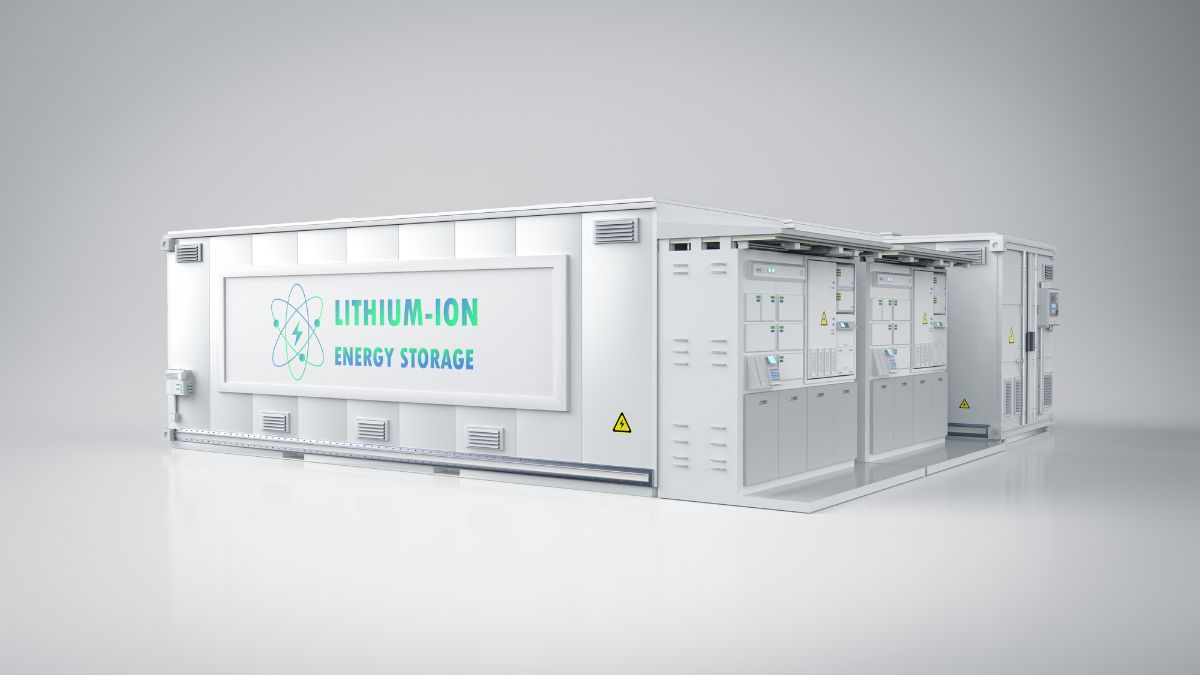
The Energy Cube extends EnerVenue’s AMC platform to higher-capacity backup requirements. Developed for indoor UPS systems in data centers, the Cube is designed to protect critical infrastructures from power loss. EnerVenue positions it as an alternative to lead-acid batteries used in UPS systems.
The Energy Cube can be retrofitted to UPS systems rated from 100KVA to 600KVA and it incorporates natural air cooling, an integrated BMS, TCP/Modbus communication, and IP20 protection.
While sharing the same AMC technology, the two products address clearly differentiated applications. Energy Core targets compact telecom backup, where continuity of power is essential for communications infrastructure, while Energy Cube addresses higher-capacity data center UPS requirements.
Both products use natural air cooling without auxiliary heating or cooling systems, supporting lower auxiliary energy requirements. Their cells also list UL 9540A, UL 1973, and IEC 63115-2 certifications.
With the Energy Core and Energy Cube, EnerVenue combines long design life, high cycling capability, aqueous metal chemistry, and application-specific system configurations to address the backup power requirements of telecom and data center infrastructure.
Subscribe to get the latest posts sent to your email.