Friday, 7 February 2025
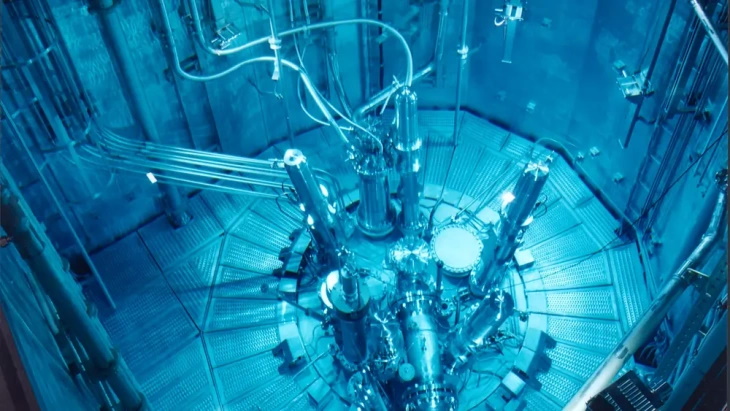
EU-CONVERSION is considering the conversion of Germany’s FRM-II research reactor and the proposed French material test reactor Jules Horowitz (JHR), whose first criticality is expected in the 2030s. EU-CONVERSION builds on three previous projects, namely EU-QUALIFY, LEU-FOREvER and HERACLES-CP.
FRM-II currently uses fuel enriched to over 95% uranium-235 to generate its dense neutron flux – and such high-enriched uranium (HEU) is seen as a nuclear proliferation risk. TUM has agreed with the German government and the Bavarian State – who finance the reactor – to work towards converting it to fuel with lower enrichments when a suitable fuel is available. This is also a condition of the reactor’s operating licence, which was issued in 2003.
The participants in the EUR12.8 million (USD13.3 million) EU-CONVERSION project – which has received funding from the European Union’s Horizon 2020 research and innovation programme – are: Technical University of Munich (Germany); Framatome (France); Institut Laue-Langevin (France); Belgium’s Nuclear Research Centre (SCK-CEN); CEA (France); Université Grenoble Alpes (France); Centrum Vyzkumu Rez (Czech Republic); Statni Ustav Radiacni Ochrany (Czech Republic); and Technicatome (France).
Two candidate fissile materials are being considered: one based on uranium-molybdenum (U-Mo) and one on uranium silicide (U2Si3). The BR2 research reactor at SCK-CEN will be used to expose both candidate materials to extreme irradiation conditions. The materials will spend about two to three cycles (about 55-75 days) in the core of the BR2 research reactor. Preparations for the demonstration test will begin this year, with irradiation in 2027–2028. Test analyses, after irradiation, will continue until 2030.
“Previous irradiation testing of the candidate materials was limited to a heat flux of 470 Watts/cm2,” said Jared Wight, programme manager at SCK-CEN. “This allowed us to test them in normal, operational conditions. In this EU project, we go a step further and increase the heat flux to more than 500 Watts/cm2. We will exceed the normal operational limits to evaluate how the fissile materials behave under extreme conditions required by FRM-II and JHR. This is crucial to ensure the safety and reliability of the reactors.”
He added: “The nuclear industry is making efforts around the world to reduce the use of highly-enriched uranium as fissile material, which is intended to prevent a potential spread and proliferation of this material. The bulk of reactors have already been converted. Now it’s time for the last few – including these two reactors (FRM-II and JHR). It’s a tough challenge, however, because of their specific technical specifications. But it’s a challenge we intend to overcome in part with the help of our BR2 research reactor.”
“Research strength and openness to technology without ideological blinkers are prerequisites for a good and safe future,” said Bavaria’s Science Minister Markus Blume. “We want to operate Germany’s most powerful research reactor with innovative low-enriched fuel in the future – with the same scientific performance as before.”