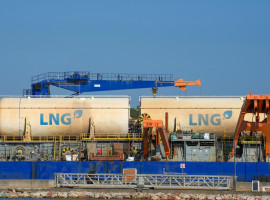
The EU proposes to restrict the sale of LNG tankers to Russia, in line with curbs on oil tankers introduced in 2023, according to European Commission President Ursula von der Leyen.
Unveiling the bloc’s 21st package of sanctions, she said it will continue targeting Russia’s shadow fleet, listing 30 more vessels on top of the 632 already sanctioned.
“For the first time, we are also targeting vessels that assist the shadow fleet – providing bunkering and other services for example. And we propose targeting critical infrastructure, such as ports, airports, refineries trading or processing Russian oil,” she said.
Russia has actively expanded its clandestine fleet by purchasing older carriers and reflagging them to obscure true ownership. Another challenge is much of the global LNG tanker trade relies on entities outside the EU and G7 coalition.
The new proposals coincided with the opening of the European Sustainable Energy Week as the continent continues to press ahead with its clean energy policy drive.
Renewables have risen from around 10% of EU final energy consumption 20 years ago to around 25% today. But weaning itself off fossil fuels remains an enduring challenge.

©EUSEW
Dan Jørgensen, European Commissioner for Energy and Housing, warned the coming months will see “a battle for hearts and minds” in Europe as the ongoing Middle East crisis leads to increases in electricity, fuel and heating bills.
“The outcome will have far-reaching consequences … but this is a battle we can win together with clean homegrown energy,” he said.
Darragh O’Brien, Republic of Ireland’s Minister for Climate, Energy and the Environment, and Minister for Transport, said the current geopolitical situation has brought Europe’s vulnerabilities into sharp focus.
“We must respond to the immediate pressures on business and industry … over half of all energy consumed across Europe still comes from imported fossil fuels. We have made significant progress but we need to be clear: lasting resilience requires structural change. Europe’s energy future must centre on electrification and clean energy.”
He said the EU emissions trading scheme (ETS) remains an essential component of European climate policy.
“Future reforms should preserve climate ambition while responding in a pragmatic way to concerns raised across several industrial sectors,” he said.
More than 150 companies and investors have warned the EU that weakening its ETS by undermining domestic clean energy production.