Friday, 9 May 2025
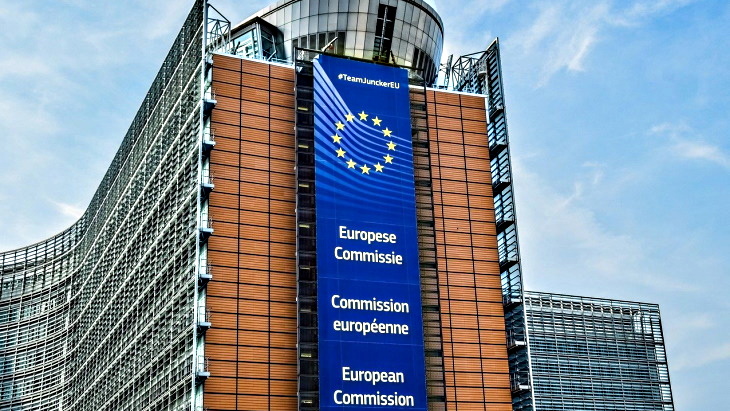
In May 2022, in response to Russia’s invasion of Ukraine three months earlier, the European Commission (EC) formally adopted the REPowerEU Plan, which aimed to rapidly reduce EU dependence on Russian fossil fuels. The plan recognised that nuclear will have a role to play in ensuring security of EU energy supplies, and highlighted the importance of coordinated action to reduce dependence on Russian nuclear materials and fuel cycle services.
“Despite the significant progress achieved under the REPowerEU Plan and via sanctions since Russia’s invasion of Ukraine, in 2024 the EU saw a rebound in Russian gas imports,” the EC said. “More coordinated actions are therefore needed, as the EU’s overdependency on Russian energy imports is a security threat.”
Measures taken so far have reduced the volumes of imported Russian gas from 150 billion cubic metres (bcm) in 2021 to 52 bcm in 2024 – with the share of Russian gas imports dropping from 45% to 19%, it noted. All imports of Russian coal have been banned by sanctions; oil imports have shrunk from 27% at the beginning of 2022 to 3% now.
In nuclear, more than 14% of uranium was sourced in the EU from Russia in 2024, while around 23% of the whole EU demand for uranium conversion services was satisfied from Russia and in uranium enrichment services Russia covered almost 24% of EU needs. Member States that are still using Russian-designed VVER reactors have made progress in replacing Russian nuclear fuel with fuel from other producers.
The EC has now published the , which it says “paves the way to ensure the EU’s full energy independence from Russia”. The roadmap sets out a gradual removal of Russian oil, gas and nuclear energy from the EU markets “which will take place in a coordinated and secure manner as we advance our energy transition”.
“The European Commission will seek to make Russian imports of enriched uranium economically less viable by presenting, next month, trade measures on the import of enriched uranium,” the roadmap says. “This will level the playing field and encourage political and business decisions in the relevant Member States to accelerate investment and capacity-building, develop an EU value chain and diversify away from Russia in a gradual manner, while allowing for supplies from other international partners. Next month the Commission intends also to restrict new supply contracts co-signed by the Euratom Supply Agency for uranium, enriched uranium and other nuclear materials with Russian suppliers as of a certain date.”
The EC also said the development of alternative nuclear fuels for Russian-designed VVER reactors operating in Member States and their licensing needed to be accelerated. It said contracting with alternative suppliers should progress quickly towards a complete replacement of Russian supplies.
The Commission is proposing to stop all remaining imports of Russian gas by the end of 2027.
EU Member States will be asked to prepare national plans by the end of this year setting out how they will contribute to phasing out imports of Russian gas, nuclear energy and oil.
Hungarian Foreign Minister Peter Szijjarto said that Hungary opposes the EC’s proposal. He said that cutting Russian gas and nuclear fuel imports threatens Hungary’s energy security.
Slovak Prime Minister Robert Fico said he respected attempts to reduce energy dependence on third countries but the Commission’s proposals would harm the EU, raising prices in the bloc and damaging its competitiveness. “This is simply economic suicide to go to the point where neither gas, nor nuclear, nor oil, everything, must end just because some new Iron Curtain is being built between the Western world and perhaps Russia and other countries,” he was quoted as saying by Reuters.
Article researched and written by WNN’s