Thursday, 20 February 2025
_13811.jpg)
Hexana aims to develop a small modular reactor (SMR) featuring a sodium-cooled fast neutron reactor, integrated with a high temperature storage device. A plant would comprise two of these reactors (400 MWt each) supplying a heat storage device. An adjoining conversion system will allow it to produce electricity on demand and in a flexible manner to compete with gas-fired power plants, but also to supply heat directly to nearby energy-intensive industries.
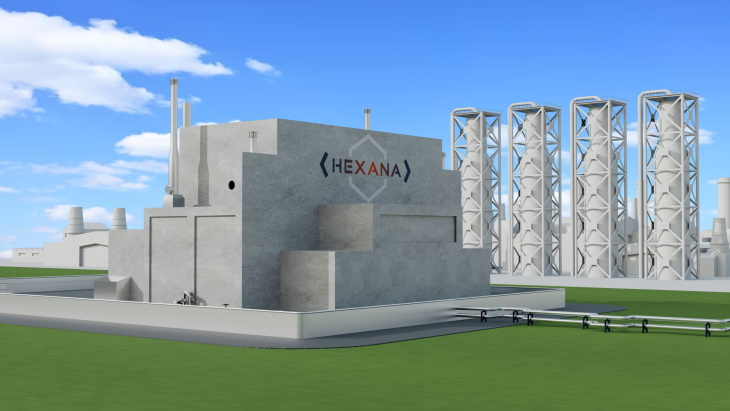
(Image: Hexana)
Tractebel will now define the conceptual design for the civil engineering and utilities of the nuclear island buildings and the special nuclear handling systems for the maintenance of large components. These studies will be incorporated into the Safety Option File that Hexana will submit to France’s Nuclear Safety and Radiation Protection Authority for licensing.
“This initial contract constitutes an important step, laying the foundations for an expanded scope during the conceptual design phase,” Hexana said.
Tractebel said: “We look forward to helping Hexana develop this groundbreaking technology that will contribute to shaping a sustainable economy.”
Materials R&D collaboration
Blykalla – formerly called LeadCold – is a spin-off from the KTH Royal Institute of Technology in Stockholm, where lead-cooled reactor systems have been under development since 1996. The company – founded in 2013 as a joint stock company – is developing the SEALER (Swedish Advanced Lead Reactor) lead-cooled SMR.
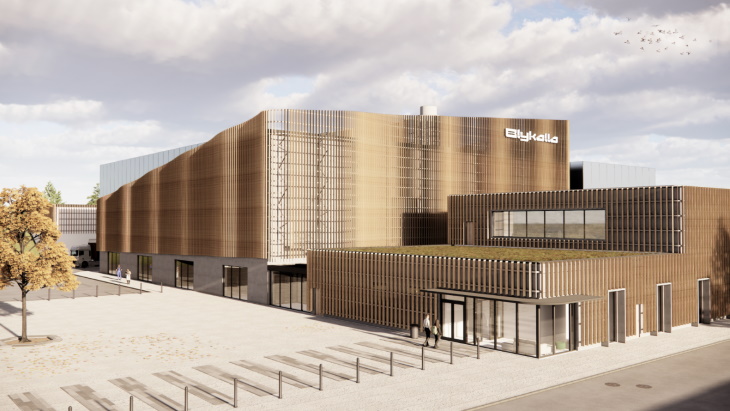
(Image: Blykalla)
Newcleo is developing its Small Modular Lead-cooled Fast Reactor (SM-LFR) technology. According to Paris-headquartered Newcleo’s delivery roadmap, the first non-nuclear pre-cursor prototype of its reactor is expected to be ready by 2026 in Italy, the first reactor operational in France by the end of 2031, while the final investment decision for the first commercial power plant is expected around 2029.
Blykalla and Newcleo have now signed an agreement for the joint research and development of materials for lead-cooled fast reactors (LFRs). The partnership entails the exchange of materials, results, and associated data to assist the respective R&D programmes of each party.
“By collaborating, Blykalla and Newcleo will have access to each other’s research facilities and expert personnel, facilitating the exchange of materials, testing results, and data,” the partners said. “This collaboration will enable both companies to enhance material solutions, ensuring the reliability and longevity of next-generation nuclear reactors.”
They noted that this arrangement also serves the purpose of supporting the optimisation of supply chains in line with the goals of the EU SMR Alliance, facilitating cross-border knowledge exchange in the licensing process for each party’s reactor technologies. Both companies are already collaborating in their respective working groups on topics of mutual interest.
_22172.jpg)
(Image: Newcleo)
“All SMR and AMR developers are working to ambitious timelines to bring our respective projects online and start generating the low-carbon electricity so crucial to delivering the energy transition,” said Newcleo founder and CEO Stefano Buono. “This type of collaboration is designed to share knowledge which will help each party accelerate their development programmes, in service not only of our respective projects but for the new nuclear sector as a whole. When the need is urgent and time is short, collaboration is key, and I’m delighted that Newcleo and Blykalla can support each other in achieving our common goal.”
Blykalla CEO Jacob Stedman added: “Both our companies recognise the urgency for developing sustainable energy to achieve decarbonisation, and LFR technology offers a pathway to do so. By combining our extensive expertise in corrosion-resistant materials with Newcleo’s industrial capabilities, we are positioned to advance the commercialisation of lead-cooled reactor technology.”