Friday, 6 December 2024
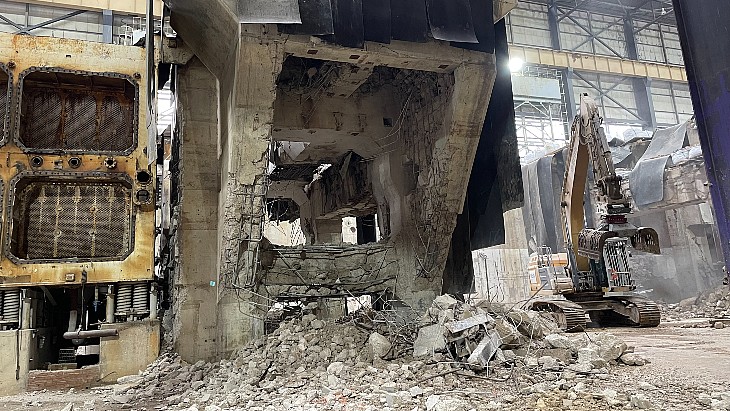
Nuclear Restoration Services said it was the largest use of explosives on a nuclear site for conventional demolition purposes in decades.
After the holes were drilled into the plinths, the charges were set and covered for the detonation, which was all planned and carried out with Office for Nuclear Regulation (ONR) oversight.
A series of test blasts had to take place and special detonator timings designed to meet nuclear site regulations for air overpressure and ground vibration, with Offive for Nuclear Regulation (ONR) having placed a hold point on the work until they were sure any risks from the novel operation had been minimised.
The ONR said that following the blasts, the huge turbine supporting concrete bases can be removed using heavy machinery within two weeks, rather than “deploying older and slower methods of drilling the structure apart which would have taken several months”.
Sizewell A’s twin reactors shut down in 2006 after 40 years of operation. Planning consent was given to demolish the turbine hall and electrical annexe in August and more than 35 miles of cabling and 8000 scaffolding boards, clips and pipes have been taken out.
Alan Walker, Sizewell A site director, said: “The detailed planning and stakeholder engagement for this were exemplary. Everyone involved has done an outstanding job and this success demonstrates our commitment to achieving safe, efficient decommissioning processes.”
Nuclear Decommissioning Authority Chief Assurance and Performance Officer, Alan Cumming, said: “This is what mission delivery is all about. Decommissioning, knocking stuff down and dispatching the waste. It’s an incredible achievement and testament to the expertise, capability and innovative mindset each partner brought to the project.
“This is a substantial step towards completion of the safe, secure and sustainable decommissioning of Sizewell A, leaving a positive legacy for the community and future generations.”
Watch: Sizewell A Turbine Hall Demolition:
During the year ahead of the detonation more than 7100 tonnes of metal was removed from the turbine hall to be recycled and sold, with more than 17,000 tonnes of demolition rubble also to be reused and recycled. The giant turbine hall itself – which covers an area about the size of a football pitch – is scheduled to be demolished in the spring.
The success of the project means Nuclear Restoration Services – which is part of the Nuclear Decommissioning Authority – may now use the same technique at some of its other 12 sites being decommissioned.
Sizewell A’s two 210 MWe Magnox gas-cooled reactors operated from 1966 until 2006. Defuelling began in 2009, with fuel removed from the reactors placed in the site’s used fuel storage ponds before being packaged in transport containers for shipment to the Sellafield complex for reprocessing. The final flask of fuel was shipped to Sellafield in August 2014. Sizewell A was declared completely fuel free in February 2015. The decommissioning milestone marked the removal of 99% of the radioactive hazard from the former Magnox nuclear power station.