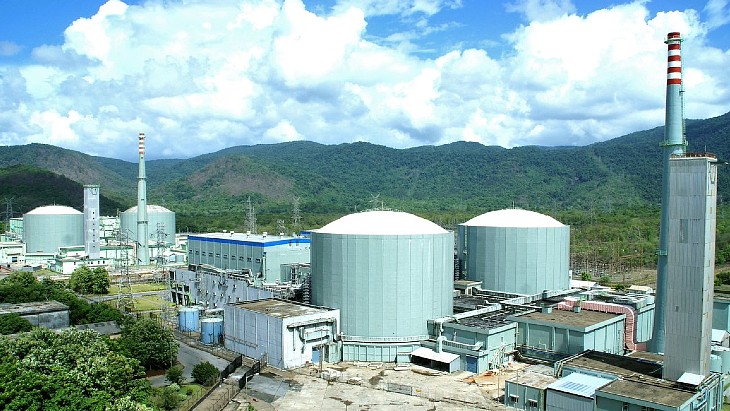
According to the of the consent, the present status of the project is that “Excavation activities for identified safety-related structures at Kaiga-5&6 have been completed. Post-excavation investigations for Nuclear Building, Control Building and Station Auxiliary Building have been completed and are nearing completion for other structures. Preparatory activities for First Pour of Concrete are in progress”.
It adds that “after initial safety review by Nuclear Projects Safety Division and identified Review Groups/Divisions of AERB, the Application and supporting submissions were reviewed by Tier-l and Tier II regulatory committees. Taking into account these reviews, the application was considered and approved by the Board of AERB”.
The consent is valid for five years, up to 28 February 2031. The pouring of first concrete for the nuclear island is the point at which a site becomes officially recognised as a nuclear power unit under construction.
Excavation works for the units – which are part of a planned fleet of ten such reactors – began in May 2022. Indian engineering company Larsen & Toubro has already manufactured and dispatched four of the eight steam generators for the units.
In April 2025 Nuclear Power Corporation of India Ltd (NPCIL) presented a purchase order for the contract to build Kaiga units 5 and 6 to Megha Engineering & Infrastructure Ltd in the first major nuclear contract for the Hyderabad-based company. The INR12,800 crore (about USD1.5 billion) engineering, procurement and construction contract for the two 700 MWe nuclear reactors was the biggest order placed by NPCIL. (1 crore is 10 million).
Two 700 MWe pressurised heavy water reactor units at Kakrapar, in Gujurat, are already in commercial operation. Another, Rajasthan unit 7, reached full power earlier this month. Construction is ongoing on a second 700 MWe unit at the Rajasthan site.
India’s government has sanctioned the “fleet mode” construction of further 700 MWe units at Gorakhpur in Haryana; Chutka in Madhya Pradesh; and Mahi Banswara in Rajasthan. India’s ambition is to have at least 100 GW of nuclear energy capacity by 2047 to support its energy transition efforts.
Kaiga nuclear power plant has four existing 202 MWe pressurised heavy water reactor units, which were connected to the grid between 1999 and 2011.