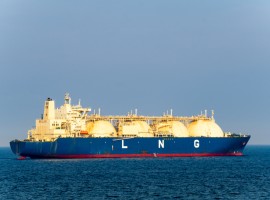
The trajectory of global liquefied natural gas (LNG) demand is now marked by “deep uncertainty,” according to the president of the International Group of Liquefied Natural Gas Importers (GIIGNL), signaling a more cautious tone from one of the industry’s most influential voices.
Speaking at an industry event in Paris, GIIGNL President Anne-Sophie Corbeau noted that although long-term fundamentals remain strong, short- to medium-term demand projections are increasingly difficult to pin down due to volatile pricing, geopolitical fragmentation, and uneven economic recoveries in key Asian markets. GIIGNL’s annual report, also released today, underscores that while global LNG imports reached 405 million tonnes in 2024 — up from 401 million in 2023 — growth is slowing, and regional dynamics are diverging.
This comes as the U.S. Department of Energy last week officially resumed approvals for LNG export permits, ending a politically charged freeze that had stalled billions in Gulf Coast investments. The Biden administration’s earlier pause had rattled developers, but U.S. LNG still remains a dominant force, accounting for nearly 30% of global supply in 2024.
Despite recent trade friction, including Chinese tariffs on U.S. LNG, American exporters have maintained a strong position in the global market. Flexible contracting models, competitive pricing, and access to Asian and European terminals have helped U.S. LNG continue expanding even in the face of regulatory uncertainty and shifting geopolitics.
Europe’s imports dipped slightly in early 2025, while demand from China and South Asia showed only modest recovery, held back by price sensitivity and stronger domestic gas output in some markets. Meanwhile, new regasification capacity in Germany and India may support late-year growth, but analysts warn that without clearer long-term policy signals, buyers remain cautious.
Trading desks are now watching how flexible contracts and spot-market exposure will shape flows into 2026, particularly as Qatar, the U.S., and Australia expand capacity amid increasingly competitive global pricing. No major FID announcements were made in the wake of GIIGNL’s report.
By Charles Kennedy for Oilprice.com
More Top Reads From Oilprice.com
- U.S. Demands Unilateral Tariff Cuts From EU
- Phillips 66 to Lay Off Most Workers at Los Angeles Refinery
- Oil Prices Rise as Trump Extends EU Tariff Deadline