By
12 min ago 3 min read
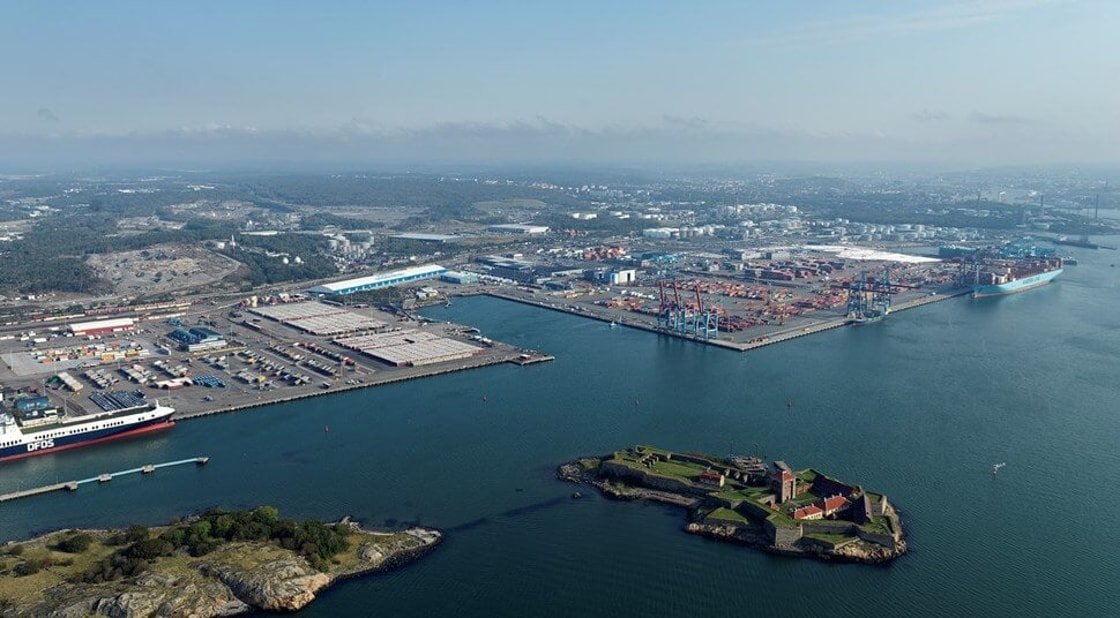
Sweden’s Port of Gothenburg will be able to offer large-scale bio-LNG bunkering from 2027, when a new liquefaction facility being built by Nordion Energi is expected to come online, the port said today (12 Nov).
The facility’s 500 cubic metre storage tank has now been installed, marking the first of the plant’s major components to be put in place. The tank, which arrived at the port by vessel, weighs almost 140 tonnes and will be capable of holding up to 200 tonnes of bio-LNG – also called liquefied biogas (LBG).
Groundworks, including foundations and base slabs, have also been completed, with the facility scheduled to become operational in the second quarter of 2027.
Once commissioned, the plant will have an annual capacity of 250 gigawatt-hours (GWh) of bio-LNG, equivalent to the fuel requirements of approximately 500 trucks or the bunkering needs of 50 vessels.
The project is expected to strengthen the availability of renewable bunker fuels in the shipping sector, where interest in bio-LNG is growing alongside an expanding orderbook of vessels designed to operate on the fuel.
“Shipping’s transition requires a collaborative value chain. This facility strengthens the port’s position in renewable bunker fuels and makes it possible to offer LBG to the shipping sector on a larger scale,” said Therese Jällbrink, Head of Renewable Energy at the Port of Gothenburg.
The liquefaction plant will be the first in Sweden to connect directly to the west Swedish gas grid, creating an additional route to market for domestic biogas producers connected to the network.
It will also enable bio-LNG to be supplied from the gas grid to shipping, heavy transport and industrial users, according to Nordion Energi.
ST1 Biokraft has already signed an agreement securing part of the facility’s liquefaction capacity, while several shipping companies regularly calling at the port are already using bio-LNG to fuel their vessels.
“The facility is now really starting to take shape, and we are moving closer to our goal of being able to deliver LBG from the gas grid to shipping, heavy transport and industry,” said Carolina Wistén, Head of Customer and Market, Gas Grid, at Nordion Energi.
The development comes as the shipping industry explores alternative fuels to reduce emissions from maritime transport, with biomethane-derived bio-LNG offering a renewable alternative to conventional fossil LNG.
The Port of Gothenburg is Scandinavia’s largest port, handling approximately 20% of Sweden’s trade and more than half of the country’s container traffic.