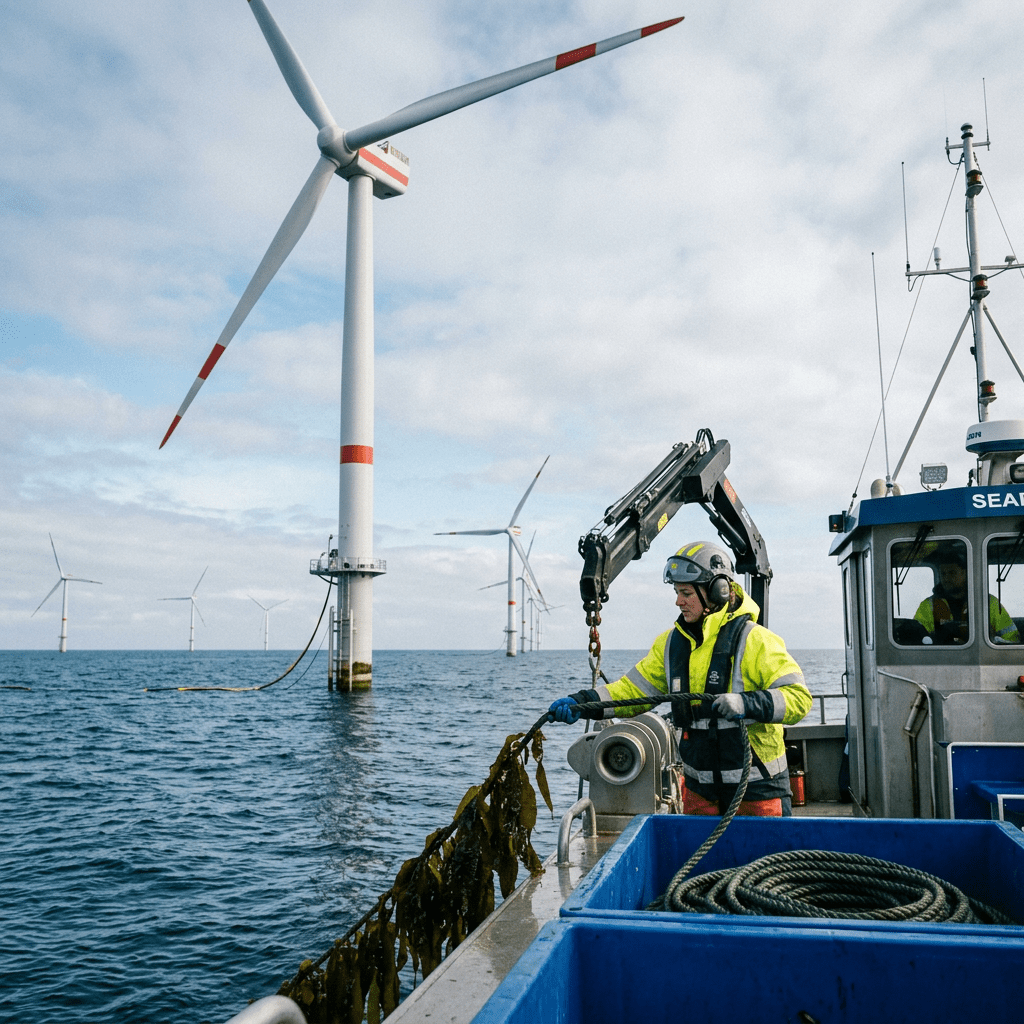
Offshore wind farms are rapidly evolving beyond their traditional role as renewable energy generators, emerging as platforms for a new generation of blue economy innovations. Recent research from Denmark highlights how offshore wind infrastructure can support large-scale seaweed cultivation, creating opportunities to combine clean energy production with sustainable food systems and marine resource development.
The concept centers on the efficient use of marine space. As countries accelerate offshore wind deployment to meet climate and energy goals, vast ocean areas are being designated for renewable power generation. Researchers have demonstrated that these same areas can also host seaweed farms, allowing multiple economic activities to coexist within a single offshore zone.
This integrated approach, known as multi-use offshore infrastructure, offers significant advantages. Existing wind farm assets—including service vessels, maintenance operations, monitoring systems, and logistics networks—can be leveraged to support aquaculture activities, reducing operational costs while maximizing the value of offshore investments.
Field trials conducted in the North Sea have shown promising results, with seaweed achieving high yields and strong quality under offshore conditions. Unlike conventional agriculture, seaweed cultivation requires no arable land, freshwater, or fertilizers, making it an attractive solution for sustainable biomass production. Harvested seaweed can be used in food products, animal feed, bio-based materials, and industrial applications.
For the renewable energy sector, the development signals a broader shift toward multifunctional offshore ecosystems. Future offshore wind projects could increasingly integrate complementary industries such as aquaculture, green hydrogen production, carbon capture solutions, and energy storage systems.
As the offshore renewable energy market continues to expand globally, multi-use infrastructure models are expected to play a critical role in improving project economics, optimizing marine resource utilization, and accelerating the transition toward a more sustainable and resilient blue economy.
Subscribe to get the latest posts sent to your email.