The co-founder of artificial intelligence firm Anthropic has suggested that an AI ‘kill switch’ which can be checked by a third party may need to be mandatory for companies.
Jack Clark, one of seven founders of Anthropic, said most labs have different ways of being able “to pull the plug” but lawmakers may need to enforce having one. It follows Anthropic Chief Executive Dario Amodei calling for the pace of AI development to slow and be more closely monitored.
Last month hackers linked to the Iranian regime forced a small-scale in a sophisticated cyber attack targeting AI systems.
Industrial gas safeguards
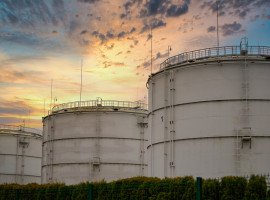
For the operational technology systems that directly control physical infrastructure, such as valves, compressors, and chemical storage tanks, gas plants already use physical kill switches.
They operate under strict global safety standards (eg IEC 61511). Even if an AI is introduced to optimise production or gas flows, it is layered on top of traditional automated safety systems.
Plant safety regulations dictate that no software loop can override a hardwired emergency shutdown button. If an AI malfunctions, acts erratically, or is compromised by a cyberattack, human operators have physical buttons to isolate the plant and vent or containment systems safely, completely independent of the network.
But where the picture is less clear is in the fast evolving realm of digital infrastructure – where questions over ownership and control are more nebulous.
As chemical processing and industrial gas facilities rapidly adopt agentic AI to optimise pipelines, pressures, and energy distribution, they face strict new cybersecurity and safety landscapes.
There is no exact public total for the number of individual industrial gas plants using agentic AI, but adoption is scaling rapidly across major chemical and industrial gas corporations.
Autonomous energy-optimisation agents can dynamically balance heavy power loads by ingesting real-time grid pricing and weather data to lower production costs.
The push for a legal or software-based AI kill switch centres on the digital systems running these facilities, such as autonomous AI agents handling supply-chain logistics, trading, or predictive maintenance.
Cyber expert Graeme Stewart, Head of Public Sector at Check Point, the software technology firm, said putting a switch in place when things go wrong, which occasionally they will, is a necessary step and one that will need to be written into UK law.
“Autonomous technology has the potential to turbocharge the economy but checks and balances need to be put in place, especially when you’re dealing with organisations like the NHS and other critical public services,” he said.
“This policy however raises much bigger questions, for example who owns ultimate responsibility for a kill switch? The tech provider, government, cyber regulator or policymakers? We also need to hear detail about what role this function would provide, such as disabling automated workflows and putting them back into human control or quarantining a specific AI agent.”
It might make sense that this capability is rolled out across critical national infrastructure as a priority and then once the model is in place, expanded from there, he added.
“Yes these rules can be written into code and commands, but such large-scale deployments will be an irresistible target to hackers. That’s why the UK private and public sector needs to ensure security levers are built into these programmes by design, rather than bolted on after an AI disaster takes place.”
Check Point’s Cyber Security report 2026 found energy and utilities are in the top five of weekly attacks, with incidences up 37%, and the third highest category in the US, with attacks up 88%.
“We continue to see a correlation between kinetic geopolitical conflicts and heightened offensive cyber operations, particularly against critical infrastructure,” it notes.
Simon Edwards, CEO of cyber testing specialist SE Labs said agentic AI systems are an obvious target for hackers, so having an emergency pause button in place is a sensible suggestion.
According to the World Economic Forum’s Global Cyber Security Outlook 2025, AI autonomy without governance is one of the top three systemic risks to enterprise resilience.
“Do we really want AI systems running unchecked, without any way to shut them down when suspicious activity is detected across the energy grid or our health service?” he said.
“This suggestion of a kill switch, whilst sound, should form part of a much wider AI strategy, that comprises of rigorous testing for bugs and weaknesses and strong governance rules that are enshrined into law. We also need a conversation about who takes responsibility for an AI kill switch and under what circumstances it can be used.”