By
12 min ago 2 min read
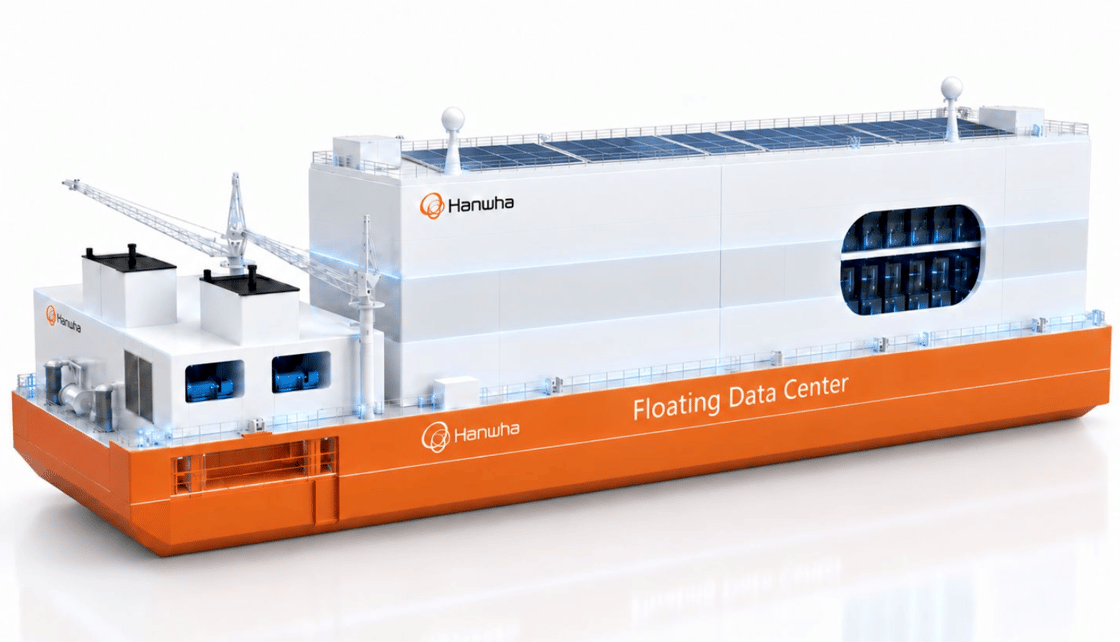
South Korean shipbuilder Hanwha Ocean has unveiled its 60MW floating data centre at in Bangkok.
The concept, which recently secured approval in principle from the American Bureau of Shipping, comes as demand for land-based centres continues to soar, accompanied by rising power requirements, cooling efficiency constraints and community concerns.
The floating data centre seeks to sail pass these issues by generating its own power offshore while using seawater-based cooling systems.
Its modular design allows power generation methods, server types and data capacity to be configured flexibly depending on local conditions and customer requirements.
However floating data centres face severe challenges relating to harsh marine environments, high costs, and complex connectivity. Repairing servers in remote offshore platforms requires specialised marine vessels and complex logistics.
Saltwater, humidity, and salt spray accelerate the wear and corrosion of physical structures and electronic components while biofouling (accumulation of marine organisms on surfaces) also clogs systems and increases upkeep.
The hyperscale data centre boom sweeping Asia is in Southeast Asia, while South Asia remains largely out of reach for gas, according to new research from Wood Mackenzie.
Southeast Asia’s data centre pipeline is set to more than triple from 2.8 GW today to 9.4 GW by 2035, with electricity demand from data centres growing from 17 TWh to 57 TWh over the same period.
Carbon dioxide could offer an and managing heat generated by data centres.
UK Prime Minister Andy Burnham recently on data centres development, amid growing concerns over their energy use and sustainability.