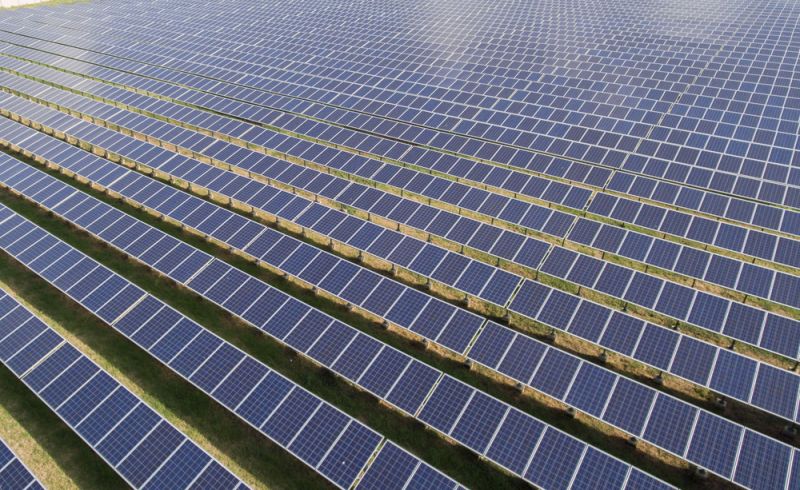
The Himachal Pradesh Electricity Regulatory Commission has released a suo-motu order on January 6, 2026 to determine the generic levelized tariff for solar photovoltaic projects for the financial year 2026-27. The order is issued under the state’s renewable energy regulations of 2017 and covers the period from April 1, 2026 to March 31, 2027. The Commission has invited stakeholders to submit comments and suggestions by February 10, 2026. This tariff exercise aims to provide clarity for project developers, distribution licensees, and investors about cost assumptions and applicable rates for different project sizes in the state.
The Commission has divided solar projects into four categories based on capacity. The smallest category includes projects up to 1 MW, followed by the 1 MW to 3 MW range, and then the 3 MW to 5 MW band. Any project above 5 MW will fall under the largest category and such projects are expected to sell power through competitive bidding or through the Solar Energy Corporation of India. This classification reflects the differences in project scale, cost structures and procurement methods. It also allows the Commission to adjust tariffs based on size-related cost variations.
The proposed tariffs are different for projects located in general areas and for those located in urban or industrial zones. For areas outside urban and industrial pockets, the tariff is proposed at ₹3.47 per kWh for projects up to 1 MW, ₹3.40 per kWh for those between 1 MW and 3 MW, and ₹3.34 per kWh for the 3 MW to 5 MW range. For projects in urban and industrial areas, these rates rise slightly to ₹3.52 per kWh, ₹3.46 per kWh and ₹3.40 per kWh respectively. The Commission has explained that a higher tariff for urban and industrial sites will help encourage project development in those zones where costs are typically higher.
The tariff calculations are based on a normative capital cost that acts as a benchmark for all projects. For a standard 3 MW to 5 MW project, the capital cost is estimated at ₹335.79 lakh per MW. This includes ₹85.37 lakh for modules and ₹250.42 lakh for other project components such as land, civil works and evacuation facilities. Smaller projects are given a cost uplift of 5 percent for up to 1 MW and 2.5 percent for the 1 MW to 3 MW category because their per-unit costs are usually higher. An additional ₹7.50 lakh per MW is also allowed for projects located in urban and industrial areas.
The tariff proposal is built on key financial assumptions such as a 25-year project life, a debt-equity ratio of 70:30, a loan interest rate of 10.80 percent and a return on equity of 14 percent. The Commission has proposed operation and maintenance expenses of ₹10.96 lakh per MW in the first year with an annual escalation of 3.84 percent. The tariff will apply to projects that submit a joint petition for PPA approval between April 2026 and March 2027 and are commissioned by March 31, 2028. Government subsidies are not factored into the tariff and will be adjusted separately. A royalty of 5 paise per unit will be payable to the state government and will be treated as a pass-through cost.
Subscribe to get the latest posts sent to your email.