By
56 min ago 3 min read
The hype around hydrogen inflated its market claims in the face of economic realities and served as a drag on its growth and development. That at least has been the popular narrative.
But this week’s European Sustainable Energy Week provided a different perspective.
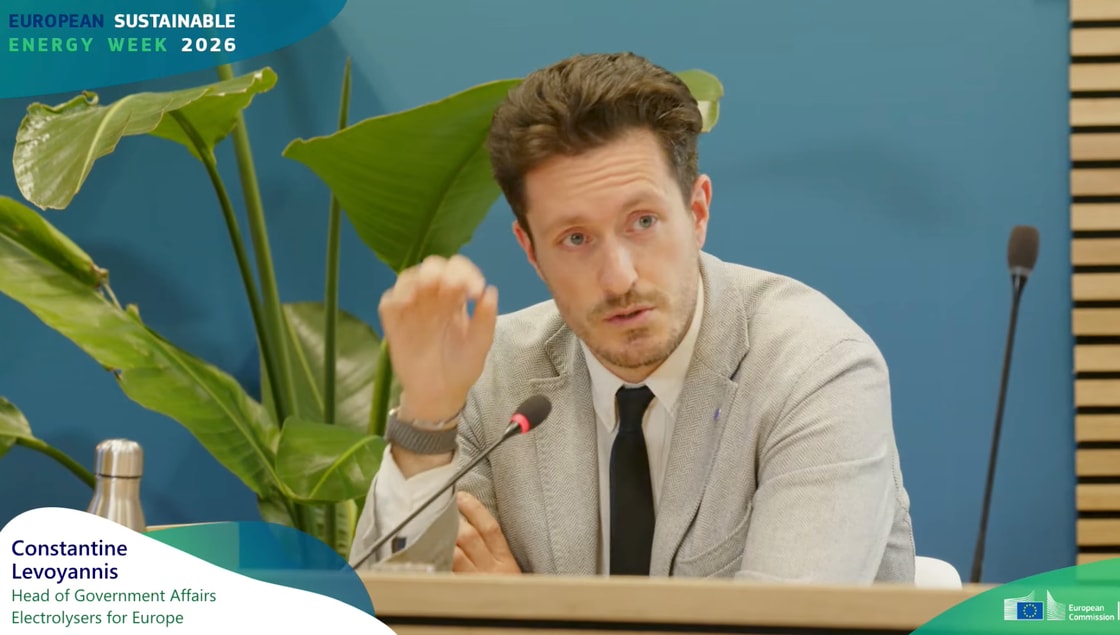
“There’s a hashtag #hydrogensouffle which I’m frankly fed up of seeing on LinkedIn,” said Constantine Levoyannis, Head of Government Affairs at Nel.
“But hype is a part of any clean tech development … you go down to the trough of disillusionment and from there you start going into a slope of enlightenment, which ends with productivity. I think the worst is behind us – the market is consolidating and maturing.”
Quizzed on the state of Europe’s electrolyser industry Levoyannis characterised its development using the Gartner Hype Cycle – a framework tracking how emerging technology moves from initial enthusiasm and inflated expectations through disillusionment.
Representing Electrolysers for Europe, an industrial coalition launched by leading electrolyser manufacturers, Levoyannis added, “The dreamers are disappearing and the real projects are the ones we’re having discussions with.”
This comes amid a recognisable ramp-up in European electrolyser deployments, though fears persist around cheaper imports undercutting the continent’s OEMs – particularly from China, where Longi Hydrogen has already electrolyser to Europe this year, and Sungrow Hydrogen has progressed its targeting of the Iberian Peninsula through a in Spain.
European players have warned of the threat, with Sunfire CEO Nils Aldag cautioning it risks the “” of the bloc’s electrolyser industry, and that the (IAA) does not go far enough to protect manufacturers.
Levoyannis echoed this, arguing the EU “needs to advance profitability.”
“If China has more than 60% global manufacturing capacity, and the rules in China are restrictive on us investing into the Chinese economy, then it needs to be reciprocal on our side.”
Charlotte Roule, CEO of Storengy, one of Europe’s leading operators of underground gas storage, and Vice-President Hydrogen, ENGIE Group, said the biggest challenge is matching the gap between political ambition and market reality.
“We need to understand that when we speak about hydrogen, we speak about an entire value chain, so we need to have this integrated global approach,” she said.
She added that a key investment element is predictability, along with the need for “credible” demand creation, and seeing infrastructure as a critical enabler.
“Hydrogen will be a resilient asset for the EU,” she said.