Monday, 25 November 2024
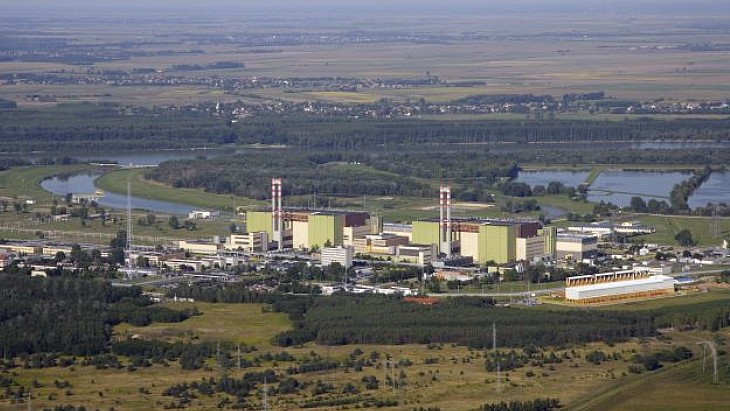
The Paks plant is located about 180 kilometres southwest of Budapest and is owned by Magyar Villamos Művek (MVM). The existing four units at Paks are VVER-440 reactors that started up between 1982 and 1987 and they produce about half of the country’s electricity. Their design lifetime was for 30 years but that was extended in 2005 by 20 years, to between 2032 and 2037, and there are plans for a further 20-year extension.
The aim for International Atomic Energy Agency (IAEA) Operational Safety Review Team (OSART) missions is to assess safety performance against IAEA safety standards, highlight areas of good practice and propose improvements.
During the 18-day mission, the areas of good practice identified by the 13-member team were: the development and implementation of a monitoring and repair programme for confinement systems; the storage of geospatial information on plant structures and components and the sharing of data on different platforms; and the development of software to predict potential initiating emergency events and the progression of events.
The suggestions to further improve safety included: consider enhancing measures to maintain measurement equipment, includinginspections, calibrations, storage and traceability; consider reinforcing plant programmes and work practices to ensure that, in the event of an earthquake, the potential impact of non-fixed items on safety-related equipment is minimised, and consider enhancing processes, procedures and practices to provide personnel with the necessary instructions in the industrial areas of the plant.
OSART team leader Yury Martynenko, senior nuclear safety officer at the IAEA, said: “The team was pleased to see that the plant was very well prepared and cooperated fully and openly with IAEA experts during the mission. The managers and staff of Paks NPP are committed to improving the operational safety and reliability of their plant, and we were pleased to see many actions in progress.”
Péter János Horváth, CEO of MVM Paks Nuclear Power Plant Ltd, said: “It was in the spirit of continuous learning that we had requested the IAEA review. The OSART mission has allowed us to make an in-depth assessment of our work. The recommendations and suggestions will help us to continuously improve the plant’s operational safety, and thanks to the expertise of our team, we can also contribute to the enrichment of global best practices.”
This was the fourth OSART review mission to Paks NPP – the first was in 1988, followed by ones in 2001 and 2014.
A draft copy of the report has been provided to the plant management, and following any factual comments provided, the final copy will be submitted to the Hungarian government within three months. The experts on the review mission were from Argentina, Bulgaria, China, the Czech Republic, Russia, South Africa, Switzerland, Ukraine, the United Arab Emirates and the USA, as well as three IAEA officials.