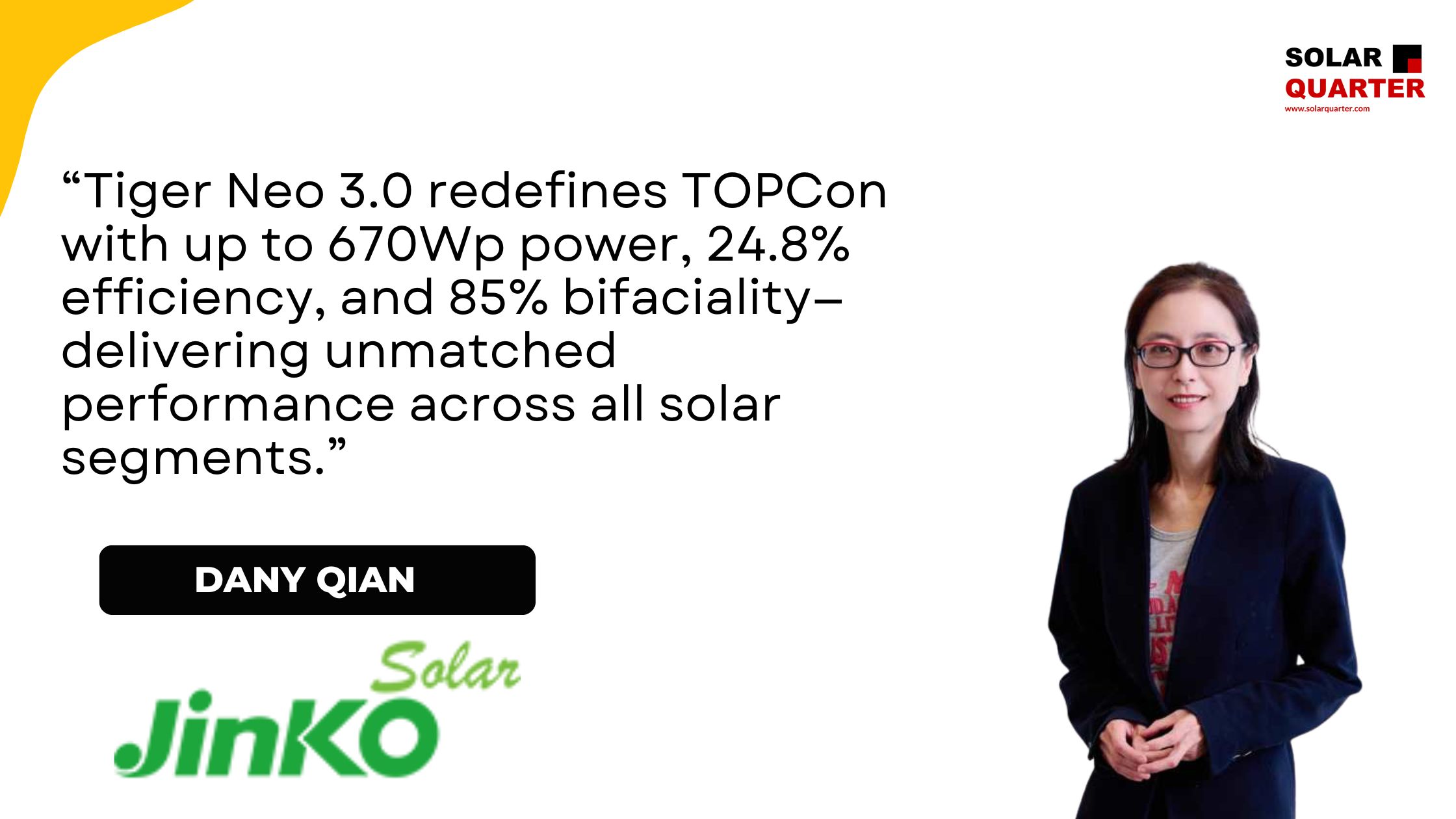
In Conversation with Dany Qian: JinkoSolar’s Vision with Tiger Neo 3.0 and the Future of TOPCon

At the ASIA Sustainable Energy Week Expo, JinkoSolar Thailand’s leading PV supplier with a 40% market share invited Dany Qian, Vice President of JinkoSolar, to share exclusive insights on the company’s technological roadmap, the transformative impact of Tiger Neo 3.0, and the future of TOPCon as a platform technology.

Q: You’ve stated that TOPCon, as a platform technology, needs to maintain its dominance in the high-performance market. Is the mass production of Tiger Neo 3.0 driving the rest of the roadmap?  

Dany Qian:
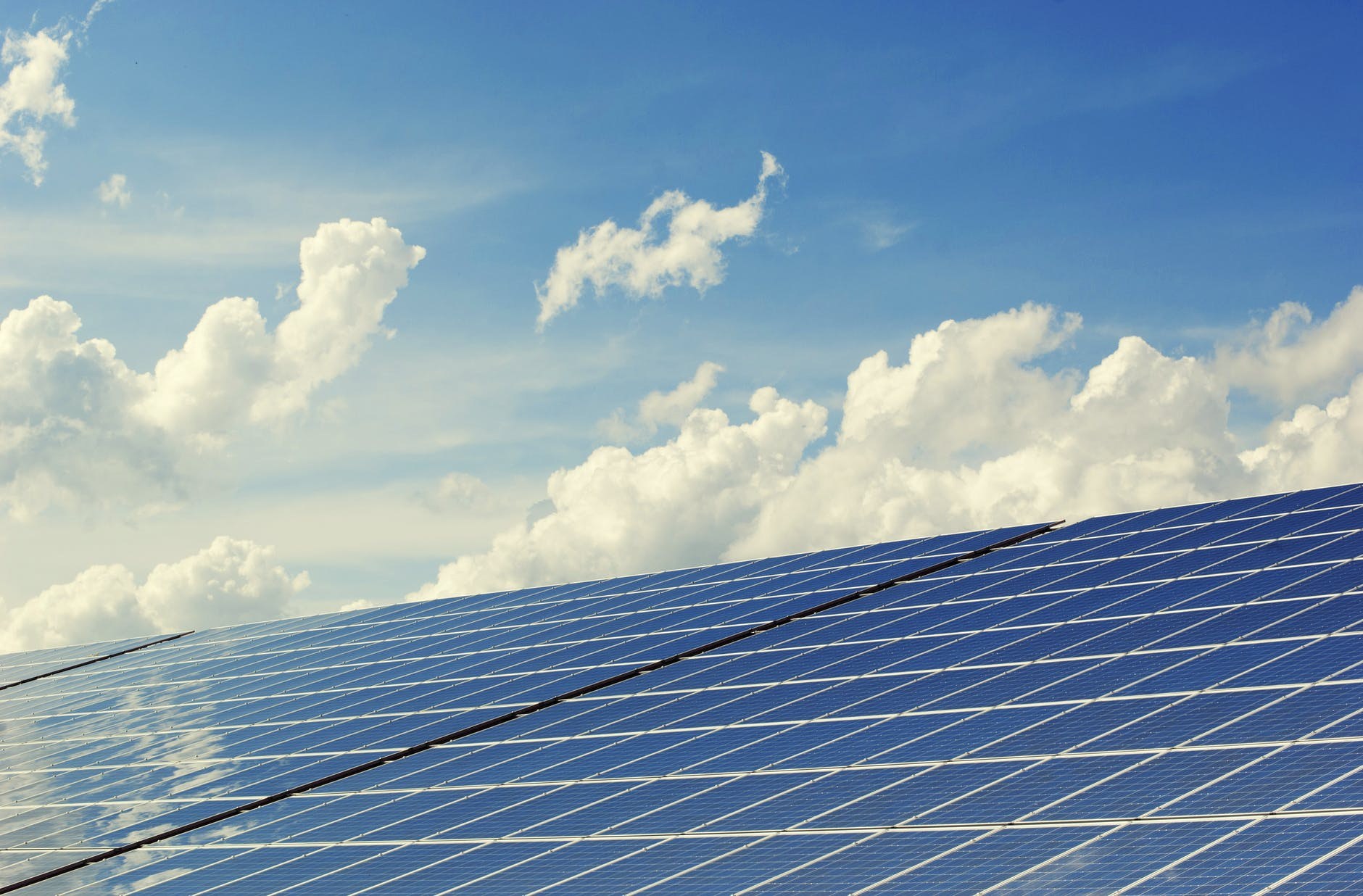
Tiger Neo 3.0 is about reintroducing TOPCon to the business, the ecosystem, and the customers. It builds credibility as the best-performing solar panel across all metrics front-side module efficiency of up to 24.8%, power class range from 650Wp to 670Wp, rear-side bifaciality of 85%, and superior low-light performance, along with resistance to LID, LeTID, and UV-induced degradation. The relative competitiveness of Tiger Neo 3.0 has exceeded what we had initially planned two years ago. That belief, the proof points, and predictable execution are incredibly important.

Q: Why did you say that Tiger Neo 3.0 raises the bar for high-performance modules?  

Dany Qian:
It’s a good question. Current TOPCon modules typically reach 620–630Wp, while XBC modules plateau around 620–640Wp and are limited by their rear-side bifaciality due to their back-contact process. Our Tiger Neo 3.0 targets a power/efficiency sweet spot north of 650Wp.

Q: Tiger Neo’s competition has performed well in both utility and DG markets. With the enhanced performance of version 3.0, is this more suited for ground-mounted projects?  

Dany Qian:
Tiger Neo 3.0 is an all-scenario applicable model. It performs equally well in utility-scale and rooftop projects, thanks to its top-tier front- and rear-side data. One solution fits all.
 

  • Related Posts

    ib vogt And Airtrunk Launch Malaysia’s First 29.99 MW Solar VPPA For Data Center Under CGPP

    Renewable energy developer ib vogt and hyperscale data center company AirTrunk have officially started commercial operations of a 29.99 MWac solar power project in Malaysia. The project marks the country’s…

    EU Approves €2.5 Billion Modernisation Fund To Accelerate Clean Energy Projects Across 11 Member States

    The European Commission and the European Investment Bank have approved a new funding package worth €2.5 billion under the Modernisation Fund to support clean energy projects across the European Union.…

    Have You Seen?

    Brent Oil Curve Weakens Further as Prompt Supply Glut Swamps Market

    • July 4, 2026
    Brent Oil Curve Weakens Further as Prompt Supply Glut Swamps Market

    What Natural Gas’s Ascendancy Says About the US

    • July 4, 2026
    What Natural Gas’s Ascendancy Says About the US

    Oil Prices Little Changed as US-Iran Peace Efforts Hold

    • July 4, 2026
    Oil Prices Little Changed as US-Iran Peace Efforts Hold

    TotalEnergies Offers Millions of Barrels of Iraqi Crude to Asian Buyers

    • July 4, 2026
    TotalEnergies Offers Millions of Barrels of Iraqi Crude to Asian Buyers

    Americans Hit Road for July 4 Despite High Gasoline Prices

    • July 3, 2026
    Americans Hit Road for July 4 Despite High Gasoline Prices

    Oil Set for Fourth Straight Weekly Loss as Hormuz Flows Return

    • July 3, 2026
    Oil Set for Fourth Straight Weekly Loss as Hormuz Flows Return

    India Denies Directly Exporting Fuel to Russia, But Admits Traders May Be

    • July 3, 2026
    India Denies Directly Exporting Fuel to Russia, But Admits Traders May Be

    Citi: Oil Could Sink to $60 as Hormuz Traffic Normalizes

    • July 3, 2026
    Citi: Oil Could Sink to $60 as Hormuz Traffic Normalizes

    Soaring Imports Push India’s Crude Stocks to Near 1-Year High

    • July 3, 2026
    Soaring Imports Push India’s Crude Stocks to Near 1-Year High

    Japan’s Top Oil Refiner Eyes a Post-Hormuz Future

    • July 3, 2026
    Japan’s Top Oil Refiner Eyes a Post-Hormuz Future