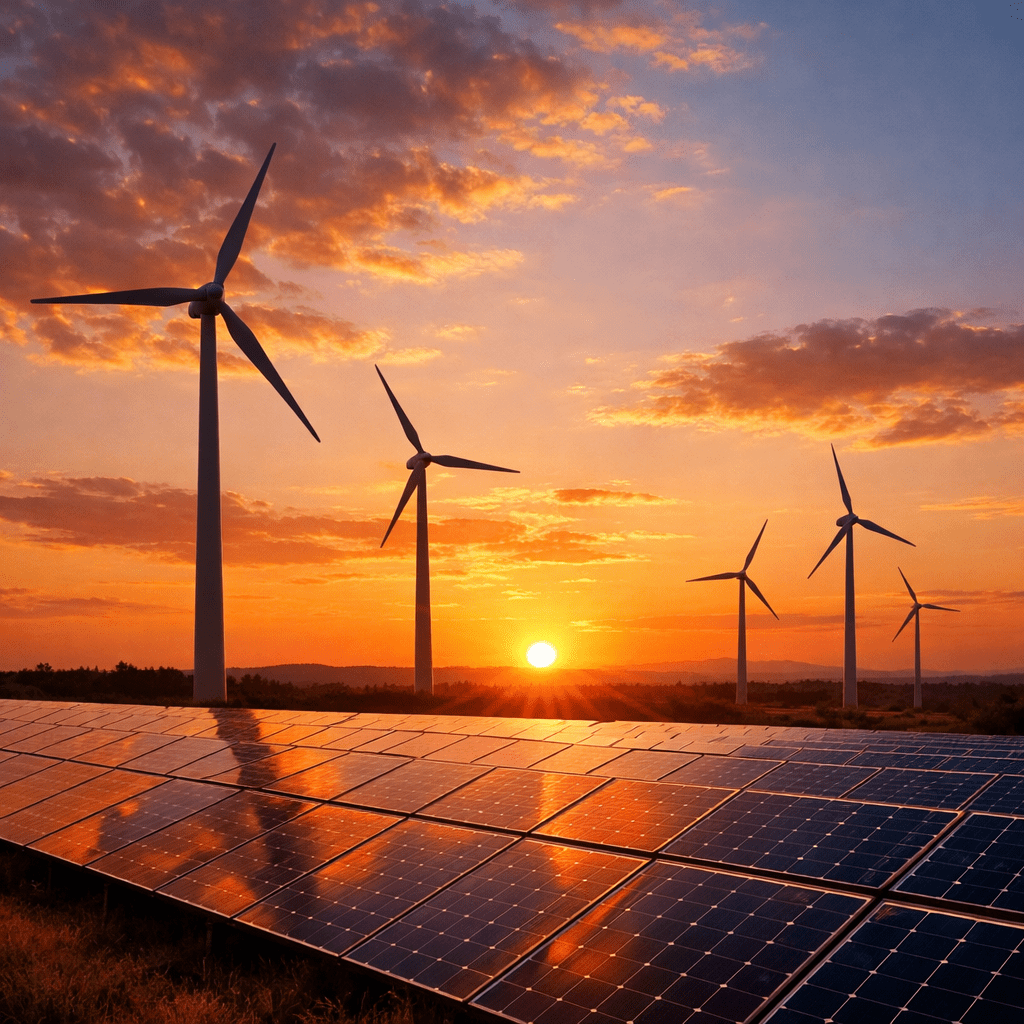
India needs to scale up its non-fossil-fuel power capacity to 600 GW by 2030 to meet its growing electricity demand reliably and affordably, according to a new study by the Council on Energy, Environment and Water (CEEW). The study, titled How Can India Meet Its Rising Power Demand? Pathways to 2030, was released at the National Dialogue on Powering India’s Future in Delhi. It is the first study to model India’s power system dispatch every 15 minutes for the year 2030.
The report highlights that India’s current and planned generation capacity should be sufficient to meet electricity demand by 2030 if it grows as per the Central Electricity Authority’s (CEA) estimates. However, if power demand rises faster due to factors like a warming climate or rapid economic growth, India will need to scale up its renewable energy (RE) capacity to 600 GW. This high-RE pathway is the most practical solution due to the affordability of renewable energy sources. The proposed 600 GW capacity includes 377 GW of solar, 148 GW of wind, 62 GW of hydro, and 20 GW of nuclear energy.
In February 2025, India’s power demand reached a record high of 238 GW, with peak summer demand expected to climb to 260 GW. This surpasses earlier projections, largely due to unusually hot weather. As India’s energy needs continue to rise, expanding renewable energy capacity becomes even more critical.
Shripad Yesso Naik, Minister of State for Power and New and Renewable Energy, emphasized the country’s clean energy achievements. India’s non-fossil fuel capacity has grown from 76 GW in 2014 to 220 GW by 2025. Naik noted that every state must leverage its renewable energy potential to ensure a clean, efficient grid that also supports the financial stability of power distribution companies (discoms).
Suresh Prabhu, former Union Cabinet Minister and Trustee at CEEW, stated that India’s energy transition must align with its economic ambitions. He highlighted the need for future-ready policies, stronger industry collaboration, and innovative, research-driven solutions to overcome challenges in grid management, deployment, and financing.

Ghanshyam Prasad, Chairperson of the CEA, stressed the importance of ensuring affordable power, which is vital for industrial growth. He suggested that states and the central government work together to meet renewable energy targets, considering the demand patterns and comfort levels of individual states in purchasing power.
The CEEW study presents different scenarios for India’s power sector by 2030. If India achieves its current goal of 500 GW of non-fossil fuel capacity, the system can manage electricity demand. However, if it falls short and only installs 400 GW, there could be power shortages. This would require additional coal capacity—between 10 and 16 GW—and significant investment in the transmission network to maintain grid stability.
The report identifies key challenges to achieving the 600 GW target. These include land acquisition issues, delays in grid connectivity, supply chain constraints, and unallocated capacity from central auctions. Addressing these challenges is essential for tapping into the renewable energy market’s potential.
Achieving 600 GW of non-fossil capacity by 2030 could lead to multiple benefits. It could reduce electricity generation costs by 6-18 paise per unit, eliminate the need for new coal plants, and save between ₹13,000 crore and ₹42,400 crore in power procurement costs. It could also create up to 100,000 new jobs and cut carbon emissions by 9-16 percent compared to financial year 2024.
Deploying 600 GW of clean energy would require major investments in battery storage (70 GW of four-hour systems), pumped storage hydro (13 GW), and retrofitting 140 GW of coal capacity for flexibility. The decreasing cost of battery storage supports this pathway, with tariffs for stand-alone battery storage falling by 65 percent over the past two years.
Dr Arunabha Ghosh, CEO of CEEW, emphasized that India’s energy expansion must focus on decarbonizing power generation while ensuring reliability and affordability. He called for continuous policy innovation, smarter transmission grid planning, and strong collaboration between central and state governments.
The recommends that the Ministry of Power set a clear 600 GW target and integrate it into the National Electricity Policy. It also suggests promoting a diverse RE portfolio, utilizing existing land and transmission infrastructure efficiently, and designing innovative bidding and contract models to support renewable energy expansion.