By

The surge in oil and natural gas prices from the Iran war might seem like good news for the world’s biggest energy companies, but disruptions to production in the region, shipping blockades and hedging losses make the reality far more complicated.
Get the Latest US Focused Energy News Delivered to You! It’s FREE:
Exxon Mobil Corp. and Chevron Corp. lost about 6% of their global production in the first quarter, while Shell Plc’s gas output was 5% lower, largely because the Strait of Hormuz has been essentially closed. It comes after just one month of fighting in the region, indicating that the hit could be far more severe if the waterway remains shut for an extended period.
“The Middle East makes a messy quarter,” Lloyd Byrne, an analyst at Jefferies Financial Group Inc., wrote in a note.
Source: Bloomberg
Also See:
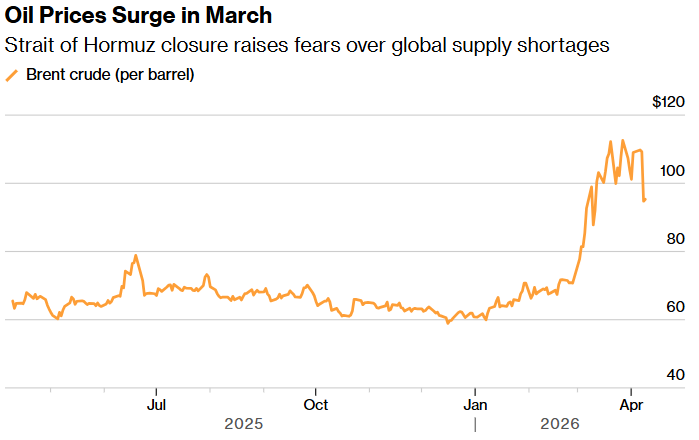
Shares of all three oil majors reached record highs in recent weeks as Brent crude surged above $112 a barrel, the most in four years, and amid speculation that fuel shortages in Asia will push up prices more in the months ahead. But production losses and shipping constraints mean the supermajors were unable to take full advantage of the price spikes, laying bare how vulnerable they are to protracted trade restrictions in the Persian Gulf.
Analysts are quickly lowering their forecasts for Exxon and Chevron’s first quarter results after they disclosed about $7 billion of mark-to-market derivative losses combined this week. As prices increased sharply in March — global crude futures rose more than 50% in less than three weeks — the companies were forced to post paper losses on hedges associated with cargoes that will take several weeks to be delivered.
“This accounting often happens well before the sale of the associated physical product is complete,” Exxon’s Chief Financial Officer Neil Hansen said in a statement. “These impacts will unwind over time.”
Read More:
Exxon’s guidance pointed to earnings that were “well below” forecasts, chiefly due to these so-called timing effects, Byrne wrote in his note.
Exxon gets about 20% of its production from Qatar and the United Arab Emirates. Both nations are severely affected by shipping disruption in the Strait of Hormuz, where traffic remains all-but blocked despite this week’s ceasefire between the US and Iran.
Additionally, two of Exxon’s Qatari liquefied natural gas production lines were damaged by Iranian missiles last month, which is affecting about 3% of its global output and could to take years to repair. Shell had a gas-to-liquids plant damaged in similar attacks.
The volatility of the quarter prompted Chevron on Thursday to take the rare step of releasing earnings guidance, allowing investors to digest how the war is impacting the company’s operations a full three weeks before it reports the actual results.
Upstream shut-ins “were higher than we had anticipated but “price capture more than offset” this, Betty Jiang, an analyst at Barclays Plc wrote in a note.
While higher prices should boost Big Oil’s profits over the longer term, the disruptions to operations and trade in the world’s most critical energy production region are making it hard for analysts to model.
“Chaotic times translate into messy print,” said Biraj Borkhataria of RBC Capital Markets.
Share This:
More News Articles