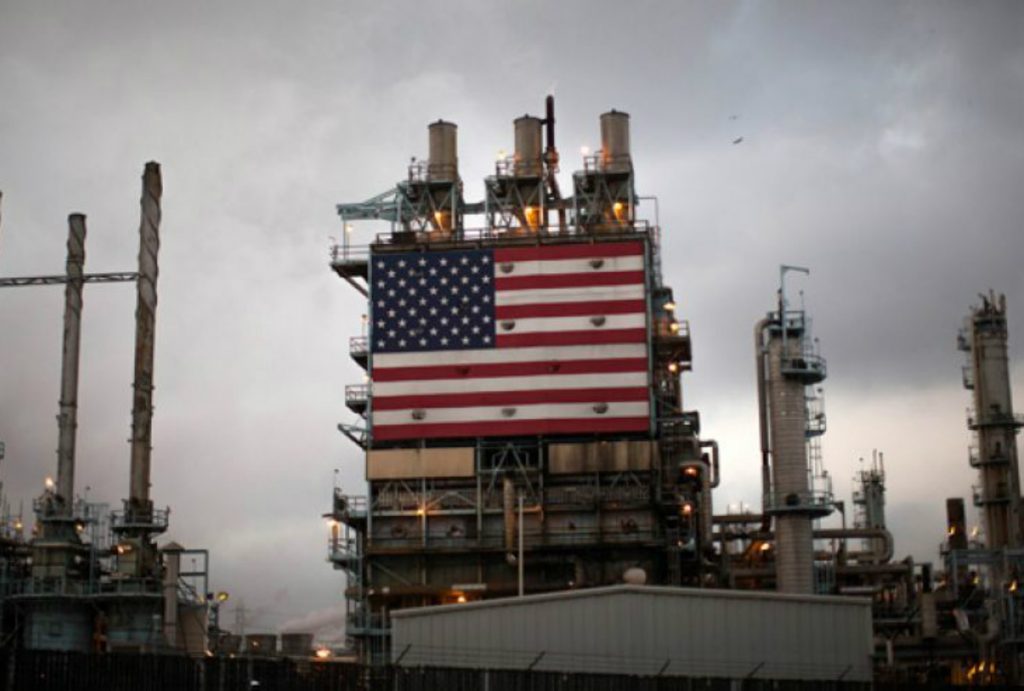
(Reuters) – U.S. Gulf Coast refiners are reaping the strongest margins in years as disruptions to Middle Eastern oil flows from the Iran war raise demand for U.S. fuel exports, analysts and experts said.
Asian and European refiners have been hit hard by a slump in Middle Eastern crude exports due to Iran’s blockade of the Strait of Hormuz, forcing some to cut production.
Get the Latest US Focused Energy News Delivered to You! It’s FREE:
On Tuesday, U.S. President Donald Trump said he had agreed to a two-week ceasefire with Iran, conditional on reopening the Strait of Hormuz, though tanker traffic remains limited and doubts persist over whether the fragile truce will hold.
U.S. refiners, less reliant on Middle Eastern crude, are well placed to benefit from global fuel shortfalls, by maximizing international sales from the U.S. Gulf Coast export hub.
The U.S., the world’s largest fuel market, has about 18 million barrels per day (bpd) of refining capacity, much of it on the Gulf Coast export hub.
Major independent refiners like Marathon Petroleum, Phillips 66, Valero Energy and PBF Energy are winners in the current market, considering they are located on the origin point of the Colonial Pipeline and have direct access to marine export terminals, analysts said.
“U.S. refiners have the upside opportunity of selling into markets facing scarcity, while not having to suffer any meaningful disruption to their own feedstock supply,” said Jeff Krimmel, founder of consulting firm Krimmel Strategy.
U.S. refinery utilization climbed to nearly 92% last month, with Gulf Coast utilization averaging above 95%, up from around 90% a year earlier, according to U.S. Energy Information Administration data. That compares with a five-year seasonal average of about 82% for the Gulf Coast.
Asian refinery utilization, by contrast, has slipped to the low-to-mid 80% range after a visible dip through March and April following run cuts, consultancy Rystad Energy said.
EXPORT MARGIN BOOST
U.S. refined products exports hit a record in March, ship-tracking data showed. The surge in exports has delivered a sharp boost to refining margins after recent quarters pressured by global oversupply.
Rising export demand is contributing to higher domestic fuel prices, as refiners receive better prices abroad despite U.S. gasoline and diesel trending toward record highs at the pumps.
That phenomenon is most visible in diesel and jet fuel markets, which have been hit most severely by the Iran war because the Middle East is a key supplier of both fuels and high-yield crude grades.
U.S. ultra-low sulfur diesel futures were trading at an over $72 per barrel premium to U.S. West Texas Intermediate crude futures, compared to about $40 before the Iran war.
U.S. gasoline futures, meanwhile, were at a near $26 premium to crude, up from near $18 prior to the war.
“Strength in global diesel markets is expected to pull barrels from the U.S. Gulf Coast, ultimately contributing to further upward pressure on domestic prices,” said Alex Hodes, director of energy market strategy at StoneX.
INSULATION LIMITS
Despite the windfall, U.S. refiners are not immune to rising crude costs as stronger global demand lifts feedstock prices.
Spot premiums for West Texas Intermediate crude have jumped to all-time highs.
Offers for WTI Midland crude to North Asia for July delivery were at premiums of $30–$40 per barrel over benchmarks, up from around $20 in late March, while bids into Europe have climbed to a record near $15 per barrel over dated Brent.
Asian refiners are also competing for South American crude barrels that have historically flowed to the U.S., market participants said.
Phillips 66 said on Monday that rising commodity prices led to nearly $900 million in pre-tax mark-to-market losses in the first quarter.
“Because oil prices rose, Phillips 66 takes a hit on the value of its hedges. But they’ll get a serious gain as they sell more and more refined products into a market with elevated product prices,” Krimmel added.
Reporting by Sumit Saha in Bengaluru and Shariq Khan in New York; Editing by Maju Samuel
Share This:
More News Articles