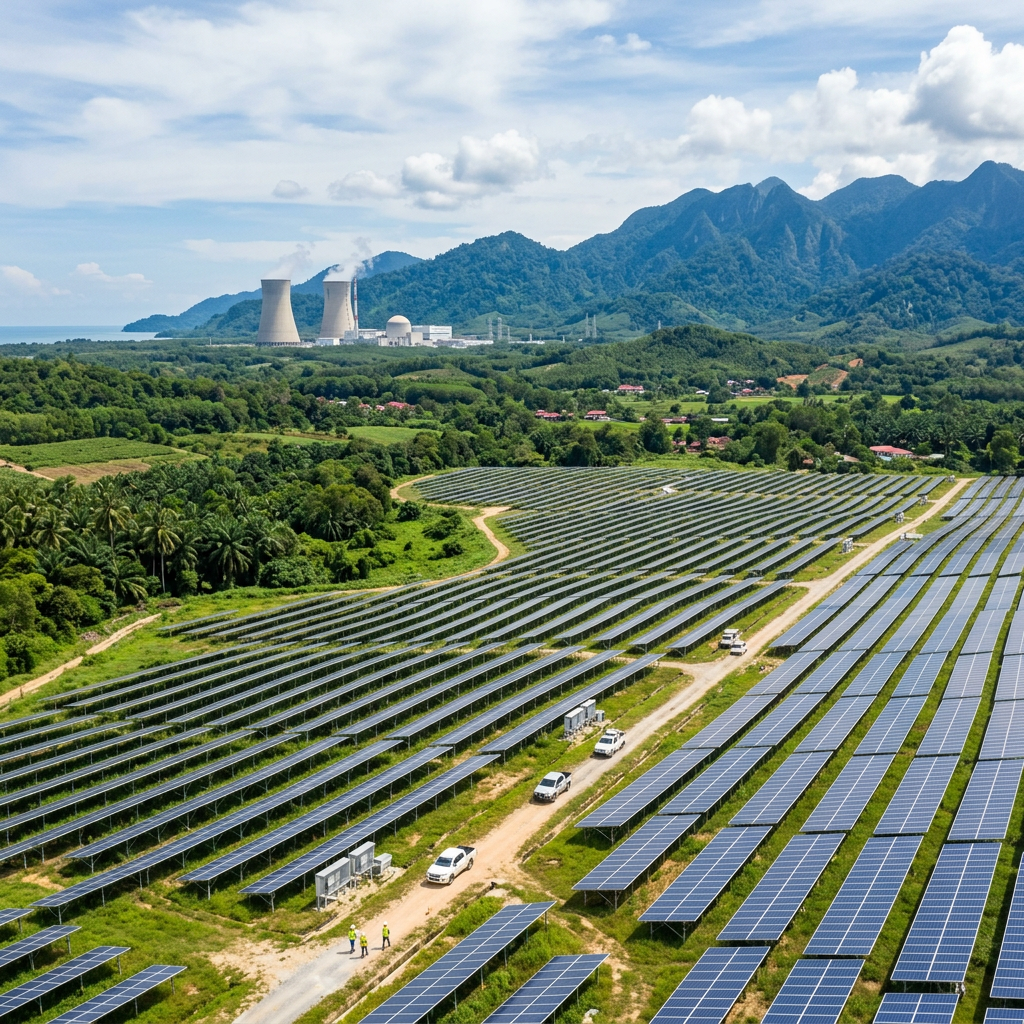
Malaysia is taking a major step toward reshaping its energy sector by reducing its reliance on coal and moving toward a mix of solar and nuclear power. According to a report by UOB Kay Hian, the country’s utilities sector is undergoing a strong transformation as the government works to meet its sustainability targets and modernize its energy mix.
A key part of this transition is the rapid expansion of solar power. Malaysia is expected to increase its solar capacity to more than 6.5 gigawatts between 2026 and 2029. This growth is opening up large opportunities for engineering, procurement, and construction companies, with project investments likely to run into billions of dollars. Solar energy is expected to play a major role in helping the country reach its goal of achieving a 70% renewable energy share while gradually phasing out coal-fired power plants by 2050.
At the same time, the government is also considering nuclear energy to ensure a stable and reliable electricity supply. Solar power, while clean and cost-effective, depends on sunlight and weather conditions, which makes it intermittent. In contrast, nuclear power plants can operate at very high capacity levels, often above 90%, providing a steady supply of electricity. This makes nuclear energy suitable for meeting base demand and maintaining grid stability as more renewable energy is .
Nuclear energy has been included in the country’s 13th development plan, showing the government’s long-term commitment to exploring this option. While a final decision on building nuclear plants is expected after 2030, early preparations have already begun. Malaysia has updated its laws related to atomic energy to ensure strict safety standards and proper regulation of nuclear materials and facilities. Experts believe that once a project is approved, it could take around ten years to complete the design and construction of a nuclear power plant. The current focus is on using proven and reliable nuclear technologies with established safety records.
Another important reason behind this shift is the rising cost and price volatility of fossil fuels like coal and natural gas. Nuclear energy offers more stable fuel costs over the long term, with plants typically operating for 60 to 80 years. Although the initial investment for nuclear projects is high, ranging between $4 billion and $10 billion per unit, it is considered a strong option for long-term energy security.
Tenaga Nasional is expected to play a central role in this transition, likely acting as a key buyer and developer of new energy projects. By combining the rapid growth of solar energy with future nuclear plans, Malaysia is aiming to create a balanced energy system that is secure, affordable, and environmentally sustainable.
Subscribe to get the latest posts sent to your email.