By
11 min ago 2 min read
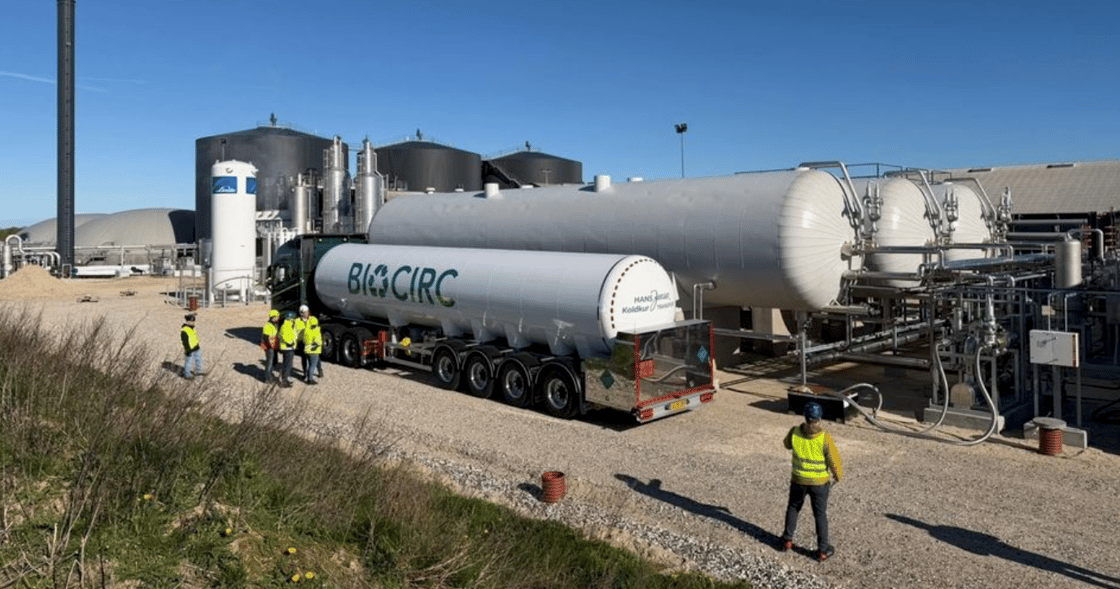
Denmark renewables firm BioCirc has signed a seven-year carbon dioxide storage deal with tech giant Microsoft.
The European company will deliver 650,000 carbon removal units, corresponding to 650,000 tonnes of permanent CO2 displacement, using bioenergy carbon capture and storage (BECCS) technology at five of BioCirc’s eight bioas plants.
It is BioCirc’s largest agreement to date. The company will deliver 100,000 carbon removal units annually, starting from the second half of this year to 2032.
Anette Poulsen, Sales Development Manager at Adding Engineering, said, “This is a strong signal, both for the development of a permanent CO2 displacement and for the role Danish companies can play in the green transition on a large scale. It also shows how much is starting to happen in the intersection between energy, technology, process plants and documentation in recent years.”
Microsoft is ramping up its carbon removal business as it strives to be carbon negative by 2030.
Last month it signed a 15-year deal to purchase 626,000 tonnes of CO2 a Saskatchewan-based BECCS project.
Other projects are ongoing. In Europe, construction is underway to enable carbon to be captured and condensed by so it can be stored, beginning in 2028, deep under the North Sea.
In the US, Lithos Carbon is spreading finely crushed volcanic rock across farmlands to convert carbon into bicarbonate ions that are stored for millennia deep in the ocean.
And in Bolivia, Exomad Green is locking up carbon by processing sustainable forestry residues into biochar, a soil enhancement, using a type of thermal decomposition that was developed to break down organic materials in the absence of oxygen.
By buying a vast majority of global tech-based credits, Microsoft is trying to mature the carbon removal market while offsetting the rising emissions caused by its energy-hungry AI data centres.
Last year it signed agreements to remove 45 million metric tonnes of CO2 with 21 companies.
It included a , involving the capture of 6.75 million tonnes a year of CO2 from a BECCS facility in Louisiana. Construction is slated to begin in 2026, with commercial operations expected by 2029.