By
4 min ago 2 min read
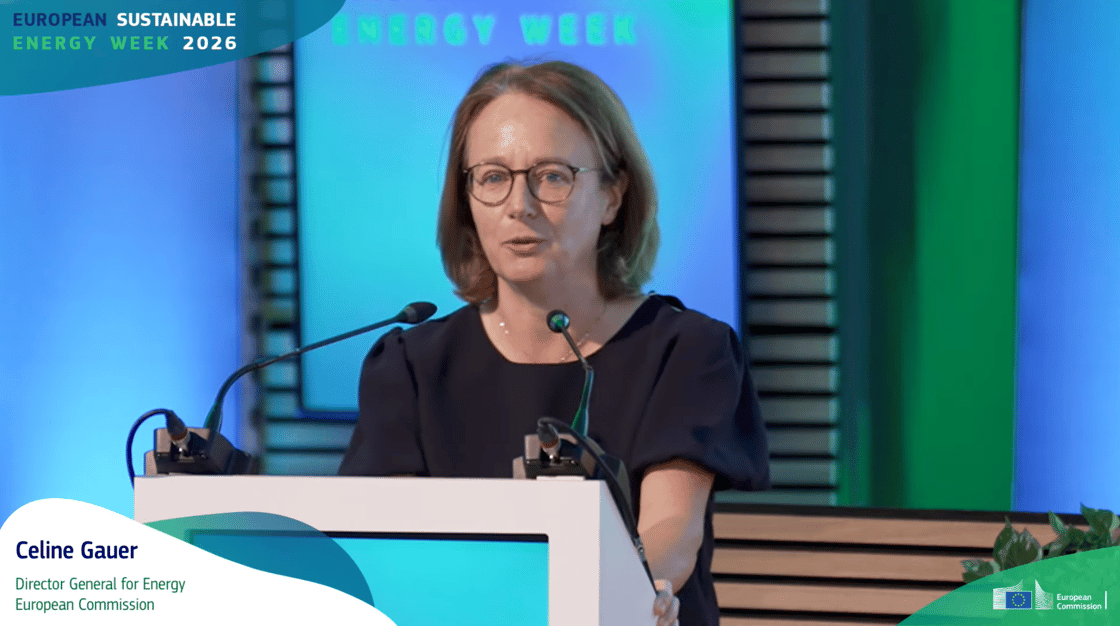
The Middle East crisis has cost European economies €45bn to date, according to the new Director-General for Energy at the European Commission.
Addressing delegates at the European Sustainable Energy Week, Céline Gauer – taking up the role this month – said, “Since 2022, resilience and competitiveness have come to the forefront but the current crisis underscores the urgency on delivering on those objectives. It is putting the public finances of many member states under huge stress.”
She reiterated a recurring message from the first day of the conference, notably that Europe must “drastically reduce” its fossil fuel dependency.
In the short term, the Commission is providing temporary and targeted support.
“The key to delivering that is the electrification of economies,” she said, adding that the three key elements to delivery are predictability, investment and reforms.
“Investments are much more effective when they are combined with reforms. The post-Covid lesson is it is much more effective when combining both.”
Mechthild Worsdorfer, Deputy Director General, Directorate-General for Energy, European Commission, took up the theme of cybersecurity, which is adding another layer of complexity alongside geopolitical upheaval.
“The paradox is here. The very technologies which make our energy more efficient bring new challenges, opening up new attack surfaces,” she said. “Before energy security was mainly about pipelines – now it’s codes, chips and connectivity. Cybersecurity is the backbone of a competitive supply chain.”
The commission recently published a .
The initiative comes as energy systems grow ever more dependent on digitalisation, as rising prices and geopolitical challenges put pressure on industrial competitiveness and purchasing power of businesses.
AI-based operation and maintenance optimisation could save up to €94bn ($110bn) annually by 2035.
A has also been launched, designed to strengthen Europe’s competitiveness, autonomy and geoeconomic position.