New heat-resistant steel developed for BR-1200

The Russian state nuclear corporation said the new type of heat-resistant steel was developed by specialists at the Central Research Institute of Mechanical Engineering Technology (TsNIITMASH), its mechanical engineering division.

It said that the BR-1200 fast neutron reactor’s operating temperature compares with 320-350 degrees Celsius in VVER-type reactors.

Sergei Logashov, Deputy Director General and Director of the Institute of Materials Science at TsNIITMASH, said: “This development is based on our many years of experience creating materials for heavy liquid-metal coolant systems and the use of computer modeling. The resulting material combines the radiation and corrosion resistance required for the BR-1200 primary circuit, thermal stability at temperatures up to 600 degrees Celsius, and, most importantly, surpasses the reference EP302 steel (currently used for nuclear power plant structures operating in contact with liquid-metal coolant) in long-term strength.”

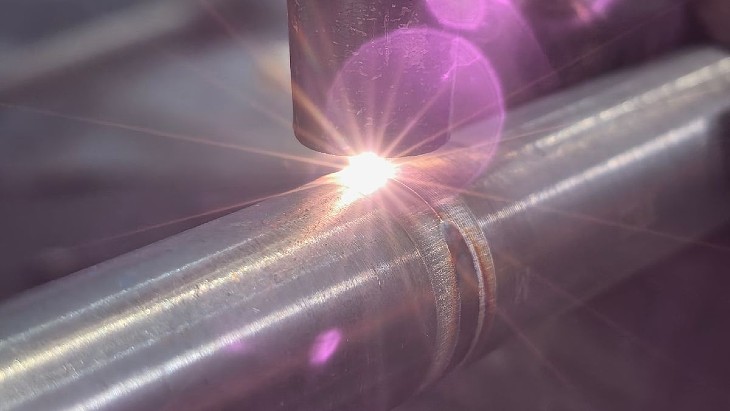
The specialists also tested laser welding technology for austenitic and ferritic-martensitic steels and, Rosatom says, “the studies showed that laser welding significantly increases the productivity of welded structures (compared with traditional arc welding methods, while maintaining high weld quality). Importantly, the new technology can also be implemented on existing reactor units, both VVER and RITM”.

The background

The 1200 MWe (2800 MWt) BR-1200 is a lead-cooled fast reactor under development – its prototype is the BREST-OD-300, which is under construction in Seversk. It is part of Rosatom’s Proryv, or Breakthrough, project to enable a closed nuclear fuel cycle. 

A two-unit BR-1200 nuclear power plant is planned for Seversk, with the units scheduled to come online in 2036 and 2038.
   

  • Related Posts

    Agreement to build German nuclear fusion power plant

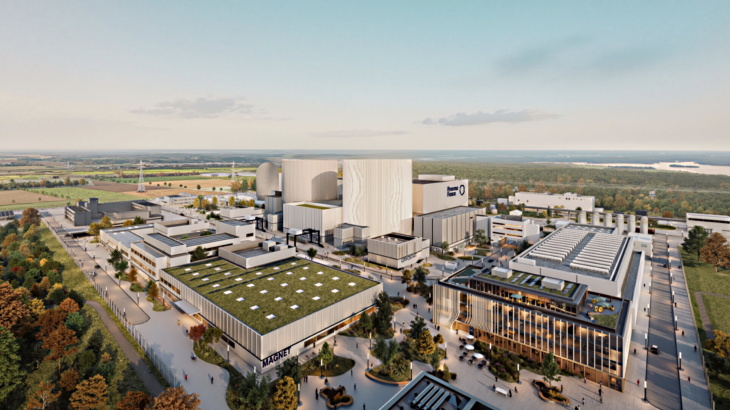
    The memorandum of understanding outlines a roadmap to commercial fusion in Europe that begins with building demonstration stellarator Alpha near the Max Planck Institute for Plasma Physics (IPP) in Garching.…

    First concrete for Kaiga 5 & 6 in India approved

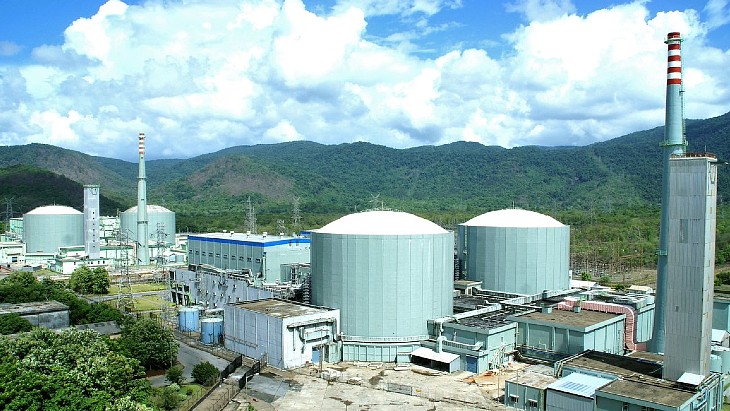
    According to the of the consent, the present status of the project is that “Excavation activities for identified safety-related structures at Kaiga-5&6 have been completed. Post-excavation investigations for Nuclear Building,…

    Have You Seen?

    Oil Prices Tumble as Crucial U.S.-Iran Talks Begin

    • February 26, 2026
    Oil Prices Tumble as Crucial U.S.-Iran Talks Begin

    Angola’s State Oil Firm Looks to Tap into Critical Minerals

    • February 26, 2026
    Angola’s State Oil Firm Looks to Tap into Critical Minerals

    Eni’s Oil and Gas Production Jumps 7% with Six New Projects

    • February 26, 2026
    Eni’s Oil and Gas Production Jumps 7% with Six New Projects

    Oil Drops More Than 1% on US Stockpiles, With US-Iran Talks Also in Focus

    • February 26, 2026
    Oil Drops More Than 1% on US Stockpiles, With US-Iran Talks Also in Focus

    $5 Billion Pipeline Deal Could Be Coming to the Gulf Coast

    • February 26, 2026
    $5 Billion Pipeline Deal Could Be Coming to the Gulf Coast

    Iran Rushes to Ship Oil Ahead of Possible U.S. Strike

    • February 26, 2026
    Iran Rushes to Ship Oil Ahead of Possible U.S. Strike

    Russia to Tighten Budget Fiscal Rule as Oil and Gas Revenues Plunge

    • February 26, 2026
    Russia to Tighten Budget Fiscal Rule as Oil and Gas Revenues Plunge

    Japanese duo inject hydrogen-based synthetic methane into gas grid

    • February 26, 2026
    Japanese duo inject hydrogen-based synthetic methane into gas grid

    Topsoe selected for Petrobras SAF and renewable diesel project in Brazil

    • February 26, 2026
    Topsoe selected for Petrobras SAF and renewable diesel project in Brazil

    First-mover CCUS projects must reach financial close to meet targets urges CCSA

    • February 26, 2026
    First-mover CCUS projects must reach financial close to meet targets urges CCSA