The Northern Lights carbon capture and storage project (CCS) has stored the first volumes of carbon dioxide offshore western Norway, the three oil and gas majors leading the project said on Monday.
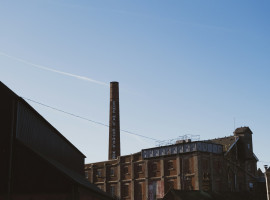
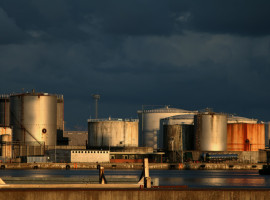
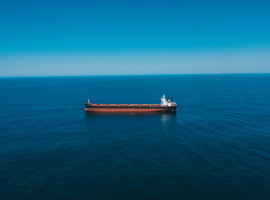
The Northern Lights project partners, Equinor, TotalEnergies, and Shell announced that the first CO2 volumes were successfully transported by vessel from Heidelberg Materials’ cement factory in Brevik, Norway, to Northern Lights’ facilities in Øygarden.
The CO2 was then injected 2,600 meters (8,530 ft) below the seabed into the storage facilities located 100 km (62 miles) off the coast of Western Norway.
The start of injection of CO2 completes the phase 1 of the development, which has a total capacity of 1.5 million tons of CO2 per year (mtpa). The capacity of this phase is fully booked by customers from Norway and Continental Europe.
“With CO2 safely stored below the seabed, we mark a major milestone. This demonstrates the viability of carbon capture, transport and storage as a scalable industry,” Equinor CEO Anders Opedal said in a statement.
“Now, we look forward to leading safe and efficient operations on behalf of the Northern Lights partnership and use this as a stepping stone for the further development of CCS in Europe,” said Irene Rummelhoff, Executive Vice President of MMP in Equinor.
Earlier this year, the partners in the Northern Lights project took the investment decision to expand the transport and storage capacity from 1.5 million to a minimum of 5 million tons of CO2 per year, following a commercial agreement with Swedish energy provider Stockholm Exergi for cross-border transport and storage of up to 900,000 tons of biogenic CO2 annually.
The expansion is enabled by a grant from the Connecting Europe Facility for Energy (CEF Energy) funding scheme, an EU funding program—in a sign that the nascent industry needs considerable government funding support to take off.
By Tsvetana Paraskova for Oilprice.com
More Top Reads From Oilprice.com
- Equinor Uncovers New Oil and Gas in North Sea
- Ørsted Shares Plummet After U.S. Offshore Wind Project Halted
- New Permian Pipeline Project Addresses Growing Gas Demand