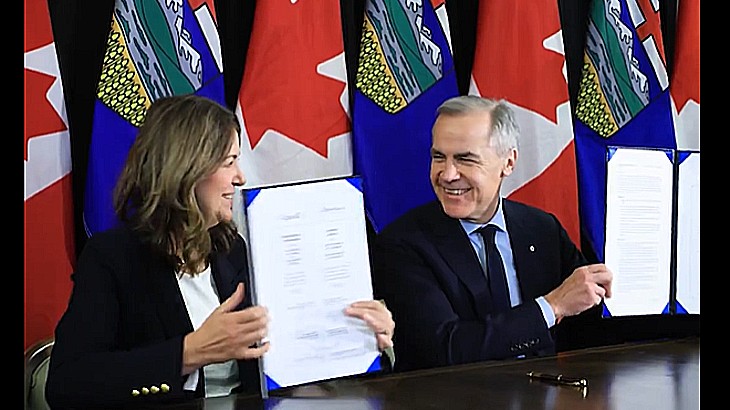
The Canadian government said the memorandum of understanding (MoU) will strengthen Canada’s energy sector, reduce emissions, and deliver substantial economic benefits.
Among Alberta’s commitments under the MoU, the province, “on or before” 1 January 2027, is to “collaborate with Canada to develop a nuclear generation strategy to build and operate competitive nuclear power generation that can serve the Alberta and inter-connected markets by 2050”.
The federal government commits to “work collaboratively with Alberta to design policy supports that enable deployment of nuclear technology, CCUS and energy storage to enable decarbonisation of the electricity system, while ensuring its reliability and affordability”. The construction of what the MoU describes as the world’s largest carbon capture, utilisation, and storage (CCUS) project features in the agreement, which it says would lower the intensity of Alberta’s oil production.
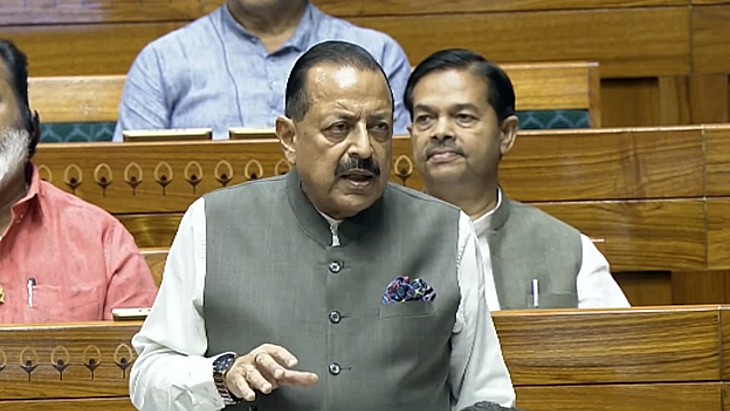
“In the face of global trade shifts and profound uncertainty, Canada and Alberta are striking a new partnership to build a stronger, more sustainable, and more independent Albertan and Canadian economy. We will make Canada an energy superpower, drive down our emissions and diversify our export markets. We want to build big things, and we’re building bigger and faster together,” Carney said.
Alberta does not currently have any nuclear power capacity, but construction of a plant featuring two to four Candu Monark reactors on a site in the Peace River area of Northern Alberta has been proposed by Energy Alberta. Earlier this year, the province launched a public engagement initiative and public survey about nuclear energy’s potential to meet future energy needs. More recently, Westinghouse and Energy Alberta signed a memorandum of understanding to collaborate on exploring the deployment of an AP1000.
There is also interest in Alberta centered on using nuclear power in the extraction of oil from the province’s extensive oil sands (tar sands) deposits, which currently relies on natural gas. Small modular reactors are seen as potentially being a good fit with the oil sands industry: a study by X-energy Canada has confirmed the feasibility and benefits of repurposing an existing thermal generation site in Alberta with X-energy’s small modular reactors.
The MoU declares an Albertan project to build a privately financed and constructed and Indigenous co-owned bitumen pipeline as a national priority, as well as proposing that Alberta is exempted from Canada’s Clean Electricity Regulations, with the province instead committing to a new long-term carbon pricing agreement. These measures have proved controversial: Steven Guilbeault, who served as Canada’s Minister of Environment and Climate Change from 2021 to 2025, announced his resignation from his current ministerial roles, including Minister of Canadian Identity and Culture, following the signature of the MoU, in protest at the measures.
However, Alberta’s premier was upbeat. “This is Alberta’s moment of opportunity to take the first steps toward being a global energy superpower and show the nation that resource development and sustainability can coexist. There is much hard work ahead of us, but today is a new starting point for nation building as we increase our energy production for the benefit of millions and forge a new relationship between Alberta and the federal government,” Smith said.