By
- Attacks have cut Saudi oil output by 600,000 bpd, state news agency says
- Shipping at near-standstill in Strait of Hormuz
- Brent down 12.7%, WTI down 13.4% this week
- Russia’s crude exports from western ports has increased
- Baker Hughes says U.S. rig count down 7%
NEW YORK, April 10 (Reuters) – Oil futures settled lower on Friday and posted their biggest weekly decline since 2022 ahead of talks between Iran and the U.S. aimed at securing a permanent ceasefire.
Get the Latest US Focused Energy News Delivered to You! It’s FREE:
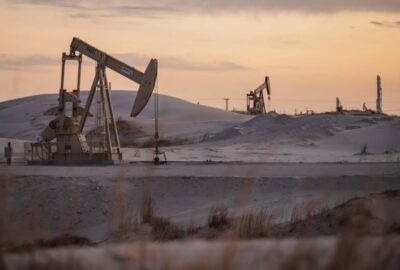
Crude futures hovered near $100 a barrel as attacks continued and the flow of oil through the Strait of Hormuz remained heavily restricted, and concerns lingered over potential supply disruptions in Saudi Arabia. Prices in the physical market were at record highs.
Brent futures settled down 72 cents, or 0.8%, at $95.20 a barrel, capping a week in which contracts fell 12.7%. The decline followed a sharp selloff after Iran and the U.S. agreed on Tuesday to a two‑week ceasefire brokered by Pakistan.
It was Brent’s steepest weekly loss since August 2022.
U.S. West Texas Intermediate crude futures fell $1.30, or 1.3%, to settle at $96.57 a barrel, with a weekly decline of 13.4%, its largest since April 2020 during lockdowns for the pandemic.
“The key issue for the oil market is whether ship traffic through the Strait of Hormuz will resume. So far, there are no signs of this happening. If oil supplies from the Persian Gulf remain blocked, oil prices are likely to rise again,” Commerzbank analysts said in a note on Friday.
Traffic through the strait remained less than 10% of normal volumes as Tehran warned ships to keep to its territorial waters. Most ships that have sailed through the Strait in the past day were linked to Iran, ship-tracking data showed on Friday.
Iran wants to charge fees for ships to pass through the strait under a peace deal, a Tehran official told Reuters on April 7. Western leaders and the United Nations’ shipping agency have pushed back on that idea.
The crucial artery for oil and gas flows has been effectively shut down by the conflict that began when the U.S. and Israel launched air strikes against Iran on February 28.
More than 60 energy infrastructure assets across the Gulf have been hit by drone and missile strikes. While most attacks are not expected to cause prolonged disruptions, at least eight facilities face lengthy repair timelines, according to a Thursday note from Natasha Kaneva, head of global commodities research at J.P. Morgan.
Middle East producers shut in about 7.5 million barrels per day (bpd) of crude oil production in March as storage capacity tightened, with outages projected to rise to 9.1 million bpd in April, the Energy Information Administration said in a report earlier this week.
The sharp hit to global oil production from the Iran war is poised to flip the oil market into a supply deficit this year, analysts say, a huge swing in forecasts that erases previous expectations of comfortable oversupply.
Still, producers in the Middle East have asked Asian refiners to submit crude oil loading programmes for April and May in preparation for the eventual resumption of shipping through the Strait of Hormuz, three sources with knowledge of the matter said.
SAUDI DISRUPTION, RUSSIA WAIVER
Prices steadied on Friday as investors balanced lower Saudi output with diplomatic progress. Saudi state news agency SPA reported on Thursday that attacks on Saudi energy facilities have cut the kingdom’s oil production capacity by about 600,000 barrels per day and reduced its East-West Pipeline throughput by about 700,000 bpd.
Meanwhile, Lebanon said it intends to take part in a meeting with U.S. and Israeli representatives in Washington next week to discuss and announce a ceasefire.
U.S. President Donald Trump’s administration is likely to extend as soon as Friday a waiver allowing countries to buy some sanctioned Russian oil and petroleum products, two sources familiar with the matter told Reuters.
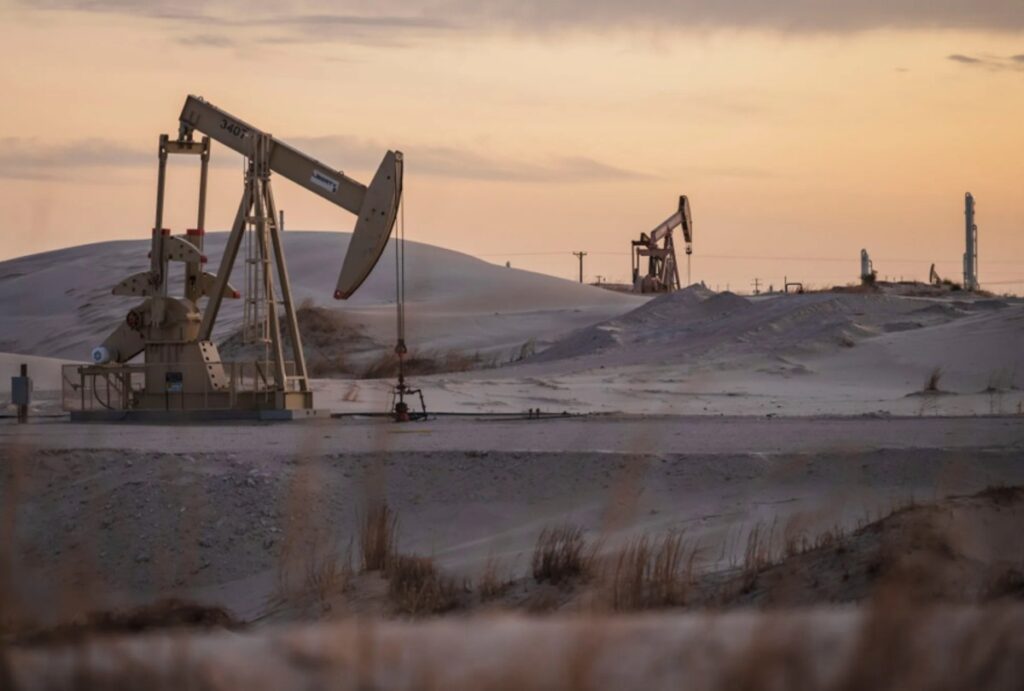
U.S. energy firms this week cut the number of oil and natural gas rigs operating for the third time in four weeks, Baker Hughes <BKR.O> said in its closely followed report on Friday. This week’s decline puts the total rig count down 38 rigs, or about 7% below this time last year, the energy services firm said.
Russia’s crude oil exports from its main western ports increased in early April compared with March, according to trading sources and Reuters calculations, despite disruptions to loadings caused by drone attacks on energy infrastructure.
Reporting by Siddharth Cavale in New York, Robert Harvey in London, Colleen Howe in Beijing and Siyi Liu in Singapore Editing by David Goodman, Christina Fincher and David Gregorio
Share This:
More News Articles