By
- Saudi-flagged crude oil tanker damaged near Hormuz after LNG tanker hit, sources say
- Saudi Arabia considers expansion of oil pipeline to Red Sea, sources say
- Ukrainian drones strike eight tankers from Russia’s ‘shadow fleet’
NEW YORK, July 7 (Reuters) – Oil prices settled 3% higher on Tuesday and then extended gains post-settlement, after the U.S. revoked the general license that authorized the sale of Iranian crude oil. Reports of attacks on vessels near the Strait of Hormuz also revived fears of disruptions to tanker shipping.
Get the Latest US Focused Energy News Delivered to You! It’s FREE:
Brent crude futures settled up $2.17, or 3.01%, to $74.16 a barrel, while U.S. West Texas Intermediate crude rose $1.89, also 2.76%, to $70.44 a barrel.
In post-settlement trade, the global benchmark climbed $1.87 to $76.03 and WTI jumped $1.76 to $72.2 at 3:26 p.m. ET (1926 GMT) after the U.S. revoked a general license that authorized the sale of Iranian oil. Both benchmarks were up more than 5% from the previous day’s settlement prices.
The U.S. warned that Iran’s actions in the Strait of Hormuz were “wholly unacceptable” and would be met with consequences after attacks on tankers in the strategic waterway, a U.S. official said on Tuesday.
The U.S. move came after three tankers were hit in the Strait of Hormuz on Tuesday, including a Qatari liquefied natural gas carrier that Qatar said was struck by an Iranian drone.
A Saudi-flagged crude oil tanker, believed to be the supertanker Wedyan, was also damaged off Oman. The cause was not immediately clear.
“Obviously today is the next level of breakaway from the memorandum of understanding,” said Bob Yawger, director of energy futures at Mizuho, adding it was unclear whether Iran’s actions were aimed at exerting authority over the Strait of Hormuz or were primarily a show of strength during mourning ceremonies for the slain Supreme Leader Ayatollah Ali Khamenei.
In June, the U.S. and Iran signed a memorandum of understanding aiming to end the Iran war and reopen the Strait of Hormuz.
Yawger said the U.S. decision to revoke the oil license was a signal that Iran had gone too far but added he did not expect the move to have a lasting impact on Tehran’s ability to export crude or on the prospects for a broader agreement. “I don’t think it’s in either side’s interest not to get a deal done,” he said.
“This shows just how fragile the ceasefire actually is. Further attacks could sporadically appear in the coming months and this will further add to the volatility,” said Ajay Parmar, director of energy and refining at ICIS. “Just one disagreeable message from one side could bring anger to the other, and remember if Iran merely threatens to close the Strait of Hormuz again, prices will spike considerably. As such, we firmly believe that volatility really is here to stay.”
“Renewed tensions in the Middle East and concerns over the vessel attacks could drag lower oil exports from the Middle East,” UBS analyst Giovanni Staunovo said.
Talks to reach a final deal between Tehran and Washington will not take place if U.S. threats continue, Iran’s foreign minister said on Tuesday, following U.S. President Donald Trump’s threat to “finish the job” unless a deal is done.
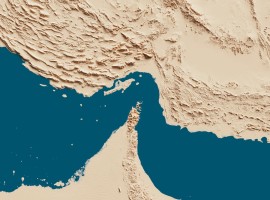
Investors are monitoring talks between the U.S. and Iran and their implications for shipping through the Strait of Hormuz, which prior to the beginning of the Iran war carried a fifth of the world’s daily supply of oil and LNG.
Also on Tuesday, Kyiv’s military said Ukrainian drones struck eight tankers from Russia’s “shadow fleet” of aging vessels used to bypass sanctions that were delivering fuel to Crimea overnight.
Reporting by Nicole Jao in New York, Anushree Mukherjee and Pranav Mathur in Bengaluru and Emily Chow in Singapore; Additional reporting by Ahmad Ghaddar in London; Editing by Jacqueline Wong, Jamie Freed, Barbara Lewis, Joe Bavier and David Gregorio
Share This:
More News Articles