December 22 (Reuters) – Oil tanker loadings slowed on Monday in Venezuela, with most vessels carrying oil shipments only between local ports, sources and ship tracking data showed, following U.S. actions targeting two more ships and as Venezuelan state oil company PDVSA struggles to recover from a cyberattack.
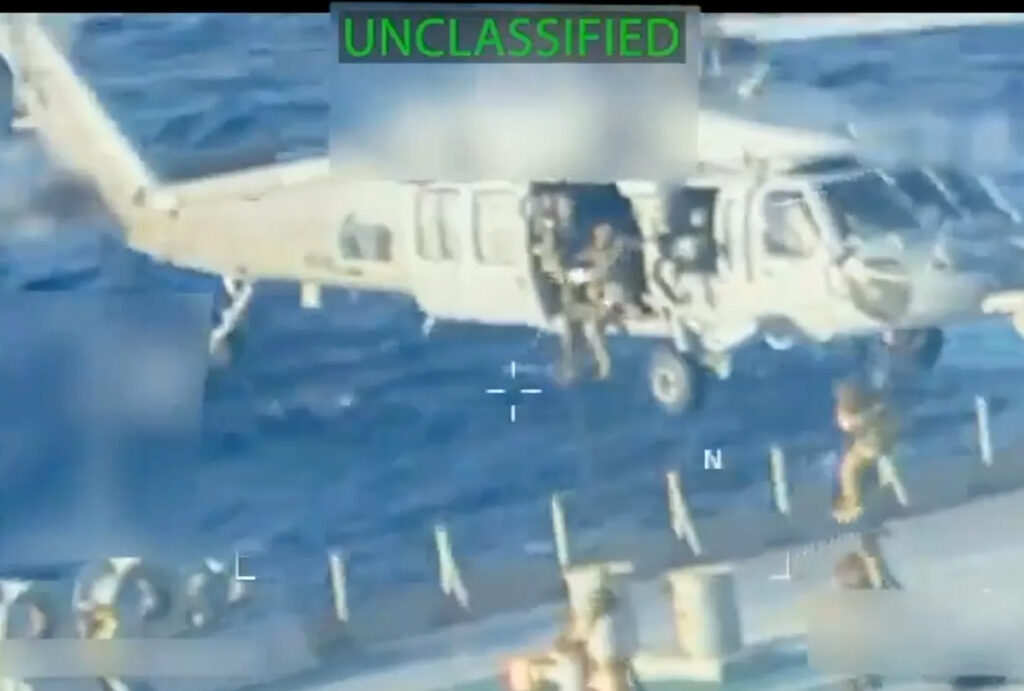
U.S. authorities said the U.S. Coast Guard this month detained a sanctioned supertanker carrying Venezuelan oil and tried to intercept two Venezuela-linked vessels earlier this week, one an empty U.S.-sanctioned vessel and the other a fully loaded, non-sanctioned oil tanker bound for China.
Get the Latest US Focused Energy News Delivered to You! It’s FREE:
Washington has not provided updated information about the two ships. Last week, US President Donald Trump announced a blockade on all sanctioned oil tankers entering and leaving Venezuela. Trump’s pressure campaign against Venezuelan President Nicolás Maduro has included bolstering the US military presence in the region and launching more than 20 raids on ships the US claims are transporting drugs in the Pacific and Caribbean Seas near the South American nation. At least 100 people have been killed in these attacks.
Brent crude futures rose 2.17 percent to $61.78 a barrel on Monday, while U.S. West Texas Intermediate crude climbed 2.2 percent to $57.77 a barrel following U.S. actions and amid Russia’s war against Ukraine, as both developments raised concerns about supply disruptions.
The number of loaded tankers that have not left Venezuela has increased in the past few days, leaving millions of barrels of Venezuelan oil stuck on ships, while customers demand bigger discounts and contract changes to make risky voyages off the country’s coasts.
Data from the London Stock Exchange Group today showed that some tankers approaching the Venezuelan coast changed course or stopped until they received instructions from their owners.
Venezuela’s state-owned oil company is working to restore some of its online systems and is resorting to manual accounting after suffering a cyberattack last week. Sources said the company has not yet fully restored its central administrative system, and some employees did not receive their salaries on time.
The state oil company and Venezuela’s oil ministry did not respond to requests for comment. Venezuelan Foreign Minister Ivan Gil said on Monday that the U.S. seizures violated international law and constituted “acts of piracy.”
The Chinese Foreign Ministry said today that the US interceptions represent a serious violation of international law.
Data showed that Chevron, the main partner of Venezuela’s state oil company, shipped a cargo of Venezuelan oil equivalent to 500,000 barrels on Sunday, bound for the U.S. Gulf Coast on one of its tankers, with authorization from Washington.
Venezuelan Oil Minister Delcy Rodriguez said on Sunday that Caracas had not halted deliveries to Chevron, in a social media post that included a video of Venezuelan maritime authorities overseeing the ship’s departure.
According to the data, Chevron shipped seven cargoes of Venezuelan oil to the United States this month, each carrying between 300,000 and 500,000 barrels.
Prepared by Abdul Hamid Makawi for the Arabic Bulletin – Edited by Ali Khafaji
Share This:
More News Articles