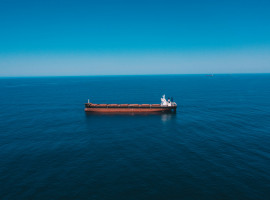
Oil markets remained volatile in early Asian trade on Monday as Trump attempts to form a broader coalition of countries to protect shipping through the Strait of Hormuz amid fresh attacks on energy infrastructure across the Middle East.
At the time of writing, West Texas Intermediate had dipped 0.53% to $98.19 after an initial surge, while Brent was continuing its climb, rising 0.41% to $103.60 per barrel.
The volatility follows a weekend of escalation in the Middle East conflict, beginning on Friday evening when the U.S. bombed military assets on Kharg Island, the heart of Iran’s oil export system. Iran responded by warning the UAE to evacuate three major ports, claiming the ports had been used by the U.S. to launch strikes.
On Saturday, a drone attack resulted in a fire that halted oil loadings at the UAE’s Port of Fujairah. Oil loadings later resumed, with reports that the fire had started from debris after the drone had been successfully intercepted. The same day, a missile struck inside the U.S. embassy compound in Baghdad, leading the U.S. to update a security alert telling citizens to leave the country.
By Sunday, there were further reports of attacks across the region, including strikes on the Ali Al Salem base in Kuwait, Baghdad International Airport, and Dubai International Airport. The UAE said it had been attacked by four ballistic missiles and six drones from Iran, while Saudi Arabia reported intercepting 37 drones in a matter of hours in its eastern region, home to major oil installations.
To counter the escalating supply risk in the region, Japan began releasing oil reserves on Monday, starting with 15 days of private-sector reserves and then one month of state-held stocks, for a total of about 80 million barrels. The move underscores how seriously Asian importers are treating the supply threat from Hormuz.
Washington, meanwhile, insisted that the crisis will be temporary, with U.S. Energy Secretary Chris Wright saying on Sunday that the war will “certainly come to the end in the next few weeks” and that energy prices would begin to ease afterward.
President Trump, meanwhile, said he was in talks with several countries about forming a coalition to reopen and police the Strait of Hormuz, though he declined to identify which governments might join. He said such an operation would begin immediately once a coalition was in place.
Saudi Crown Prince Mohammed bin Salman and UAE President Sheikh Mohammed bin Zayed also condemned the continued Iranian attacks on Gulf states in a phone call, calling them a serious escalation that threatens regional security and stability.
For oil traders, the focus will be on tanker flows through the Strait of Hormuz and any further attacks on infrastructure or production. While reserve releases and messaging may move prices temporarily, this is ultimately a question of supply fundamentals and logistics.
By Josh Owens for Oilprice.com
More Top Reads From Oilprice.com
- Trump Bombs Iran’s Kharg Island and Threatens to Hit Oil Exports
- Goldman Sachs Hikes Brent Oil Forecast to Over $100 for March
- Banks Hike Oil Price Forecasts, and Some See $150 Crude