Summary
- Iran faces 8 p.m. Washington deadline to open Strait of Hormuz
- Trump threatens to order attacks on Iran’s bridges, power plants
- Iran rejects temporary ceasefire, demands permanent end to conflict
- WTI premium to Brent widens
(Reuters) – Oil prices rose on Tuesday ahead of a deadline set by U.S. President Donald Trump for Iran to open the Strait of Hormuz or face attacks on power plants and other infrastructure.
Brent crude futures were up $1.39, or 1.27%, at $111.16 a barrel by 1209 GMT while U.S. West Texas Intermediate crude was close to a four-week high at $116 a barrel, up $3.58 or 3.18%.
Get the Latest US Focused Energy News Delivered to You! It’s FREE:
Typically WTI trades at a discount to Brent, but this has reversed in a market where barrels for earlier delivery command a higher price. The benchmark WTI contract is for May delivery while Brent is for June.
“What appears to be a shift in relative value is, in reality, a reflection of how aggressively the market is pricing immediacy,” Saxo bank analyst Ole Hansen said in a note.
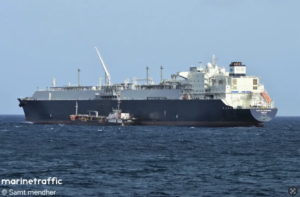
Trump has given Iran until 8 p.m. in Washington (midnight GMT) to reopen the Strait of Hormuz, through which about a fifth of global oil supply is normally shipped. Iranian forces effectively shut the strait after U.S. and Israeli attacks began on February 28.
If Tehran fails to comply, Trump said “every bridge in Iran will be decimated” by midnight EDT (0400 GMT) on Wednesday and “every power plant in Iran will be out of business, burning, exploding, and never to be used again.”
Strikes on Iran intensified on Tuesday, including attacks on railway and road bridges, an airport and a petrochemical plant, and power lines, according to Iranian media.
Responding to a U.S. proposal through mediator Pakistan, Iran rejected a ceasefire and said a permanent end to the war was necessary, pushing back against pressure to reopen the strait.
Disrupted exports from Gulf oil producers have sent oil prices soaring. This has meant a financial windfall for those still able to export – Iran, Oman and Saudi Arabia – while other states have lost billions of dollars, a Reuters analysis found.
The U.N. Security Council is expected to vote on Tuesday on a resolution to protect commercial shipping in the strait, but in significantly watered down form after veto-wielding China opposed authorising force, diplomats said.
Alongside the unusual U.S. crude oil futures premium over Brent, the conflict has sent spot premiums for WTI crude surging to record highs as Asian and European refiners scramble to replace Middle Eastern supply.
State firm Saudi Aramco raised the official selling price of its Arab Light crude to Asia for May delivery, setting a record premium of $19.50 a barrel above the Oman/Dubai average.
Kazakhstan’s energy ministry said on Tuesday its oil exports via the Black Sea were stable a day after Russia said Ukrainian drones had hit the Caspian Pipeline Consortium’s terminal, which handles 1.5% of global oil supply.
OPEC+ oil producing nations agreed on Sunday to raise their May oil output quotas by 206,000 barrels per day, though the increase will be largely notional as key members cannot boost production because of the Hormuz closure.
Additional reporting by Anmol Choubey in Bengaluru and Emily Chow in Singapore; editing by Susan Fenton, Emelia Sithole-Matarise and Jason Neely
Share This:
More News Articles