Summary
- Oil futures rise on the week
- US imposes new Iran-related sanctions amid diplomatic efforts
- US oil and natural gas rig count falls for eighth straight week, first time since September 2023
- EU abandons proposal to lower Russian oil price cap
(Reuters) – Oil prices settled down on Friday as the U.S. imposed new Iran-related sanctions, marking a diplomatic approach that fed hopes of a negotiated agreement, a day after President Donald Trump said he might take two weeks to decide U.S. involvement in the Israel-Iran conflict.
Brent crude futures settled down $1.84, or 2.33%, to $77.01 a barrel.
Get the Latest US Focused Energy News Delivered to You! It’s FREE:
U.S. West Texas Intermediate crude for July – which did not settle on Thursday as it was a U.S. holiday and expires on Friday – was down 21 cents, or 0.28%, at $74.93.
The more liquid August contract settled at $73.84.
Brent rose 3.6% on the week, while front-month U.S. crude futures increased 2.7%.
The Trump administration issued fresh Iran-related sanctions, including on two entities based in Hong Kong, and counter-terrorism-related sanctions, according to a notice posted to the U.S. Treasury Department website.
The sanctions target at least 20 entities, five individuals and three vessels, according to Treasury’s Office of Foreign Asset Control.
“Those sanctions are cutting both ways. They may be part of a broader negotiation approach towards Iran. The fact they are undertaking this is a signal they are trying to resolve this outside of conflict,” said John Kilduff, partner at Again Capital in New York.
Oil prices jumped almost 3% on Thursday after Israel bombed nuclear targets in Iran, while Iran – OPEC’s third-largest producer – fired missiles and drones at Israel. Neither side showed any sign of backing down in the week-old war.
Brent prices retreated after the White House said Trump would decide whether the United States would get involved in the Israel-Iran conflict in the next two weeks.
“Although a major escalation is yet to occur, risks to supply from the region remain high, still hinging upon the potential for U.S. involvement,” said Russell Shor, senior market analyst at Tradu.com.
Israel’s UN ambassador said Israel seeks genuine efforts on Iran’s nuclear capabilities from Friday’s meeting between European and Iranian ministers, not just another round of talks.
“However, while Israel and Iran carry on pounding away at each other, there can always be an unintended action that escalates the conflict and touches upon oil infrastructure,” PVM analyst John Evans said.
Iran in the past has threatened to close the Strait of Hormuz, a vital route for Middle East oil exports.
Oil exports so far have not been disrupted and there is no shortage of supply, said Giovanni Staunovo, an analyst at UBS.
“The direction of oil prices from here will depend on whether there are supply disruptions,” he said.
An escalation of the conflict in such a way that Israel attacks export infrastructure or Iran disrupts shipping through the strait could lead to oil at $100 a barrel being a reality, said Panmure Liberum analyst Ashley Kelty.
Elsewhere, the EU has abandoned its proposal to lower the price cap on Russian oil to $45, Bloomberg reported.
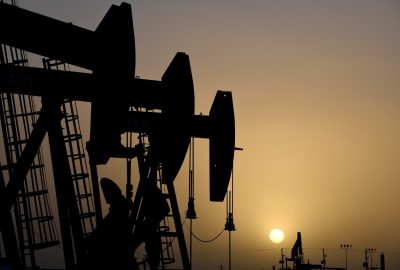
U.S. energy firms this week cut the number of oil and natural gas rigs operating for an eighth week in a row for the first time since September 2023, energy services firm Baker Hughes said in its closely followed report.
The oil and gas rig count, an early indicator of future output, fell by one to 554 in the week to June 20, the lowest since November 2021.
Reporting by Georgina McCartney in Houston, Seher Dareen in London, Sudarshan Varadhan and Florence Tan; editing by David Evans, Jason Neely, David Gregorio, Leslie Adler, Rod Nickel
Share This:
More News Articles