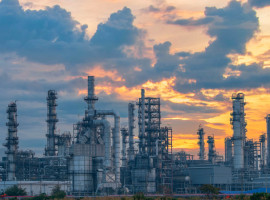
Oil prices skyrocketed in early Asian trading on Thursday after President Trump announced new sanctions on Russia’s two largest oil producers, Lukoil and Rosneft, marking the first Ukraine-related sanctions of his second term. Brent crude futures jumped 5.53% to $66.05 per barrel, while WTI crude futures surged 6.05% to $62.04 per barrel, as traders weighed the immediate threat to Russian supply. The measures, announced late Wednesday in Washington, came as Trump’s frustration with Putin has grown over the ongoing war in Ukraine.
The spike in prices is directly attributed to the prospect of significantly curtailed Russian oil supply hitting the global market due to the U.S. sanctions, which target the two major state-controlled energy companies. The sanctions followed a 19th package of restrictions approved by the European Union that includes a ban on Russian liquefied natural gas imports, and a similar move by the United Kingdom last week, sanctioning the same Russian energy giants. “Given President Putin’s refusal to end this senseless war, Treasury is sanctioning Russia’s two largest oil companies that fund the Kremlin’s war machine,” said U.S. Treasury Secretary Scott Bessent in a statement. He added that Washington “encourages our allies to join us and adhere to these sanctions.” The Treasury also sanctioned dozens of subsidiaries of the two companies, blocking their U.S. assets and prohibiting American entities from doing business with them.
The sanctions mark a significant policy shift for Trump, who had previously avoided targeting Russian oil firms, opting instead for tariffs and trade measures. Earlier this year, Trump imposed 25% tariffs on Indian goods in retaliation for New Delhi’s continued purchases of discounted Russian oil. The White House has so far avoided sanctioning Chinese buyers, another key market for Russian crude. Since the $60 per barrel price cap on Russian oil was introduced by Western nations in 2022, Russia has rerouted much of its crude exports from Europe to Asia, with India and China becoming its top customers.
Oil prices had fallen earlier in the week amid renewed fears of oversupply and concerns about weakening global demand due to tensions between Washington and Beijing. On Tuesday, Brent crude fell for a second consecutive session, touching its lowest levels in nearly five months before rebounding on the sanctions news. Analysts said the U.S. action could have far-reaching implications for global oil flows and prices if enforced aggressively. Edward Fishman, a former U.S. State Department official now at Columbia University, warned Reuters that, “This can’t just be one and done.” Jeremy Paner, a former Treasury Department sanctions investigator now with Hughes Hubbard & Reed, said the absence of sanctions on banks or non-Russian buyers such as India and China meant the measures “will not get Putin’s attention.”
Trump told reporters he canceled a planned summit with Putin in Hungary, saying it “didn’t feel like the right time,” but expressed hope that the oil sanctions would be temporary. “I like to remove sanctions quickly,” Trump said, citing the risks they pose to the U.S. dollar’s dominance in global trade, as Russia increasingly seeks payment for oil in other currencies.
The sanctions will likely keep oil prices supported in the short term, particularly as traders weigh the potential for retaliatory moves from Moscow. In the medium to long term, a downward move remains likely if the sanctions fail to curtail Russian exports meaningfully or if global demand remains weak. It seems the only certainty in today’s oil markets is volatility.
By Charles Kennedy for Oilprice.com
More Top Reads From Oilprice.com:
- India May Reduce Russian Oil Imports for Trade Deal
- Japan’s New PM Pushes for Faster Nuclear Reactor Restarts
- Kazakhstan to Keep New Fuel Price Freeze Until Spring