Monday, 4 August 2025
Poland’s National Atomic Energy Agency has issued a new operating licence for the MARIA nuclear research reactor, operation of which was suspended after its previous licence expired at the end of March.
_98198.jpg)
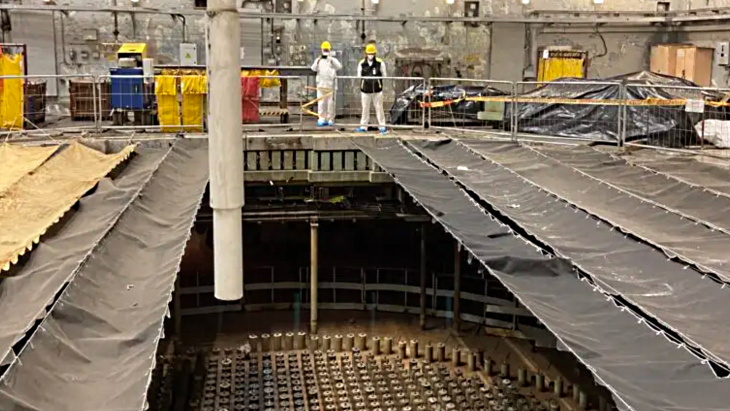
MARIA is the only operating nuclear reactor in Poland. The high flux research reactor – located at the Świerk Research Centre about 30 kilometres south-east of Warsaw – is a water and beryllium moderated reactor of a pool type with graphite reflector and pressurised channels containing concentric six-tube assemblies of fuel elements. The 30 MWt reactor achieved first criticality in December 1974.
The National Centre for Nuclear Research (NCBJ) submitted an application to the National Atomic Energy Agency (NAEA) for a new permit to operate MARIA, along with the required documents, on 20 August last year. However, NCBJ was repeatedly requested to provide clarifications and supplement the documentation. Due to the lack of a permit from 1 April, the reactor’s operation has been suspended until a new permit is issued.
The NAEA said the decision by its president to issue a new licence for an indefinite period was “preceded by a months-long analysis and evaluation of all documents attached to the application, during which the applicant was repeatedly requested to provide clarifications and additional information on issues that were unclear but related to the facility’s operational safety”.
“Receiving the new permit confirms the high level of safety of our infrastructure and the competence of the team of engineers, physicists, and specialists involved in the operation of the MARIA reactor,” said Agnieszka Pollo, acting director of NCBJ. “We thank the Polish Atomic Energy Agency for its substantive and responsible cooperation, and all domestic and international partners for their trust during the reactor’s outage. We are initiating the procedure to resume the reactor’s operation and will continue its research and service mission.”
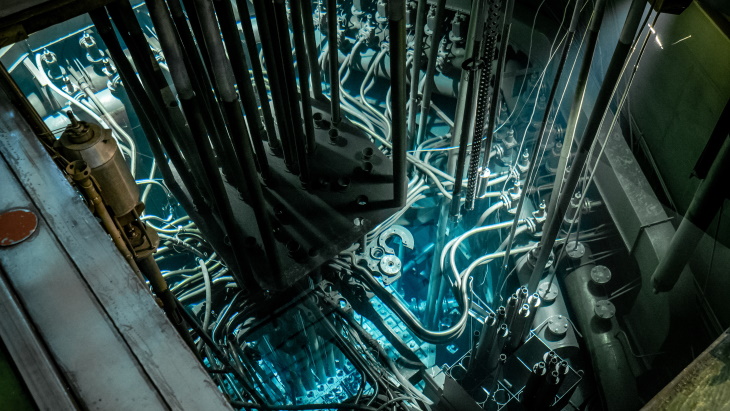
The MARIA reactor (Image: NCBJ)
“This is very good news for us, and even a relief,” said Polish Energy Minister Miłosz Motyka. “The reactor plays a very important role, but nuclear safety requirements must always be met. Now that all the necessary analyses and procedures have been properly prepared and approved, MARIA can return to work, and the priority is to implement the modernisation programme, which will allow it to operate for another 20 years.”
In June 2023, Poland’s Council of Ministers adopted a resolution on the modernisation of the MARIA nuclear research reactor, enabling its operation after 2027. According to NCBJ, it could operate for another 30 years, subject to sufficient funds for operating it and modernisation.
For many years, MARIA has played a key role in the production of medical radioisotopes, including molybdenum-99, accounting for a portion of the global supply. Furthermore, it provides an important base for research in nuclear physics, materials science, and nuclear energy, as well as for staff training for the implementation of Poland’s nuclear power programme.