The prospect of a deal between the US and Iran appeared to be gaining traction on Tuesday, after Qatar said a proposal had been drafted and American Treasury Secretary Scott Bessent sounded hopeful on an agreement to reopen the Strait of Hormuz.
Oil reversed earlier gains, and US government bonds rallied, on optimism that mediators will be able to broker a deal and avoid major American airstrikes on Iran. Brent crude traded below $82 a barrel, dropping 2.5%.
Both Qatar and Bessent cautioned there’s no solid agreement yet and Iran has not signaled there’s been progress on Hormuz.
“We’re in talks with the Iranians and I think there is a chance we may have a deal today or tomorrow to open the strait,” Bessent said to CNBC on Tuesday. Asked whether there would be a toll on maritime traffic, he added: “I think it would be freedom of movement.”
Bessent’s comments came after the foreign ministry of Qatar, one of the main mediators between Washington and Tehran, said a proposed de-escalation resolution was “being circulated between the parties.”
A Qatari spokesman said he couldn’t provide a timeline for a pact and that the focus is on finding a short-term resolution to avoid a further confrontation.
It’s unclear if Qatar was referring to negotiations between Iran and Oman to get more ships sailing through the Strait of Hormuz.
Tensions have ramped up in recent days, with Trump saying he was giving Iran a final chance to reach a deal. Over the weekend, he held off on attacks — likely along with Israel — he said would have been the largest since World War II.
“I want to give them every last chance before decapitation,” Trump told reporters on Monday. “You’ll find out today or tomorrow. I mean, they’re going to go quickly, one way or the other. It’s not very complex.”
A diplomatic resolution appears to hinge on the talks between Oman and Iran. Iran continues to take a hard line on the waterway. It insists it has the right to manage maritime traffic and stop vessels that try to sail through the chokepoint without its permission.
Iran’s stance underscores the difficulty Trump has faced in wrapping up a war he started in late February and that’s sent energy prices soaring, hurting the US leader and his Republican Party ahead of midterm elections in November.
The Islamic Republic has vowed to retaliate fiercely against any big US-Israeli strikes. Throughout the conflict, it has shown the ability to cause significant damage to Gulf Arab states such as Kuwait, Bahrain, Saudi Arabia and the United Arab Emirates.
Trump has regularly backed down from threats to launch massive attacks on Iran. If he opts for them this time, that would likely push out oil prices further.
A senior Iranian official called on the US to “take the first step and change its behavior” by returning to the terms of an interim peace deal the sides reached in June. Mohsen Rezaee, adviser to Iran’s supreme leader, told state television on Monday that “US warships and bases will be in serious danger” if Trump doesn’t lift a blockade of Iranian ports.
Bloomberg reported last week that Muscat and Tehran were discussing reopening the so-called through Hormuz. It has, however, been mined by Iran, according to people familiar with the matter, and may have to be cleared before vessels use it on a regular basis.
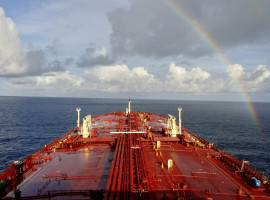
The chokepoint, a for supplies of oil, liquefied natural gas and other commodities such as fertilizers, remains all but shut. Hardly any ships are sailing through, at least with their transponders turned on. Most that do are going on a northern route close to Iran’s shores with Iranian permission, or on a southern one nearby Omani territory.
Trump said “there’s not going to be charging” for access to the strait, something Tehran has set as a key condition of any deal.