By
2 hours ago 3 min read
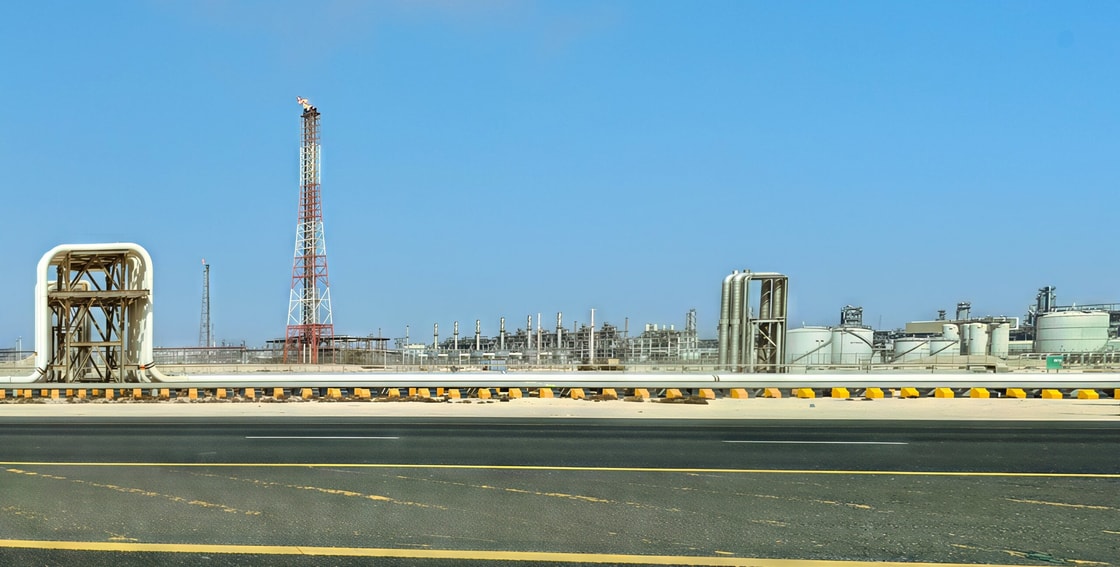
QatarEnergy has confirmed an internal explosion during the restart of the Ras Laffan liquefied natural gas (LNG) facility on Sunday evening (21 June).
The incident was caused by a technical malfunction during operations at a factory in Ras Laffan Industrial City, one of the world’s most strategically important gas hubs.
Qatar’s Interior Ministry said 54 people were injured and 18 remain missing. A search and rescue group, along with civil defence teams, are looking for those missing.
Ras Laffan has a total production capacity of 77 million metric tonnes per annum of LNG via 14 trains. Helium is predominantly produced as a by-product of LNG processing, meaning global helium supply has also been dramatically impacted.
Qatar accounts for around 30% of the world’s helium capacity, and more than 80% of Qatar’s output is produced as a by-product of LNG production from its Helium 1 and Helium 2 facilities in Ras Laffan Industrial City.
Last week (16 June), Reuters reported that QatarEnergy was LNG production at the plant “very quickly”.
It had expected to lift output to about 50% of capacity one month after safe passage through the strait was restored and to roughly 80% within two months.
LNG hasn’t been produced at QatarEnergy’s Ras Laffan plants since 6 March, and there has been no helium by product either.
Speaking at gasworld’s Specialty Gas Summit earlier this month, helium consultant Phil Kornbluth said the industry is currently facing a critical question over whether current disruptions prove to be a temporary supply shock or the beginning of ‘’ due to the loss of capacity in the Middle East.
He explained that the helium market had been in oversupply since early 2024, with effective global production capacity of around 7.3 billion cubic feet (bcf) per year against demand of around 6.2 bcf.
In what he described as a “buyer’s market”, capacity utilisation stood at around 84% before the current disruption.
That outlook changed after Qatar Energy halted LNG production following the outbreak of hostilities in the Middle East. Because helium at Qatar’s Helium 1 and Helium 2 facilities is produced from LNG waste streams, the shutdown removed a major source of global supply.
Speaking on a quarterly earnings call in April, Air Liqude CEO Francois Jackow said the resumption of LNG and helium production at Ras Laffan was “more important” than the reopening of the Strait of Hormuz.
Air Products also highlighted the impact of the outage, telling investors that it has been drawing helium from its storage cavern in Beaumont, Texas, as weak market conditions persist.
CEO Eduardo Menezes said the company has not received product from Qatar since December and that the Middle East conflict has not materially changed its position.