In a report sent to Rigzone by Standard Chartered Bank Commodities Research Head Paul Horsnell this week, analysts at the bank, including Horsnell, said U.S. tariffs on Canadian oil would likely be counterproductive.
“The U.S. imported an average of 6.6 million barrels per day of crude oil in the first 10 months of 2024, of which 4.0 million barrels per day was heavy oil for use in upgraded refineries with cracking units,” the analysts stated in the report.
“Heavy oil cannot easily be substituted with the light oil that makes up most of U.S. shale oil production; such a switch would create a significant loss of optimization in the highly expensive cracking units that require feed from vacuum distillation of the heavy residual obtained by simple distillation,” they added.
“Canada provided 75 percent of U.S. heavy crude oil imports in 2024, with its market share having steadily increased since 2000 … squeezing out flows from Mexico, Venezuela, and Colombia,” they continued.
“If one were devising a tariff regime for oil imports with the aim of minimizing the pass-through of the tariff to retail prices, the tariffs would ideally target the most easily substitutable flows into the most competitive retail area,” they went on to state.
The analysts noted in the report that, in the U.S., that would be light sweet crude oil imports into the Gulf Coast refining system. They said the other end of that scale is the 2.2 million barrels per day of Canadian heavy imports into Midwest refineries, which they pointed out in the report is more than half of Canada’s total crude oil exports to the United States.
“Canada has supplied 99.89 percent of all heavy imports into Midwest refineries over the past 10 years,” the analysts stated in the report.
“The low substitutability of this flow implies that a tariff would largely feed through to local retail prices,” they added.
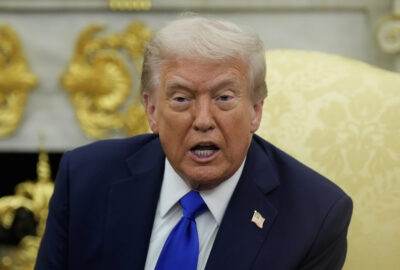
In another report sent to Rigzone by Horsnell this week, analysts at Standard Chartered Bank, including Horsnell, noted that “focus will shift to February 1, when President Trump has said he plans to impose tariffs of up to 25 percent on Mexico and Canada”.
“The timing, scope, and impact of tariffs remain uncertain,” the analysts added in the report.
In an analysis piece sent to Rigzone on Tuesday, Michael Brown, Senior Research Strategist at Pepperstone, said, “tariff rhetoric remains likely to ramp-up in the near future, especially ahead of the rumored February 1 date for tariffs to be imposed on Canada and Mexico”.
Rigzone has contacted the Trump transition team, the White House, the U.S. Department of Energy, and the American Petroleum Institute for comment on the Standard Chartered reports and Brown’s analysis piece. At the time of writing, none of the above have responded to Rigzone yet.
In a White House press briefing by White House Press Secretary Karoline Leavitt, which was transcribed on the White House website on January 29, Leavitt was asked, “[President Trump’s] alluded to both the potential for tariffs for Canada and Mexico but also China to take effect on [February 1] … What’s he thinking about that … Should those countries expect that on the 1st”.
“He was asked and answered this question this past weekend when he took a lot of questions from the press, and he said that the February 1st date for Canada and Mexico still holds,” Leavitt responded in the briefing.
When pressed in the briefing “about the China 10 percent tariff that … [Trump] also had mused about last Tuesday going into effect on the same date”, Leavitt said “the president has said that he is very much still considering that for February 1st”.
To contact the author, email