By

LAUNCESTON, Australia, March 13 (Reuters) – Dial out the noise and focus on the fundamentals is a tactic that may work best for global commodity markets as they navigate the mounting challenges posed by U.S. President Donald Trump’s erratic and inconsistent trade policies.
While the media focus on each headline-grabbing announcement and social media post about new and retaliatory tariffs from the U.S. leader and his administration, commodity markets are busy doing what they have done so well in the past, adapting to rapidly changing circumstances.
For commodities it’s important to make distinctions between those already being affected by Trump’s trade policies, those likely to be in the future, and those unlikely to suffer direct impact, but which might feel second-round effects from a slowing world economy.
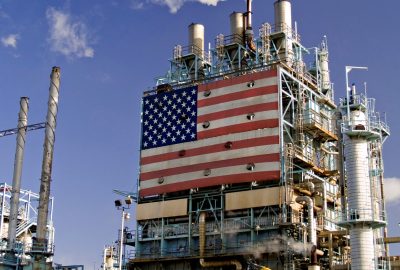
The first group includes steel and aluminium, with Trump’s 25% tariffs on all imports of the metals having started.
The main impact is likely to be price increases for steel and aluminium in the United States, as domestic producers have limited scope to boost output significantly.
That will force consumers of the metals to pay the tariffs, and they are also likely to face increases in the cost of U.S.-sourced metals as local producers raise prices to match those of competing imports.
Over the longer term it is possible that U.S. aluminium and steel makers will increase capacity and output, or that foreign producers will build plants in the United States.
But whether this happens depends very much on whether companies take the view that the tariffs are largely permanent, and if the U.S. economy will be strong enough to justify making the investments.
For countries outside the United States there may be some re-ordering of trade flows as they seek to replace metals previously sold to the United States, but a far bigger risk is the threat of a synchronised global economic slowdown as tariffs cut trade flows, boost inflation and cut competitive advantages.
Commodities in Trump’s firing line include crude oil and copper, albeit from different perspectives.
Trump has indicated he intends to put a tariff on copper imports, a move that is drawing copper inventories from Asia and Europe to the United States and increasing the price of U.S. copper relative to other global benchmarks.
This a straight arbitrage play likely to wind down as soon as tariffs take effect, or not, depending on what Trump eventually decides.
Disruption to the global copper market is likely to be limited, with the fate of China’s economy this year more of a driver, since it is the world’s biggest importer and processor of the metal.

CME premium to LME copper
MILITARY METALS
An example of looking at fundamentals and ignoring noise is reaction to Trump’s reported plan to build metals refining facilities on U.S. military bases as he moves to ensure a secure supply of critical minerals.
Trump is rightly concerned about China’s control over much of the sourcing and processing of critical minerals, which include metals such as copper, lithium and cobalt, as well as minor metals such as tungsten and rare earths.
But it is questionable whether the solution is to build refineries on military bases.
The United States would still have to source the raw ores, often from foreign countries, and nothing Trump is doing would seem to be ensuring greater U.S. access to resources.
Trump has effectively killed foreign aid, and with it much of his country’s soft power, and his bullying tactics and tariffs on friend and foe alike are ruining the image and reputation of the United States.
It would be hard to find a stauncher U.S. ally than Australia, but in the wake of Trump’s tariffs on steel and aluminium, Prime Minister Anthony Albanese urged fellow citizens to buy local rather than U.S. goods.
“Buy Bundy rather than some of the American products … You can make a difference,” Albanese said in a radio interview on Thursday, referring to the renowned domestic rum.
Australia has major reserves of numerous critical minerals, but with Trump treating the country as a trade enemy it is increasingly difficult to see cooperation on investment in developing mines and processing.
Crude oil is another commodity that may be affected by Trump’s policies, but more from a geopolitical view than tariffs.
If Trump does try to use sanctions to force Iran’s crude exports to near zero, this will tighten supply and be bullish for prices.
If he does manage to secure a peace deal in Ukraine, it is likely to be on Russia’s terms and result in an easing of sanctions, which may boost supply.
There is also the risk that U.S. crude exports are included in retaliatory tariffs should the trade war continue to escalate, which would force a re-ordering of global flows.
Liquefied natural gas (LNG), of which the United States is the biggest shipper, is also at risk of being sucked into trade wars, and this has already started with China’s tariffs, which are likely to end Beijing’s purchases of U.S. cargoes.
One commodity quietly benefiting from Trump’s decisions is gold, which has rallied to record highs as investors seek a safe haven.
While Trump has not mentioned gold as a tariff target, it is worth remarking that much of the precious metal’s current rally of about 15% since his November election victory to Wednesday’s close of $2,932.06 an ounce, is built on buying by U.S. investors.
From December to February, some 600 metric tons of gold was transferred to CME-approved vaults, says consultancy Metals Focus, which has tightened physical supply in the top-consuming region of Asia.
In some ways gold is the poster child for how commodities should deal with Trump. Assess the risks, act accordingly and don’t make too much noise about it.
The views expressed here are those of the author, a columnist for Reuters.
Share This:
More News Articles