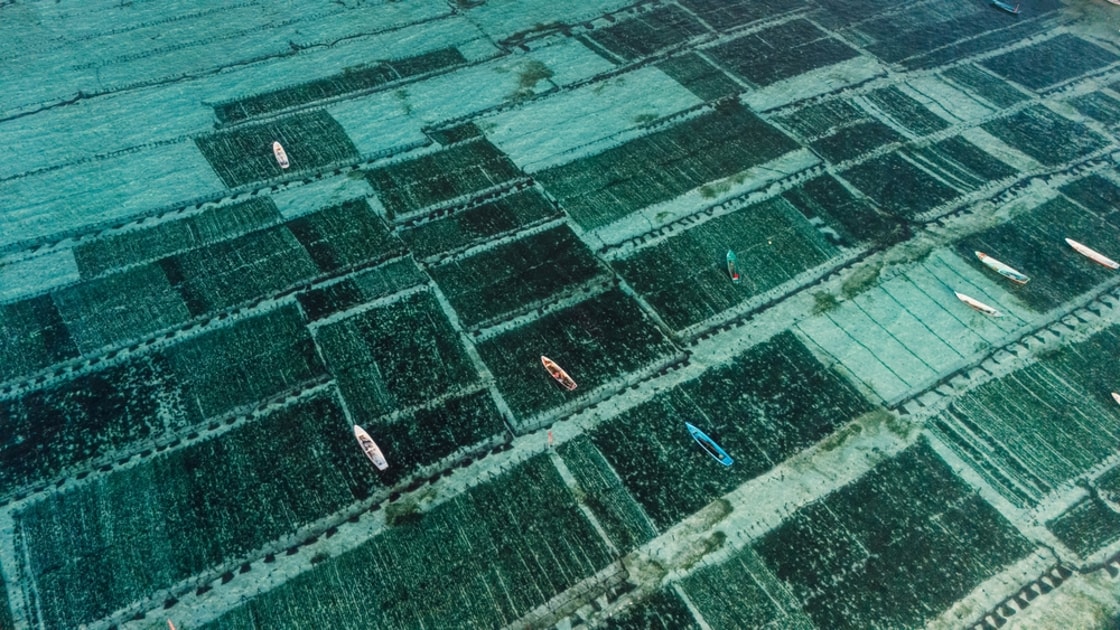
A UK bioenergy project using cultivated seaweed as an alternative feedstock for biomethane production could offer a route to diversifying renewable gas supplies without competing for agricultural land or freshwater.
Zenco Group, a UK-based marine renewable gas developer, has signed a long-term offtake agreement with SmartestEnergy for a facility expected to produce up to 420GWh of renewable gas annually. Commercial operations are scheduled to begin in 2028.
The development comes after European Commissioner for Energy and Housing Dan Jørgensen called for of homegrown biomethane to strengthen energy security and reduce Europe’s dependence on imported energy.
Speaking at European Biomethane Week, Jørgensen said domestic production could help protect economies against geopolitical shocks, while the European Biogas Association has called for faster deployment to realise the sector’s potential.
Zenco’s proposed facility offers one potential route to diversifying the feedstocks used to produce renewable gas. The plant will use established anaerobic digestion (AD) technology, with cultivated seaweed integrated as production scales.
The company expects the facility to become the first AD plant to run fully on seaweed-based feedstock.
Unlike conventional agricultural feedstocks, seaweed grown at sea does not require agricultural land or freshwater, according to the companies. This could offer an alternative for expanding bioenergy production, although the project’s expected output does not establish how much seaweed-based biomethane could contribute to UK or European gas supplies more broadly.
The companies have not disclosed the volumes of seaweed required or the proportion of production that the feedstock will supply at different stages of the development.
The project will be delivered in two phases. The first will focus on producing biomethane for injection into the gas grid, while the second will introduce renewable fuel production, allowing the facility to optimise output between the two.
Under the agreement, SmartestEnergy will act as offtaker for the biomethane and exclusively market the Renewable Gas Guarantees of Origin and associated environmental products from the facility.
Vishnu Aggarwal, Vice President of global environmental markets trading at SmartestEnergy, said the agreement combines established AD technology with a feedstock that could be scaled for future production.
“Greater investment in renewable gas will enable biomethane to play a bigger role in the energy transition across the UK and Europe,” he said.
Sean McNeill, founder and CEO of Zenco Group, said the partnership would allow the company to focus on developing and producing energy and fuels from marine feedstocks.
“Our partnership with SmartestEnergy allows us to focus on what we do best, developing and producing defossilised energy and fuels from sustainable marine feedstocks,” he said.
Seaweed farming is concentrated in Asia, particularly China and Indonesia, according to the UN Food and Agriculture Organization (FAO). It is primarily used for food, as well as in the production of agar, alginate and carrageenan, which are used as thickening agents in food, pharmaceuticals and cosmetics.