According to the proposed timeline, the aim would be for Serbia to be ready to select a technology and enter the construction contracting process by 2032, with a nuclear power plant online in 2040.
The Preliminary Technical Study on the Peaceful Use of Nuclear Energy was presented to the Serbian Chamber of Commerce and media on Saturday.
It identifies 19 key steps in three phases – phase 1 involves examining the feasibility and steps to take a decision to launch a nuclear power programme. Phase 2 includes activities related to the selection of a nuclear reactor type, contracting and construction of a nuclear facility. Phase 3 is when construction takes place.
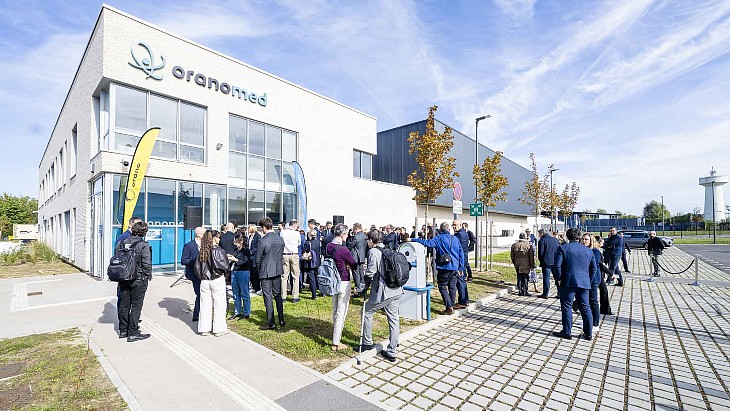
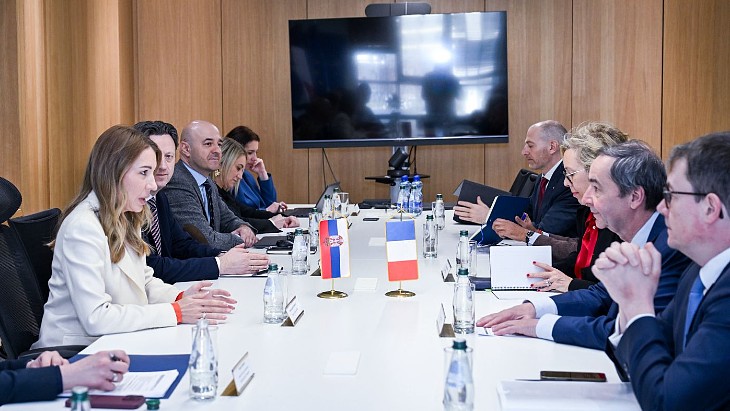
On Friday Minister of Mining and Energy Dubravka Đedović Handanović held talks with EDF Chairman and CEO Bernard Fontana (see picture above) about continuing cooperation in the development of the nuclear power programme.
“We discussed the continuation of cooperation in the next year. It is important to clearly define priorities, to agree on the next steps and deadlines with a clear goal, which is the completion of the first phase of the nuclear programme development with maximum efficiency. At the moment, in Serbia we do not have a complete legal or institutional framework that is necessary for the development of a peacetime nuclear programme, and this is one of the things in which we continue cooperation – analyses and studies of the legal framework,” the minister said.
“We have domestic experts who are ready to work on developing the nuclear programme, but strengthening human capacity is something we will work on the most in the next year. Spotting and recognising experts, their development and training is another area in which we will cooperate with EDF. The French electricity company trained hundreds of engineers, built experts and strengthened human capacity in many countries when they launched their nuclear programmes, such as Italy and China, and they have a developed system,” she added.
A number of potential sites for a nuclear power plant will need to be identified, she added, to ensure there are “options in order to choose the optimal one”.
According to the ministry report Miroslav Popović, special adviser to the minister, told the chamber of commerce event the report includes a “comparative overview of technological options, both for conventional and small modular nuclear power plants, without prematurely closing the door to any individual path”.
The Serbian ministry also reports that EDF’s Fontana confirmed his commitment to continued cooperation “and indicated that EDF has the programmes and structure to support the development of the nuclear programme in Serbia in all its components and at the pace desired by the Serbian authorities”.
Background
Serbia had a longstanding law banning the construction of nuclear power plants, but in December 2024 the National Assembly voted through amendments to the energy law ending that 35-year prohibition.
In October 2024 EDF and French engineering consultancy Egis were awarded the contract by Serbia’s Ministry of Mining & Energy to conduct a preliminary technical study on the potential use of nuclear power in the country.
There have also been talks with Russia’s Rosatom about cooperation on nuclear energy and President Aleksandar Vučić has discussed the option of Serbia acquiring 5 to 10% of Hungary’s Paks nuclear power plant, as well as saying at 2024’s multinational Nuclear Energy Summit in Brussels, that the country was seeking support from other countries in terms of know-how and financing to achieve its aim of getting 1,200 MW of capacity from small modular reactors.