By
7 min ago 3 min read
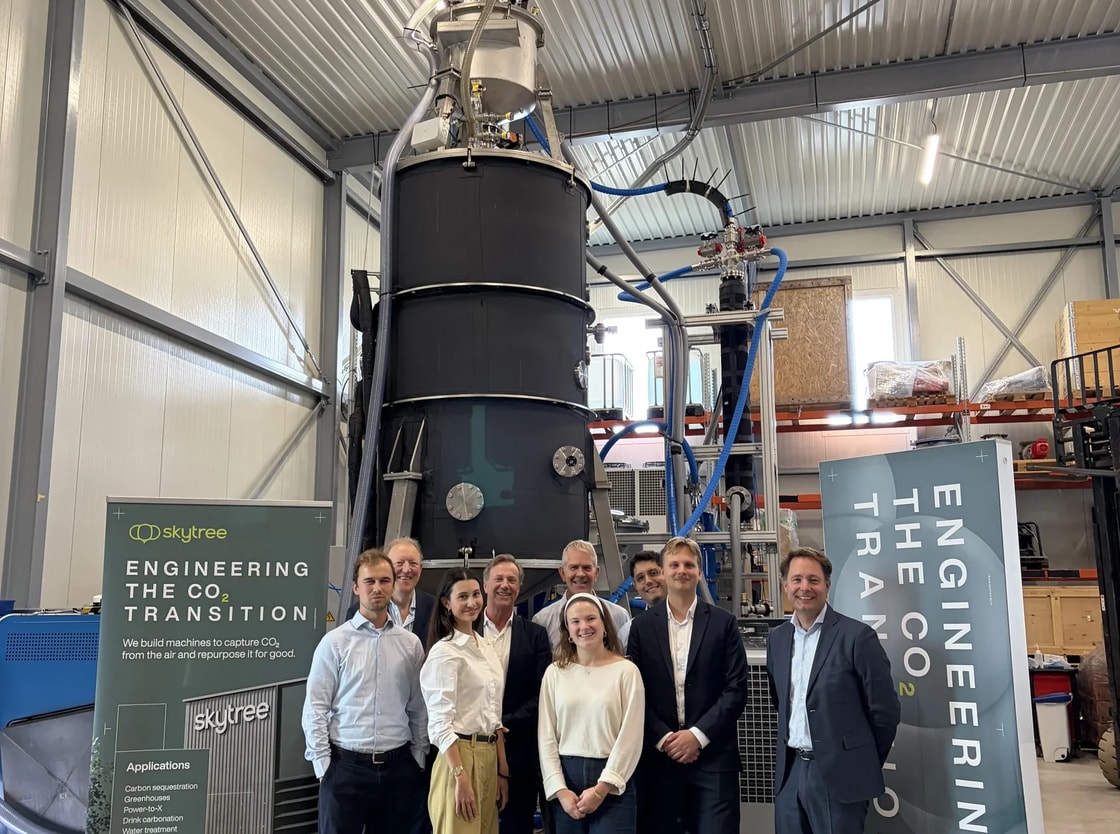
Netherlands-based direct air capture (DAC) firm Skytree has secured a €1m ($1.12m) development loan from Dutch state-backed investment firm Invest International for a planned project in Iceland.
The Skypark DAC project would look to install the company’s technology by 2028 and begin operations using Iceland’s geothermal energy during the same year.
The project development phase is expected to continue through 2026, covering engineering, permitting, and site preparation studies, supported by the loan financing.
This builds on the company’s first Skypark DAC project, at the site of Dutch energy company Lingezegen Energy in the Netherlands in June 2026. The Iceland site marks the next step in developing the company’s international Skypark project pipeline.
Skytree’s Skypark DAC hub model aims to bring together a site and energy partner, capital providers, and local carbon dioxide (CO2) offtakers in a repeatable format.
Camille Hanna, Vice-President of Skyparks at Skytree, said, “Wherever we find clustered industrial demand for CO2, cost-effective renewable energy, and customers tired of price spikes and supply interruptions, we can build a Skypark.”
The model creates long-term offtake contracts, stable pricing, and a local CO2 source, she added.
Skytree said its DAC technology is based on over a decade of applied research from the European Space Agency and aims to supply CO2 to the renewable fuels and chemicals, food and beverage, and water treatment sectors.
Invest International is a joint venture of the Dutch State (51%) and development bank FMO (49%), respectively.
Iceland’s CO2 market
Skytree aims to use Iceland’s geothermal energy source to capture CO2 and provide a local source to reduce import reliance.
In , Swiss carbon capture firm Climeworks switched on its DAC and storage plant in Iceland.
Ten times bigger than its , the Mammoth plant was projected to have an initial capture capacity of up to 36,000 tonnes of CO2 per year.
However, the firm’s still fall far short of the initial 36,000 tonnes per year capture rate promised, despite claiming to have more than doubled CO2 capture performance at its Icelandic DAC and storage facility over the past 18 months.
Global DAC market
While DAC remains one of the most expensive sources of CO2, with current costs often estimated in the hundreds of dollars per tonne, developers are pursuing lower energy consumption and modular designs to improve economics as projects scale.
The International Energy Agency (IEA) has estimated current DAC costs at between $500 and $1,900 per tonne of CO2, although technology improvements and larger-scale deployment could reduce costs considerably over time.
Under the IEA’s Net Zero Emissions by 2050 Scenario, DAC technologies need to scale up and capture more than 85 million tonnes of CO2 in 2030 and around 980 million tonnes of CO2 in 2050.
In 2022, the IEA reported DAC technology captured only 0.01 million tonnes of CO2, meaning significant investment and development is needed to meet its global DAC targets.