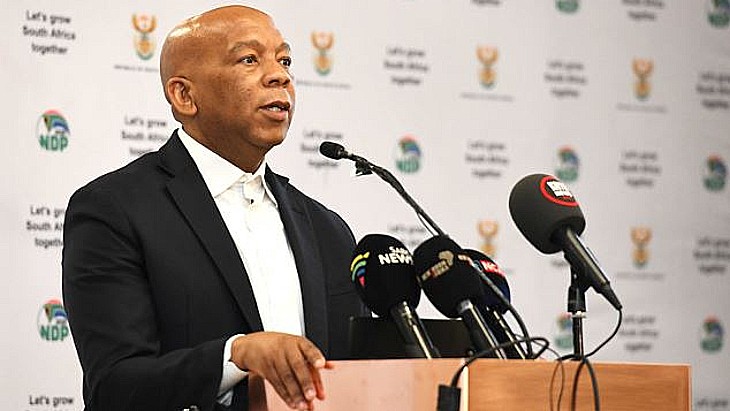
Announcing the Integrated Resource Plan (IRP) 2025 at a livestreamed event on 19 October, Minister of Electricity and Energy Kgosientsho Ramokgopa said South Africa’s electricity crisis had stunted development and economic growth. But now the country has “turned the corner” on load-shedding, it can address the future with an IRP that aims to address electricity supply issues, promote economic growth, and create jobs, targeting a 3% growth in the South African economy by 2030.
The final version presented to the South African Cabinet represents a ZAR2.23 trillion (USD128 billion) investment.
The IRP is not a “wish list”, the minister said. “This is not a guide. This is a policy of government. This is what is going to drive the electricity agenda in the country for the period that we are going to define and we’re going to ensure that we achieve a number of elements going forward.”
“There is no economy that grows if the lights are off. There are no industries that will decide to locate in South Africa if we can’t guarantee them available electricity that is of good quality and that is affordable.”
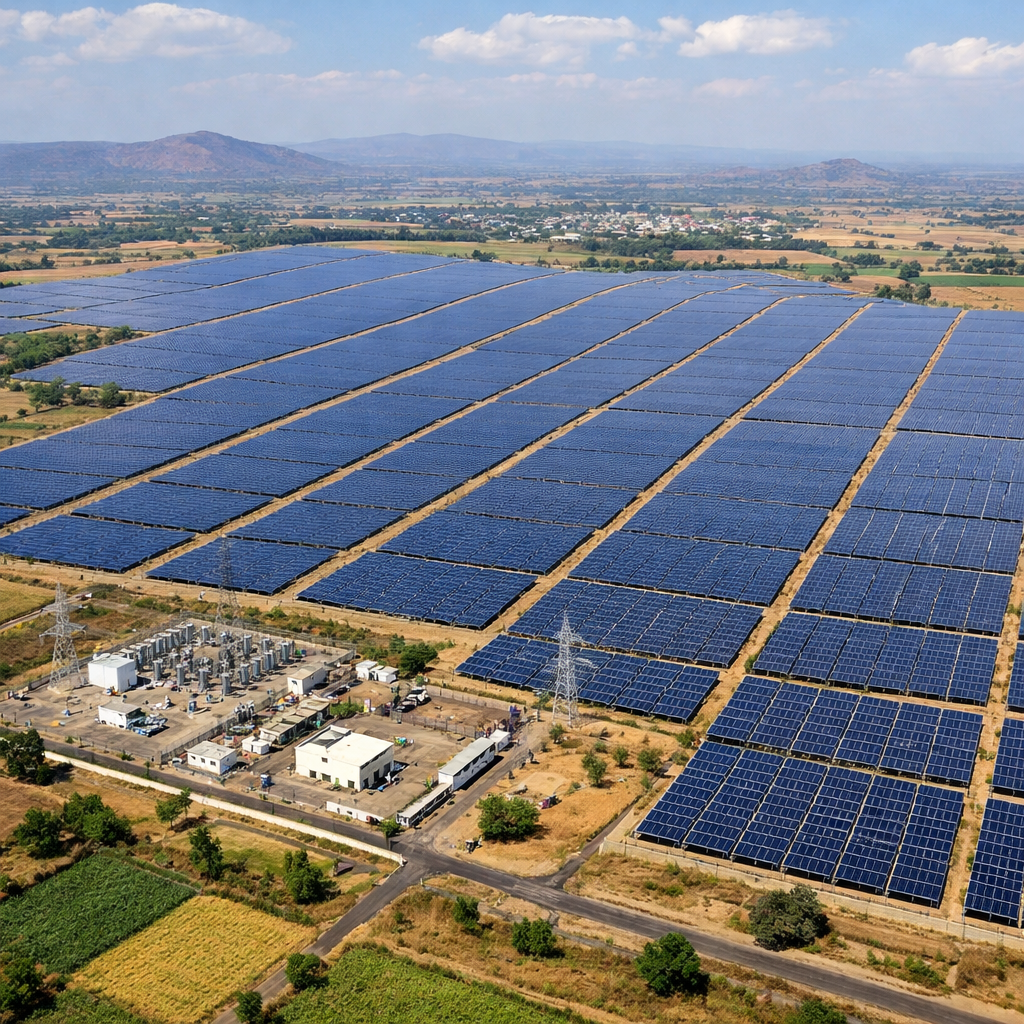
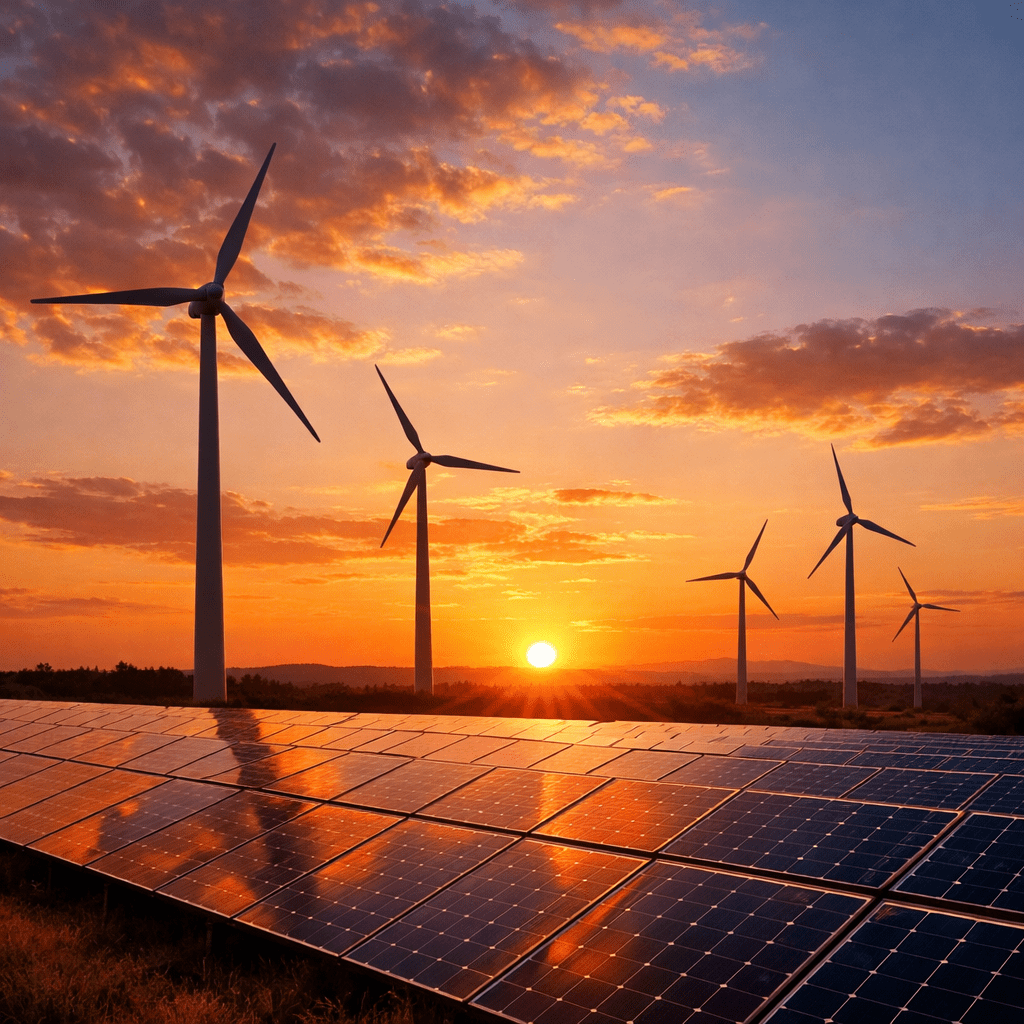
South Africa’s current energy mix, as outlined by the minister, is heavily dependent on fossil fuels: 58% coal, 10% rooftop solar photovoltaics (PV), 10% grid-connected solar PV, 8% wind, 4.5% diesel, 4% pumped storage, 3% nuclear and the remaining 3% from “small” contributors such as biomass and hydro.
The IRP calls for the addition of more than 105 GW of new generation capacity by 2039, including expansion of solar PV, wind and nuclear. This, Ramokgopa said, would be akin to rebuilding state-owned utility Eskom “two and a half times” by 2039: “The biggest investment programme of the post-apartheid era is what we are presenting to the country today and to ensure that we are able to achieve energy security.”
Fossil fuels do not disappear: the IRP calls for the introduction of 6000 MWe of gas-powered generation by 2030 which it says is critical for energy security and stability, as well as a vision for a clean coal technology demonstration plant by 2030.
The IRP calls for 5200 MW of new nuclear generation by 2039, but this could potentially be expanded further. “We think that there’s an opportunity for another 4800 MW of nuclear, but that will be supported through our nuclear industrialisation plan so that we are able to participate in the entire value chain,” Ramokgopa said.
The two biggest risks to not achieving the aims of the IRP are a limited skills pipeline – in part due to the decision to place on hold the country’s pebble bed reactor development programme which meant skills had been “haemorrhaged” – and a “decimated” construction industry, the minister said. “So it’s important that the industrialisation plan also answers the question ‘where are the skills going to come from’.”
Realism
Bismark Tyobeka, principal and vice-chancellor of South Africa’s North-West University, former CEO of the National Nuclear Regulator and current chair of the Ministerial Expert Panel on Nuclear, described the IRP as “bold” and “progressive” for recognising the urgency needed to respond to climate change and scaling back reliance on fossil fuels, as well as repositioning South Africa as envisioning reviving the nuclear fuel-cycle value chain as the country repositions itself as Africa’s “foremost nuclear nation”.
The nuclear project timescales in the plan are realistic, he said.
“This would mark a return to the fundamentals of domestic nuclear capability by enriching our own fuel for peaceful electricity generation and for non-power applications. It would support not only power reactors but also non-power reactors such as the planned new multi-purpose reactor at Pelindaba, which will replace the ageing SAFARI-1 facility. This new reactor will strengthen South Africa’s position in producing radioisotopes and other nuclear-based innovations with applications in agriculture, mining, and manufacturing.
“It is indeed an ambitious plan, but I welcome the minister’s pragmatic approach and its proposed implementation in manageable stages. Achieving the first 5200 megawatts by 2039, with the initial 1200 megawatts delivered by 2036, is a realistic target. Ten years is not an excessive timeframe if one considers that, for nuclear newcomer countries, the International Atomic Energy Agency (IAEA) milestones framework typically anticipates a 12- to 15-year process from planning to first electricity generation, including at least seven years of construction.”
He added: “Given the preparatory work already done by the South African nuclear sector – including Necsa, the Department of Electricity and Energy, and the National Nuclear Regulator, which has been modernising its regulatory framework – the timeline is achievable. We also have the National Radioactive Waste Disposal Institute fully operational and expanding its capacity, and Eskom itself has shown encouraging signs of financial recovery, recently reporting a profit exceeding R100 billion.
“The time is right, and the key players are ready. From our side, as members of the Ministerial Advisory Panel, we must ensure that implementation happens as swiftly as possible. Our advice on the IRP should focus on achieving the shortest feasible delivery timelines while maintaining the necessary pace and scale of government action. Procrastination is the thief of time, and we cannot afford to delay further.”
State-owned utility Eskom said it welcomed the launch of IRP 2025, which it said provides a clear investment framework for the supply of electricity needed to accelerate economic growth and inclusion in a context where overall unemployment stands at 30% and youth unemployment exceeds 50%. It will now conduct a “thorough review” of the IRP and subsequently publish a response along with an updated strategic plan.
The Integrated Resource Plan is described by the South African government as a “living plan” that is expected to be continuously revised and updated as necessitated by changing circumstances. It was first promulgated in March 2011, and last reviewed in 2023.