By
4 min ago 3 min read
Chinese multinational tech firm Tencent is bringing carbon utilisation ‘out of the lab’ and into everyday markets, according to a wide-ranging update coinciding with the halfway point of its carbon neutrality plan launched in 2021.
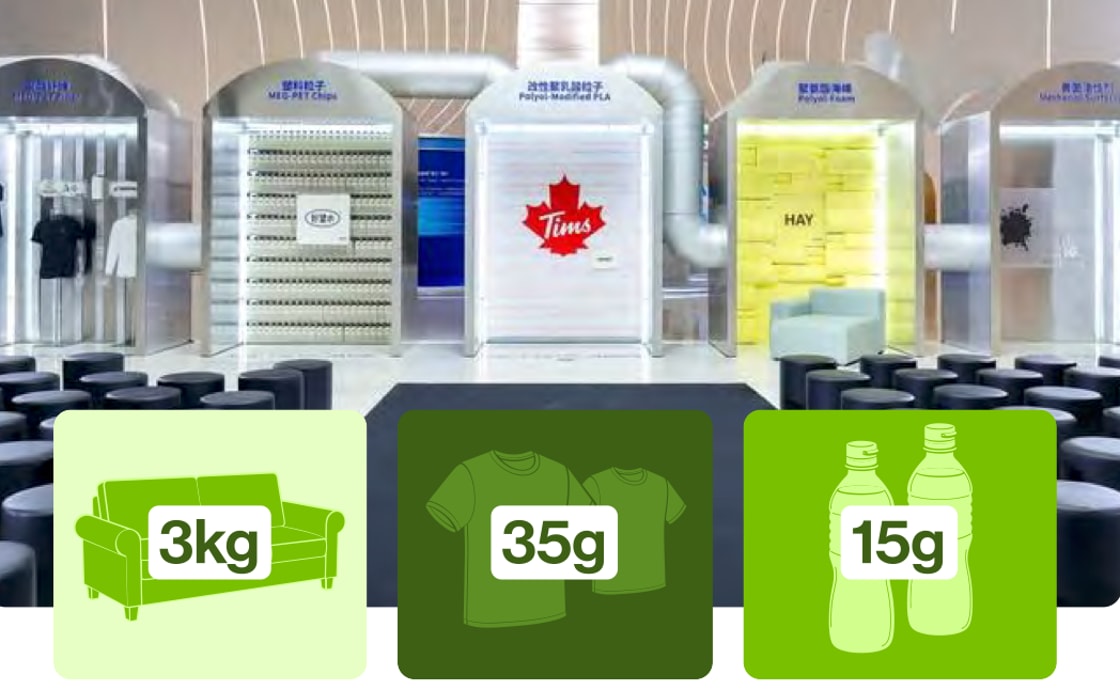
Through partnerships with brands such as Decathlon China, Hay, Sasol, and Tims China, its CarbonXmade initiative has enabled CO2‑derived materials to be used across dozens of commercial products spanning furniture, apparel, and lifestyle goods.
Individual products can embed tens of grammes of captured CO2 per unit, while collectively demonstrating that carbon‑based alternatives can scale through existing supply chains.
“This use case proves technical viability, brand acceptance, and real consumer traction,” it said.
In other developments, McDonald’s China has introduced a low‑carbon alternative brick that uses compressed materials infused with captured waste CO2.
These carbon-storing bricks avoid coal‑fired kilns, and are now being used in restaurant construction. Each 23 cubic metre brick wall permanently locks away around 380kg of CO2, demonstrating how scalable design and material innovation can embed sustainability directly into everyday infrastructure.
Tencent said the world looks very different now to the one when it started its carbon neutrality journey five years ago, and in that time it has procured more than 6.5 billion kWh of green electricity.
Ma Huateng, Chairman and CEO, said AI will be central to the next chapter of its work.
AI workloads are raising rack power demand and placing new pressure on electricity supply, cooling and infrastructure. Rack power demand has increased from 6–8 kW to 30–100 kW or more, placing new requirements on power delivery, cooling and system design.
Last week it emerged and offer an alternative route to cooling and managing the heat generated by data centres.
Growing power constraints are prompting technology firms , but consultancy firm Wood Mackenzie estimates they would cost more than three times as much as equivalent facilities on Earth.
“The same technology intensifying the climate challenge is also one of our strongest tools for solving it,” said Huateng. “We are applying our digital and AI capabilities to cut emissions within our own infrastructure – and we believe AI holds far greater potential still: to accelerate low-carbon innovation, lift efficiency, and support broader environmental transformation in industries beyond our own.”
Clean technology and carbon-conversion company by the end of this year and demo module within 18 months after being awarded CarbonX 2.0 prize funding in June.
Tencent unveiled the second phase of CarbonX, a global initiative to fast-track the development of climate technologies deemed crucial to achieving Net Zero emissions by 2050, , to offer catalytic funding and resources to support new projects.