The Energy and Resources Institute (TERI) and the Energy Transitions Commission (ETC) have released two new reports identifying agrivoltaics (AgriPV)—the co-location of solar power generation and agriculture—as a strategic solution to accelerate India’s renewable energy expansion while addressing land constraints, strengthening energy security, and supporting sustainable agricultural development.
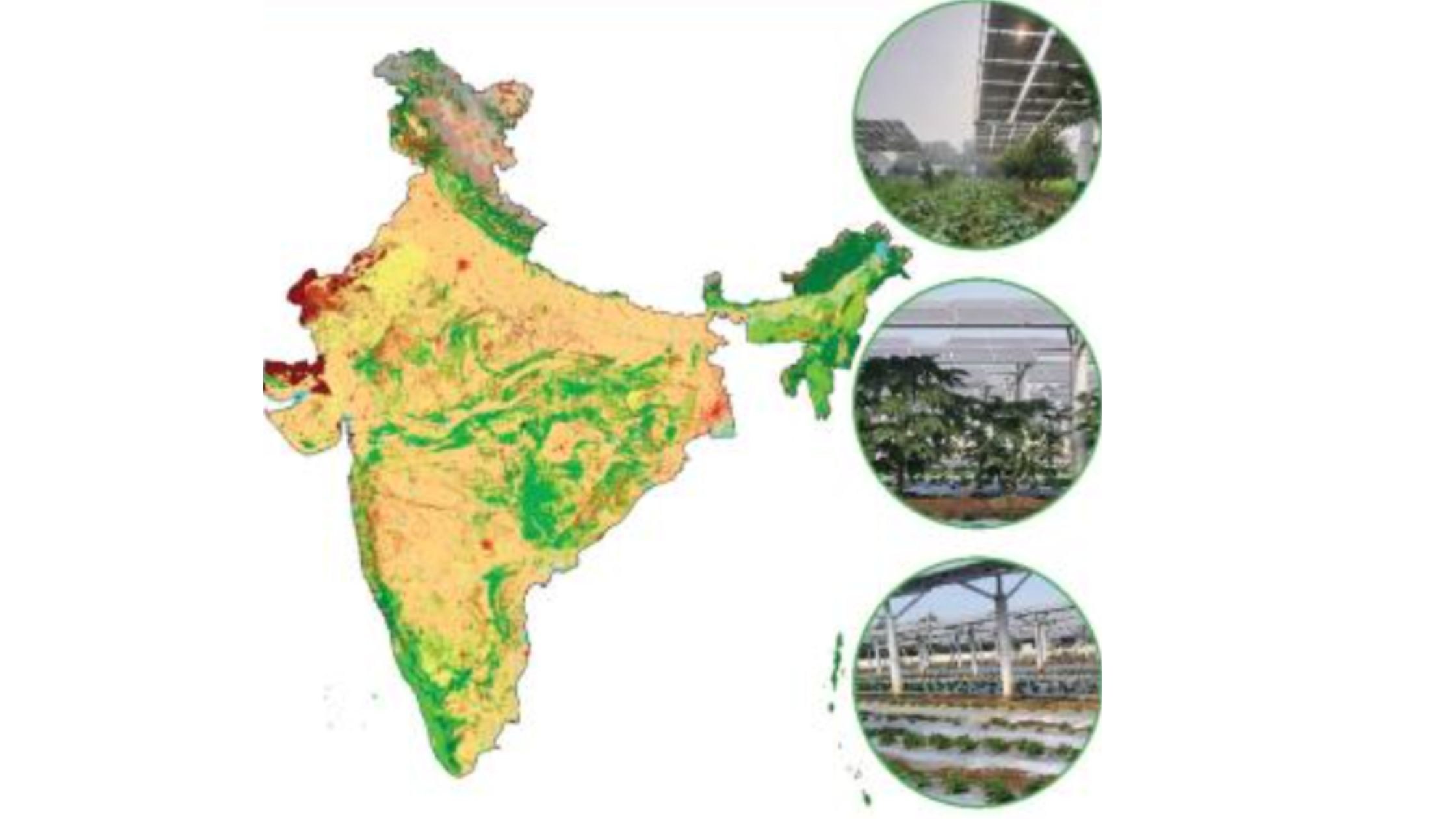
According to the analyses, approximately 7.5 million hectares of India’s cropland, representing around 14% of the country’s land area, is technically suitable for agrivoltaic deployment. The reports estimate that harnessing this potential could generate up to 20,000 TWh of electricity, nearly four times India’s projected electricity demand of 5,250 TWh by 2050.
The reports note that land acquisition remains a significant challenge for large-scale solar deployment, contributing to a 44% decline in solar installations in 2023. By enabling dual land use for agriculture and solar generation, agrivoltaics could help overcome land availability constraints while reducing pressure on agricultural production.
The studies also highlight findings from pilot projects showing that agrivoltaic systems can reduce agricultural water consumption by 30–50%, an important consideration for a sector that accounts for nearly 90% of India’s freshwater use.
The reports, titled “AgriPV Potential in India – Pathways for Sustainable Energy-Food Solutions” and “Unlocking Solar at Scale: How Agrivoltaics Overcome Land Constraints in India’s Energy Transition,” provide a comprehensive assessment of the technology’s potential to support India’s long-term clean energy strategy.
According to the organisations, agrivoltaics offers multiple system-level benefits, including expanding domestic renewable energy generation, reducing dependence on imported fossil fuels, strengthening energy security, improving farmer incomes through diversified revenue streams, enhancing climate resilience, and supporting distributed electricity generation.
The reports also emphasise that integrating solar energy with agricultural activities can help preserve productive farmland while accelerating renewable energy deployment and lowering overall system costs.
TERI and ETC stated that successful large-scale adoption of agrivoltaics will require supportive policy frameworks, targeted financing mechanisms, site-specific project designs, and implementation models tailored to local agricultural practices and regional conditions.
The organisations concluded that agrivoltaics could play an important role in supporting India’s transition toward a more resilient, low-carbon energy system while simultaneously strengthening rural livelihoods, improving resource efficiency, and advancing national energy and food security objectives.
Subscribe to get the latest posts sent to your email.