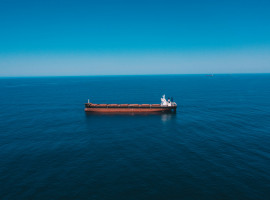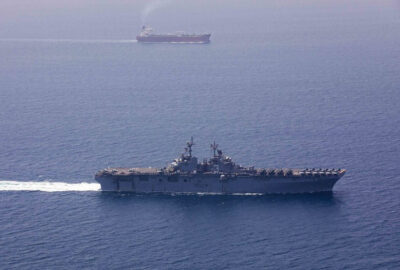
At least three tankers were damaged off the Gulf coast after U.S. and Israeli strikes on Iran triggered Iranian retaliation that put merchant ships at risk of collateral damage, shipping sources and officials said on Sunday. Risks to commercial shipping have surged in the past 24 hours, with more than 200 vessels including oil and liquefied gas tankers dropping anchor around the Strait of Hormuz and surrounding waters, shipping data showed on Sunday.
Iran has said it has closed navigation through the critical waterway.
“The U.S.-Israeli attack on Iran dramatically increases the security risk to ships operating in the Persian Gulf and adjacent waters,” said Jakob Larsen, chief safety and security officer at shipping association BIMCO.
Get the Latest US Focused Energy News Delivered to You! It’s FREE:
‘SHIPS MAY BE TARGETED DELIBERATELY OR IN ERROR’
“Ships with business connections to U.S. or Israeli interests are more likely to be targeted, but other ships may also be targeted deliberately or in error.”
A Palau-flagged oil tanker under U.S. sanctions was hit on Sunday off Oman’s Musandam peninsula, injuring four people, the country’s maritime security centre said without specifying what hit the vessel.
The Marshall Islands-flagged crude oil tanker MKD VYOM was hit by a projectile off the coast of Oman while sailing with a cargo, two maritime security sources said on Sunday.
The vessel was hit 44.4 nautical miles northwest of Muscat, one of the sources said.
British maritime agency UKMTO said that a laden merchant vessel reported an explosion in the same location. A separate tanker in the United Arab Emirates port of Jebel Ali was almost damaged by falling debris from an aerial interception after overnight Iranian attacks targeting Gulf states, maritime security sources said.
A third oil-bunkering tanker was damaged off the UAE coast, two shipping sources said.
Vessels were recommended to keep clear of the Strait of Hormuz and wider Gulf of Oman because of the risk of retaliatory strikes by Iran, the U.S. transport ministry’s Maritime Administration said in a note on Saturday.29dk2902l
“Any U.S.-flagged, owned or crewed commercial vessels that are operating in these areas should maintain a standoff of 30 nautical miles from U.S. military vessels to reduce the risk of being mistaken as a threat,” it said.
There was also the potential risk of mines being laid by Iranian forces in the narrow lanes within the Strait of Hormuz, security sources said. The Iranian military loaded naval mines on vessels in the Persian Gulf in June, heightening concern in Washington that Tehran was gearing up to establish a Strait of Hormuz blockade, two U.S. officials told Reuters in July.
There was an expectation that war risk insurance rates would surge when underwriters reviewed cover on Monday, maritime sources said.
War risk cover is required when sailing into perilous areas and the Lloyd’s of London market has already listed Iran, the Gulf and parts of the Gulf of Oman as high-risk.
“We would estimate that near-term rate increases for marine hull insurance in the Gulf could range from 25% to 50%,” said Dylan Mortimer at insurance broker Marsh.
(Reporting by Yousef Saba, Jaidaa Taha and Jonathan Saul, Additional reporting by Yannis Souliotis, Arathy Somasekhar, Enes Tunagur, Muhammad Al Gebaly and Nadine Awadalla; Editing by Ros Russell and David Goodman)
Share This:
More News Articles