

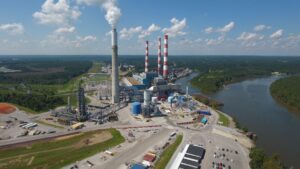
Former EPA employees at the Environmental Protection Network (EPN) strongly oppose the from fossil fuel-fired power plants and to rescind the most recent update to the Mercury and Air Toxics Standards (MATS). These proposals represent a sweeping dismantling of critical Clean Air Act protections and a dangerous departure from long-standing scientific and legal consensus.
COMMENTARY
In a radical reinterpretation of the Clean Air Act, EPA now claims that it must first determine whether GHG emissions from fossil fuel-fired power plants “contribute significantly to dangerous air pollution” before regulating them. The agency further proposes to make the finding that such emissions do not meet that threshold, a position that directly contradicts decades of EPA findings, peer-reviewed science, and binding legal precedent. The proposal includes both a complete repeal of all GHG emissions limits and, as an alternative, a narrower repeal targeting carbon capture and storage (CCS)-based standards for new and modified coal-fired units and emission guidelines for existing steam-generating units.
“This proposal is scientifically indefensible and represents a complete abdication of EPA’s responsibilities under the Clean Air Act,” said Michelle Roos, EPN’s executive director. “By eliminating carbon limits and removing requirements to implement better technology that cleans toxic emissions from coal-fired power plants, EPA is dismantling critical Clean Air Act protections that save lives and protect the air our children breathe.”
Joe Goffman, former assistant administrator for EPA’s Office of Air and Radiation, emphasized, “This proposal disregards decades of bipartisan regulatory progress. It seeks to nullify the legal and scientific consensus that carbon dioxide and hazardous pollutants pose grave threats to human and environmental health. Allowing the largest industrial sources of both climate pollution and toxic emissions to operate without restraint would mark a catastrophic failure of environmental protection.”
EPA’s previous regulatory reviews, grounded in extensive scientific research, found that the power plant rules that are now targeted for repeal by the Trump administration would prevent 15,000 deaths and five million asthma attacks and significant neurological harm from mercury exposure, particularly in children. These rules were also projected to yield $23.6 billion in annual public health and environmental benefits, compared to just $1.2 billion in annual compliance costs. In other words, rescinding these protections would impose economic and health costs on the public that are twenty times greater than the savings realized by regulated industries.
“American families will pay the cost of these rollbacks in higher health care bills from emergency room visits, missed work days and missed school days,” said Roos. “The only people who benefit from these rollbacks are the biggest emitters of toxic pollution who don’t want to install cleaner technologies.”
Revoking the MATS RTR rule weakens the nation’s most effective safeguard against toxic air pollution from coal-burning plants. EPA’s justification, that the U.S. power sector’s global emissions share has declined, is both misleading and irrelevant. Domestic responsibility for pollution mitigation remains critical to any credible climate strategy, and the rollback ignores the cumulative, transboundary nature of both carbon and toxic emissions. Moreover, the notion that reduced relative contributions excuse regulatory inaction is scientifically flawed and morally untenable.
These proposed repeals are not isolated; they are part of a coordinated strategy to weaken the regulatory framework underpinning federal environmental policy. If finalized, they would not only intensify climate and toxic exposure risks but also constrain the tools available to future administrations seeking to address environmental crises.
EPN urges EPA to withdraw this reckless and unlawful proposal immediately. We call on policymakers, scientists, and the public to oppose this dismantling of life-saving protections and to uphold the Clean Air Act.
—This commentary was submitted by the Environmental Protection Network.







%20Emergency%20Orders%20Since%20May%202025.%20Here’s%20an%20Updated%20Log.)
