(Reuters) – No one likes expensive oil, especially in the U.S., where driving, spending, and energy-intensive economic activity are on such a vast scale. But despite fears to the contrary, the average U.S. consumer has never been better equipped to deal with $100-a-barrel oil.
U.S. households are the richest they’ve ever been in nominal terms. They’ve rarely been better in relative terms either. Unemployment is also historically low, and, perhaps most importantly, gas and energy account for a historically small share of consumption.
Get the Latest US Focused Energy News Delivered to You! It’s FREE:
This may help explain why U.S. equities have outperformed their global peers since the February 28 joint U.S.-Israeli strikes on Iran triggered war in the Middle East, the closure of the Strait of Hormuz and one of the worst energy supply shocks in decades.
The S&P 500 and Nasdaq have lost around 5% since then. That’s a significant hit, wiping more than $3 trillion off the value of U.S. stocks. But the pain may be a lot worse for businesses and households in Europe, Asia and emerging markets, where benchmark indices are down 8-10%.
2% OF SPENDING ON GAS AND ENERGY
At an aggregate level, U.S. households appear fully capable of withstanding oil at current prices. Gasoline and energy goods represented only 2% of total consumer spending in the fourth quarter last year, according to Bureau of Economic Analysis data, the lowest percentage over the past 80 years, outside of the pandemic-distorted period of 2020-21.
For context, nearly 3% of spending was devoted to energy goods in 2022 when U.S. crude peaked at $130, and more than 4% in 2008 when oil hit a record peak just under $150. It peaked at around 6% in 1980-81.
True, the latest level of 2% will surely rise if the oil price remains at elevated levels for a sustained period. But, even then, most Americans should be able to handle it. As Federal Reserve data last week showed, household balance sheets have rarely been stronger.
Household net worth in the fourth quarter last year rose to 794% of disposable personal income, the highest level since early 2022. Going back to the 1950s, U.S. household net worth by this measure has only been higher in three quarters, all in the pandemic-distorted 2021-22 period.
ENERGY INEQUALITY
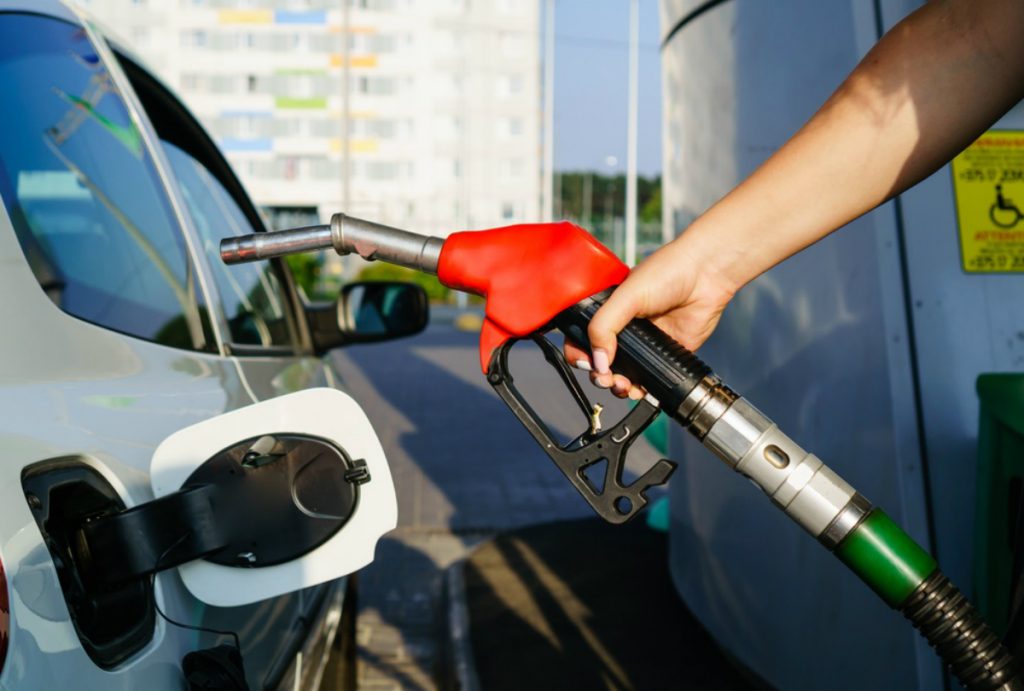
Americans aren’t immune to the impacts of the energy price spike, however. The national average price of gas at the pump is almost $4 per gallon, up 35% in a month, according to the American Automobile Association.
The Energy Information Administration puts the average slightly lower at $3.72, up 27% since the war broke out – the highest in two and a half years.
Recall, however, that gas was consistently above $4 for six months after Russia invaded Ukraine in February 2022, and hit $5 that June.
Still, it’s important to remember that America suffers from significant “energy inequality.” Lower-income households direct a far greater share of their spending to gasoline and energy.
A Fed study last year found that one in five U.S. households are “energy burdened,” meaning the average ratio of energy expenditure to disposable income is 25%, compared with only 7% for non-energy-burdened households. Most of these households are in the bottom two quintiles of the income distribution.
For the Trump administration, it would be political suicide to try to flag soaring energy prices as anything other than bad news. That’s especially true for a president whose approval ratings are so low ahead of midterm elections in November that could see the Democrats take both houses of Congress.
Moreover, there may be more pain to come. Higher oil can bump up costs throughout the economy, meaning transportation, manufacturing, fertilizer, plastics, chemicals and food could all get more expensive.
This is why Trump is scrambling to get oil prices down, and earlier on Monday he said military strikes against Iranian power plants and energy infrastructure will be put on hold.
To be sure, this is an extremely fluid situation, and Americans’ resilience could quickly wilt, especially if oil surges even higher. But for now, fears that $100 oil will break the back of the U.S. consumer seem overblown.
(The opinions expressed here are those of Jamie McGeever, a columnist for Reuters)
By Jamie McGeever; Editing by Marguerita Choy
Share This:
More News Articles