Summary
- Trump signs executive orders seeking to boost U.S. nuclear production
- Order directs nuclear regulatory agency to rule on new licenses within 18 months
- Department of Defense expected to have a prominent role in ordering reactors and installing them on military bases
(Reuters) – U.S. President Donald Trump on Friday ordered the nation’s independent nuclear regulatory commission to cut down on regulations and fast-track new licenses for reactors and power plants, seeking to shrink a multi-year process down to 18 months.
The requirement was part of a batch of executive orders signed by Trump on Friday that aim to boost U.S. nuclear energy production amid a boom in demand from data centers and artificial intelligence.
Get the Latest US Focused Energy News Delivered to You! It’s FREE:
Licensing for reactors in the U.S. can take over a decade at times, a process designed to prioritize nuclear safety but which has discouraged new projects.
“This is going to turn the clock back on over 50 years of overregulation of an industry,” U.S. Interior Secretary Doug Burgum, who heads the White House Energy Dominance Council, said in the Oval Office.
The moves include a substantial overhaul of the Nuclear Regulatory Commission that includes looking at staffing levels and directing the Energy and Defense departments to work together to build nuclear plants on federal lands.
The administration envisions the Department of Defense taking a prominent role in ordering reactors and installing them on military bases, a senior White House official said.
The orders also seek to reinvigorate uranium production and enrichment in the United States.
The CEO of U.S. nuclear power operator Constellation Energy, Joseph Dominguez, said the president’s actions would help normalize the regulatory process.
“We’re wasting too much time on permitting, and we’re answering silly questions, not the important ones,” Dominguez said during the signing event.
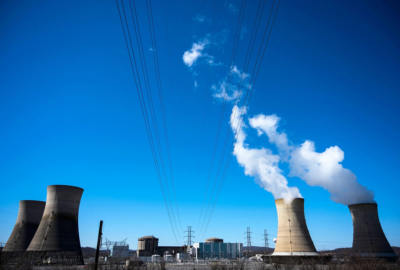
The U.S. and other nations have ramped up nuclear power regulation in recent decades, partly in response to reactor incidents like the meltdown at the Chernobyl plant in the former Soviet Union in 1986, and the partial meltdown at Three Mile Island plant in the United States in 1979.
Developers are also now looking to deploy advanced nuclear technology like small modular reactors (SMRs) that could potentially be built quickly and at less cost than traditional plants, but which may pose new safety challenges.
“Reorganizing and reducing the independence of the NRC could lead to the hasty deployment of advanced reactors with safety and security flaws,” said Ernest Moniz, former U.S. Energy Secretary and a nuclear physicist supportive of the industry.
“A major event would, like those in the past, increase regulatory requirements and set back nuclear energy for a long time,” he said.
Trump had declared a national energy emergency in January as one of his first acts in office, saying the U.S. had inadequate supplies of electricity to meet the country’s growing needs, particularly for data centers that run artificial intelligence systems.
Most of Trump’s actions have focused on boosting fossil fuels like coal, oil and natural gas, but administration officials also support nuclear power, which in recent years has attracted growing bipartisan support.
Some Democrats endorse nuclear because the plants do not emit planet-warming greenhouse gases, even as environmentalists have raised concerns about radioactive waste and reactor safety.
Republicans, who are less concerned about global warming, support it because they say nuclear power plants could strengthen U.S. energy security.
Cost and competition, however, has been a major impediment to new nuclear projects, and it is unclear whether Trump’s orders will be enough to overcome them.
NuScale, the only U.S. company with an SMR design approved by regulators, axed its project in 2023 on rising costs and competition from plants that burn plentiful natural gas.
Vogtle, the last U.S. reactor to come online, meanwhile, was about $16 billion over budget and delayed by years.
The Loan Programs Office, which the administration wants to use to finance reactor projects that banks are not willing to support, has been hit hard by Trump’s job layoffs.
Reporting By Jarrett Renshaw in Washington; Editing by Nia Williams and Diane Craft
Share This:
More News Articles