By Ron Bousso

U.S. President Donald Trump’s current plan to revive shipping through the Strait of Hormuz via financial guarantees and security assistance will require a Herculean international effort.
Get the Latest US Focused Energy News Delivered to You! It’s FREE:
Even if successful, it will likely offer only limited relief as time quickly runs out to avert the worst global economic fallout from the closure of this vital energy artery.
Trump said on Tuesday he had ordered the U.S. International Development Finance Corporation to provide political risk insurance and financial guarantees for maritime trade in the Gulf. He also said the U.S. Navy could begin escorting vessels through the Strait of Hormuz, the narrow shipping lane between Iran and Oman through which around a fifth of global oil and gas supplies normally passes.
The measures are Washington’s attempt to ease pressure on global energy markets after traffic through the Strait effectively ground to a halt on Saturday following the start of the joint U.S.-Israeli aerial bombardment of Iran.
Tehran retaliated by striking neighbouring countries, including energy infrastructure, forcing the shutdown of Qatar’s liquefied natural gas production and Saudi Arabia’s largest oil refinery.
At least four tankers were also targeted in or near Hormuz, prompting many ship insurers and charterers to suspend transit in and out of the Gulf. The closure triggered a surge in oil and gas prices – with Brent rising above $84 per barrel at one point, the highest level since July 2024 – and sent stock markets tumbling, particularly in Asia, as investors braced for a severe economic shock.
Yet the U.S. response is unlikely to reassure shippers under current conditions.
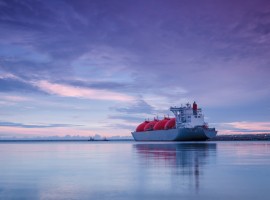
Tanker freight rates have soared in recent days, with costs on many routes hitting record highs. Chartering a crude carrier capable of carrying 2 million barrels of oil from the Gulf to Asia now costs around $30 million – roughly 5% of the cargo’s value at current prices and nearly five times its level at the start of the year.
MUCH BIGGER CHALLENGE
But reducing costs would do little to address fears that vessels could still be attacked. U.S. naval escorts would certainly lower the risk, but they are unlikely to offer full protection against Iran’s extensive use of drones, missiles and fast-attack boats.
This would not be the first time Washington has intervened to secure shipping lanes in the region.
During the “Tanker War” phase of the Iran–Iraq conflict in the late 1980s, the U.S. escorted and protected Kuwaiti oil tankers under Operation Earnest Will to deter Iranian attacks.
The scale of the challenge today, however, is much bigger.
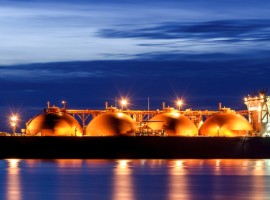
Oil and gas exports from the region have nearly doubled since then to roughly 20 million bpd last year. Qatar, now the world’s second-largest LNG producer, exported around 80 million metric tons last year – about a fifth of global demand. In the 1980s, it wasn’t even a player in the global energy markets.
Securing such enormous volumes of oil, gas and tankers would be a formidable task and would almost certainly require assistance from other countries’ navies.
And, even more importantly, organising such an effort would take days, if not weeks.
TIME IS RUNNING OUT
Time, however, is running out for both producers and consumers.
The Hormuz blockade is already forcing Gulf producers to curb output. Iraq cut production on Tuesday by more than 1.1 million bpd, roughly a quarter of its total output, due to a lack of storage capacity. Officials said output could fall by more than 3 million bpd within days if the disruption persists.
Other producers face similar constraints.
Saudi Arabia, the world’s largest crude exporter, shipped around 7 million bpd in February and is now diverting some output to the Red Sea port of Yanbu via a pipeline with a capacity of 5 million bpd. But Yanbu’s export capacity is limited to no more than 2 million bpd, so the kingdom has been forced to place large volumes into onshore storage.29dk2902l
And Saudi Arabia already holds about 82 million barrels of crude in onshore storage, around 56% of capacity, according to Kayrros data.
The United Arab Emirates, which exported about 3.3 million bpd last month, can divert up to 1.5 million bpd through a pipeline that bypasses Hormuz. But, again, that means tapping storage, which is around 40% full with about 34 million barrels already being held, Kayrros said.
As a result, Saudi Arabia, the UAE and Kuwait could see storage fill within days, forcing deeper production cuts.
ASIA’S ENERGY CRUSH
Pressure is also intensifying on consumers.
Asian refiners heavily dependent on Middle Eastern oil are struggling to replace supplies and are likely to cut operating rates. Two Chinese refineries have already reduced runs, while India has curtailed gas supplies to its industrial base due to shortages.
The shock is rippling throughout Asian financial markets. South Korea’s KOSPI index fell 18% so far this week, partly on fears that the country’s vast petrochemical and manufacturing sectors – both highly dependent on Middle Eastern energy – could be disrupted.
The key question remains how long the war will last. Trump has indicated it could drag on for several weeks, but the global energy system may not be able to wait that long – even if his plans to reopen Hormuz prove successful.
Ron Bousso Editing by Gareth Jones
Share This:
More News Articles