The U.S. special forces operation that captured Venezuelan leader Nicolás Maduro was executed smoothly after months of planning. What follows, however, is likely to be far more complex — complicating hopes for a swift, oil-driven economic recovery in a country with the world’s largest proven crude reserves.
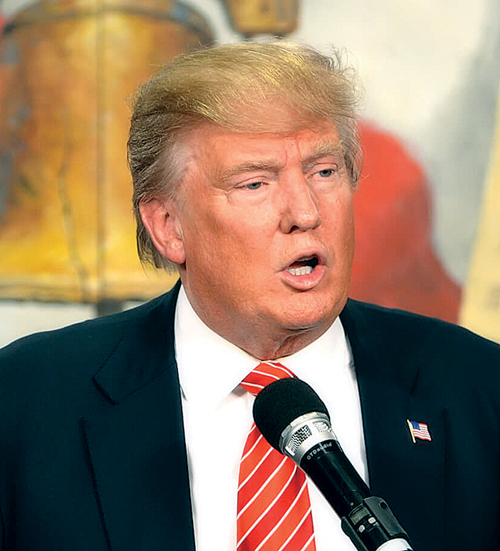
U.S. President Donald Trump
President Donald Trump faces significant challenges in asserting control over Venezuela’s oil sector amid political uncertainty, security risks and deep institutional damage after years of economic collapse. While U.S. officials argue that leveraging Venezuela’s oil exports could stabilize the country and attract investment, analysts warn the removal of Maduro may actually heighten instability in the near term.
“By removing Maduro, they potentially created a scenario of much greater instability,” said Alexander Main, director of international policy at the Center for Economic and Policy Research. “Things can go haywire in a way that we can’t really anticipate.”
Among the immediate challenges are violent pro-government motorcycle gangs roaming Caracas, drug trafficking networks and armed guerrilla groups that the weakened state may struggle to control. At the same time, the U.S. faces pressure to address humanitarian concerns in a country grappling with hyperinflation, widespread poverty and millions of displaced citizens who may seek to return.
The White House is seeking to draw U.S. oil companies back into Venezuela to rebuild its degraded energy infrastructure, but that effort is complicated by political infighting, corruption and uncertainty surrounding the acting government led by Delcy Rodriguez, Maduro’s former deputy.
“There’s no guarantee Rodriguez will be able to deliver stability,” Bloomberg Economics analysts Jimena Zuniga and Chris Kennedy wrote this week. “A delayed return to democracy could result in renewed violence and a more limited economic upside.”
U.S. officials have attempted to avoid the chaos that followed regime change efforts in Iraq, Libya and Afghanistan by leaving much of Venezuela’s existing power structure intact — a move that has sidelined the opposition led by Maria Corina Machado, whose party Washington says won the country’s 2024 election.
Trump downplayed the risks during a meeting with oil executives on Friday, predicting companies would quickly commit at least $100 billion to revive Venezuela’s oil industry. He pledged security guarantees for firms willing to invest, though details remain unclear.
“You’re going to be very secure, very safe,” Trump told executives. “Physically safe, in addition to financially safe.”
Despite those assurances, oil companies remain cautious. ExxonMobil CEO Darren Woods described Venezuela as “uninvestable,” citing the company’s prior asset seizures. “To reenter a third time would require some pretty significant changes,” Woods said, pointing to the need for durable legal and commercial protections.
Attracting long-term capital may also be difficult given the country’s deteriorated infrastructure, which analysts estimate could require $100 billion and many years to restore. Even modest production gains would demand sustained investment and political stability that has yet to materialize.
See also: U.S. won’t fund Venezuela oil revival, Burgum says
“There are still more questions than answers,” said Evan Ellis, a former State Department official. “Even with U.S. guarantees, investors are being asked to trust the same institutions that expropriated assets for decades.”
While Trump has emphasized the strategic value of Venezuela’s oil and pledged U.S. oversight of exports, skepticism remains about whether the current political framework can support a durable recovery — or provide the certainty global oil companies require before committing capital.
Read next: Chevron eyes up to $700 million cash flow upside from Venezuela
Map created in collaboration with Petroleum Economist and Global Energy Infrastructure. For an overview of this project and other related infrastructure developments, visit . Copyright World Oil 2026. All rights reserved.
Reporting by Magdalena Del Valle, Bloomberg. Edited for conciseness.