(Reuters) – U.S. oil operators in North Dakota are moving cautiously on ramping up drilling despite a sharp rise in oil prices driven by the Iran war, as companies wait to see if higher prices will last long enough to justify new investment, the state’s regulator said on Friday.
While elevated prices have improved near-term fundamentals, most producers are sticking to budgets set at the end of last year, limiting any immediate jump in drilling activity, Mark Bohrer, assistant director of the Oil and Gas Division at the state’s Industrial Commission, said. However, output could edge higher in the near term as more wells are completed and some drilling activity picks up.
Get the Latest US Focused Energy News Delivered to You! It’s FREE:
Bohrer said Continental Resources, the state’s second-largest oil producer, has been planning to add a rig and resume drilling after laying down a rig earlier this year. “Others may also entertain adding a rig here and there if the elevated oil price remains in effect long enough,” he said. U.S. WTI pricessettled up 25 cents at $96.60 on Friday, as investors doubted the prospect of a breakthrough in U.S.-Iran peace talks. The benchmark U.S. contract has risen 44.1% since the war started in late February.
Harold Hamm, chief executive of Continental Resources, which helped pioneer fracking in North Dakota’s Bakken basin, plans to put drilling crews back to work after a temporary pause announced in January, local media reported. ConocoPhillips COP.N, EOG Resources EOG.N and Diamondback Energy FANG.O are also diverting resources to drill new wells or expand existing ones, mainly in the Permian basin, to take advantage of the price environment.
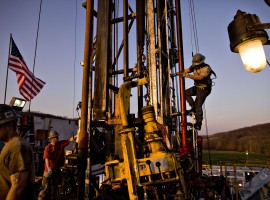
In North Dakota, there were 26 rigs operating in May, unchanged from April, while 13 hydraulic fracturing crews were active in the state, according to the regulator.
Oil production in North Dakota rose 9,000 barrels per day (bpd) to 1,142,725 bpd in March, the regulator said, citing the latest data available. Bakken and Three Forks oil production also rose by 11,000 bpd in March over February.
Bohrer said he expects oil production in the country’s third-largest oil-producing state to remain stable in the coming months, though it may increase slightly in the near term.
The number of well permits issued rose to 83 in April from 60 in March, while operators brought 49 wells online during the month. With more fracturing crews in operation, the pace of completions is expected to pick up.
Reporting by Siddharth Cavale in New York; Editing by Sanjeev Miglani
Share This:
More News Articles